
Activators of pyruvate kinase m2 and methods of treating disease
a technology of pyruvate kinase and activators, which is applied in the field of activators of pyruvate kinase m2 and methods of treating disease, can solve the problems that have not yet been exploited for therapeutic benefits, and achieve the effect of inhibiting the release of an activator, increasing the activity of pkm2, and reducing endogenous down-regulation of pkm
- Summary
- Abstract
- Description
- Claims
- Application Information
AI Technical Summary
Benefits of technology
Problems solved by technology
Method used
Image

Examples
example
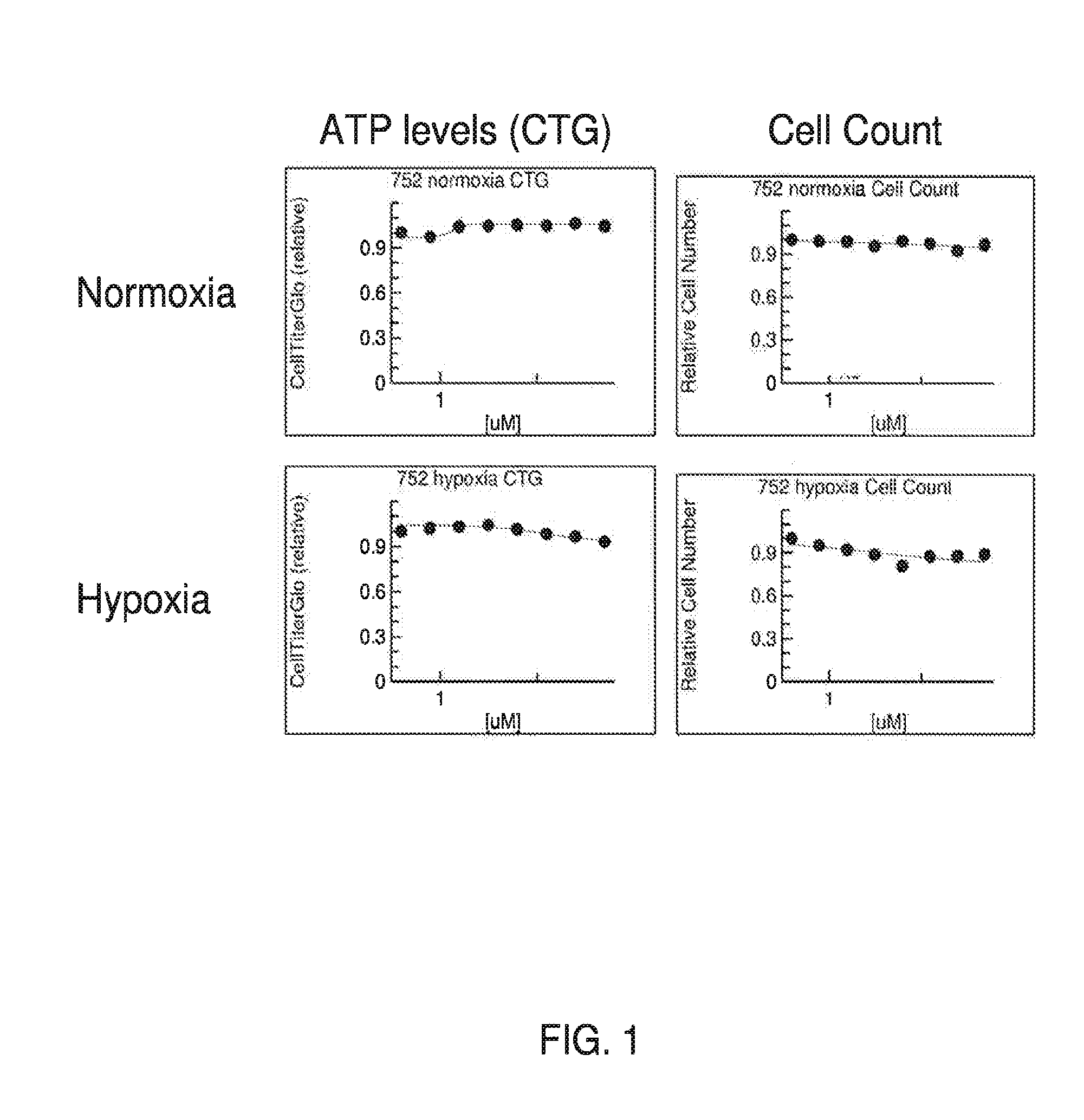
[0303]FIG. 1 shows that an PKM2 activator, AGI-752 has no effect on viability of A549 cells grown in standard media conditions under normoxia or hypoxia, as evaluated by CTG (ATP levels) or cell count. A549 cells were cultured in RPMI medium and 10% FBS (fetal bovine serum). IC50 values>>50 μM.
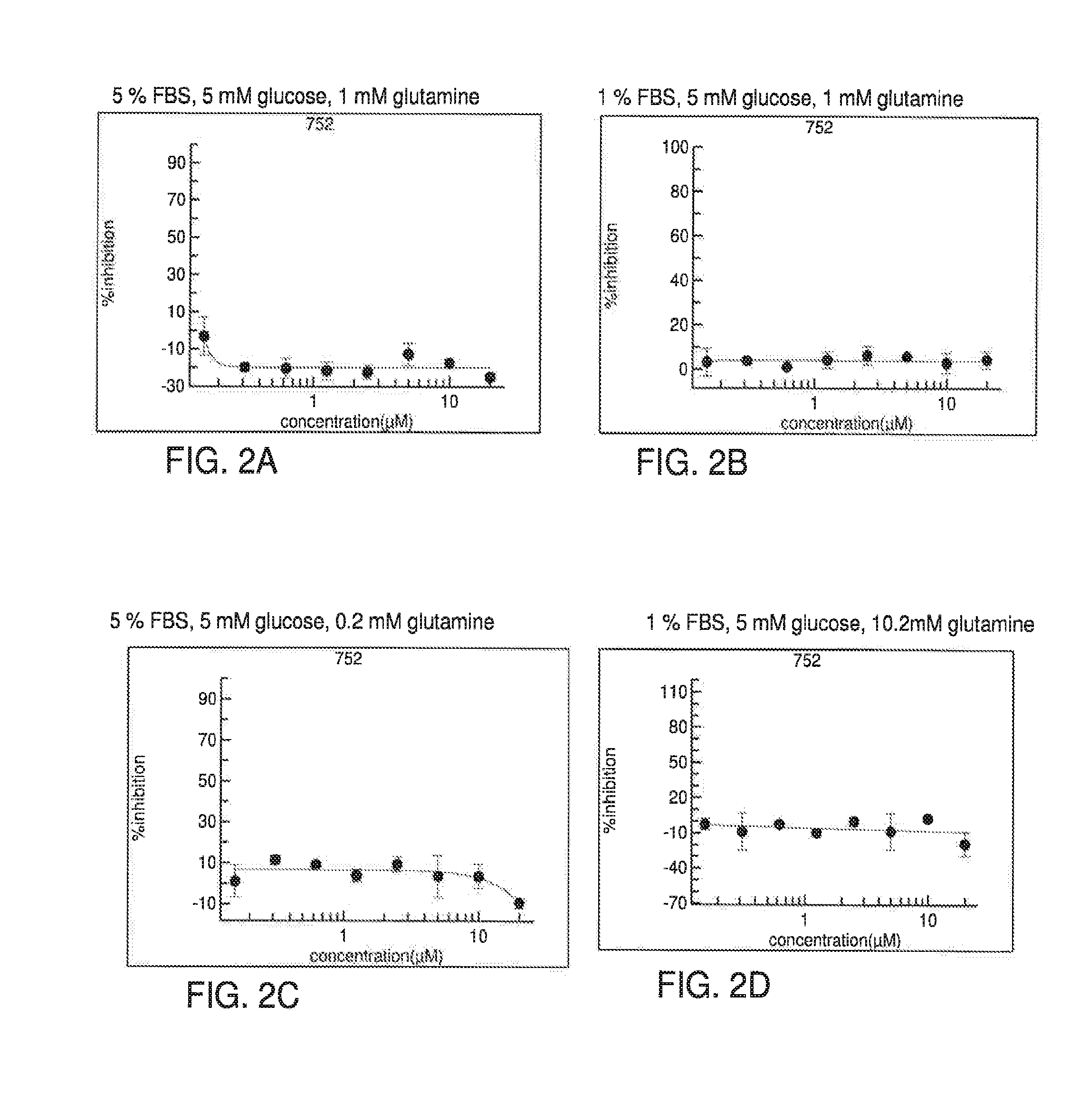
[0304]FIGS. 2A-2D also show that AGI-752 has no effect on viability of A549 cells under various serum / glutamine concentrations. All the experiments in FIGS. 2A-2D were performed in DMEM base media.
AGI-752 also had no effect on cell viability in a variety of cell lines (including A549, AsPC-1, LOVO, MIA PaCa-2, RPMI 8226, HCT 116, MDA-MB-231, and BT-474), and no effect on cell proliferation in vitro under many cell growth conditions. Multiple cells lines (including A549, 786-0, H460, HCT15, SKMEL28, Calu6, U118, HepG2, LN18, and HEK293) were screened for PKM2 activator growth inhibition. More than 10 growth conditions were assayed, such as by varying FBS, glucose, and glutamine levels; normoxia...
PUM
| Property | Measurement | Unit |
|---|---|---|
| time | aaaaa | aaaaa |
| time | aaaaa | aaaaa |
| time | aaaaa | aaaaa |
Abstract
Description
Claims
Application Information
 Login to View More