
Support vest
a technology of supporting equipment and support rods, which is applied in the direction of travelling carriers, travelling articles, travelling sacks, etc., can solve the problems of affecting the pitch of the load-carrying attachment point, interfering with the precise operation of the supported equipment, and the wearer's comfort. to be increased
- Summary
- Abstract
- Description
- Claims
- Application Information
AI Technical Summary
Benefits of technology
Problems solved by technology
Method used
Image

Examples
Embodiment Construction
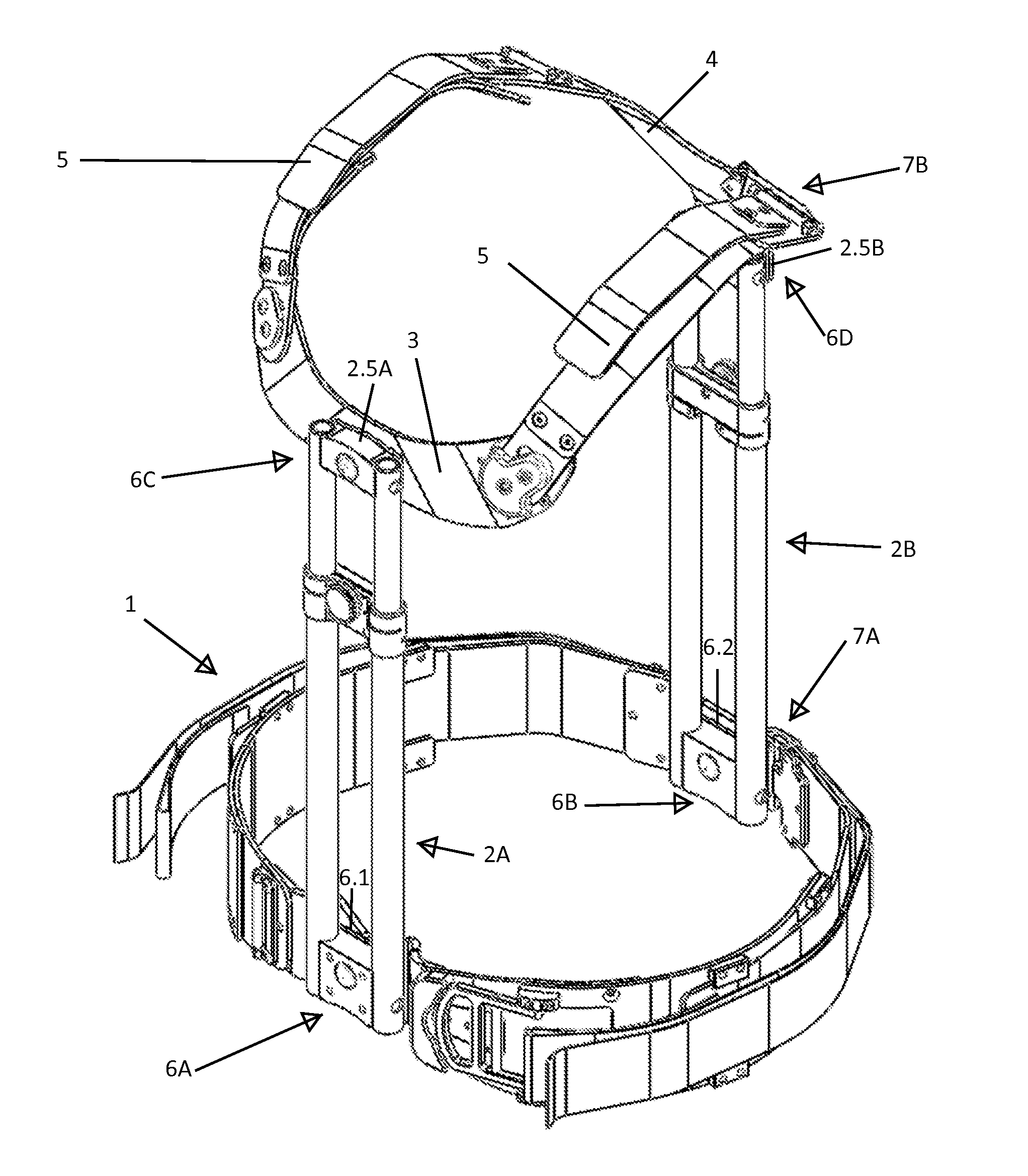
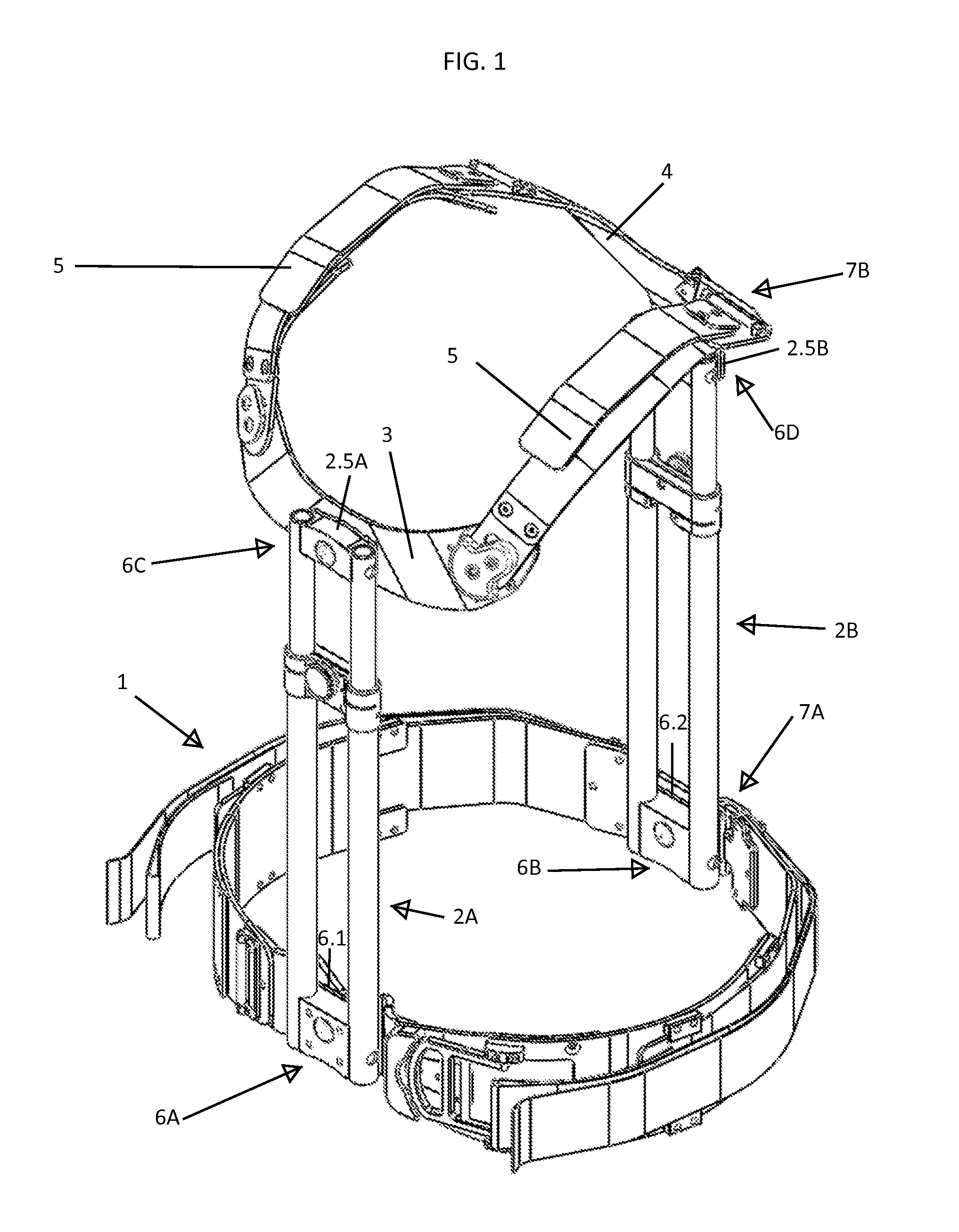
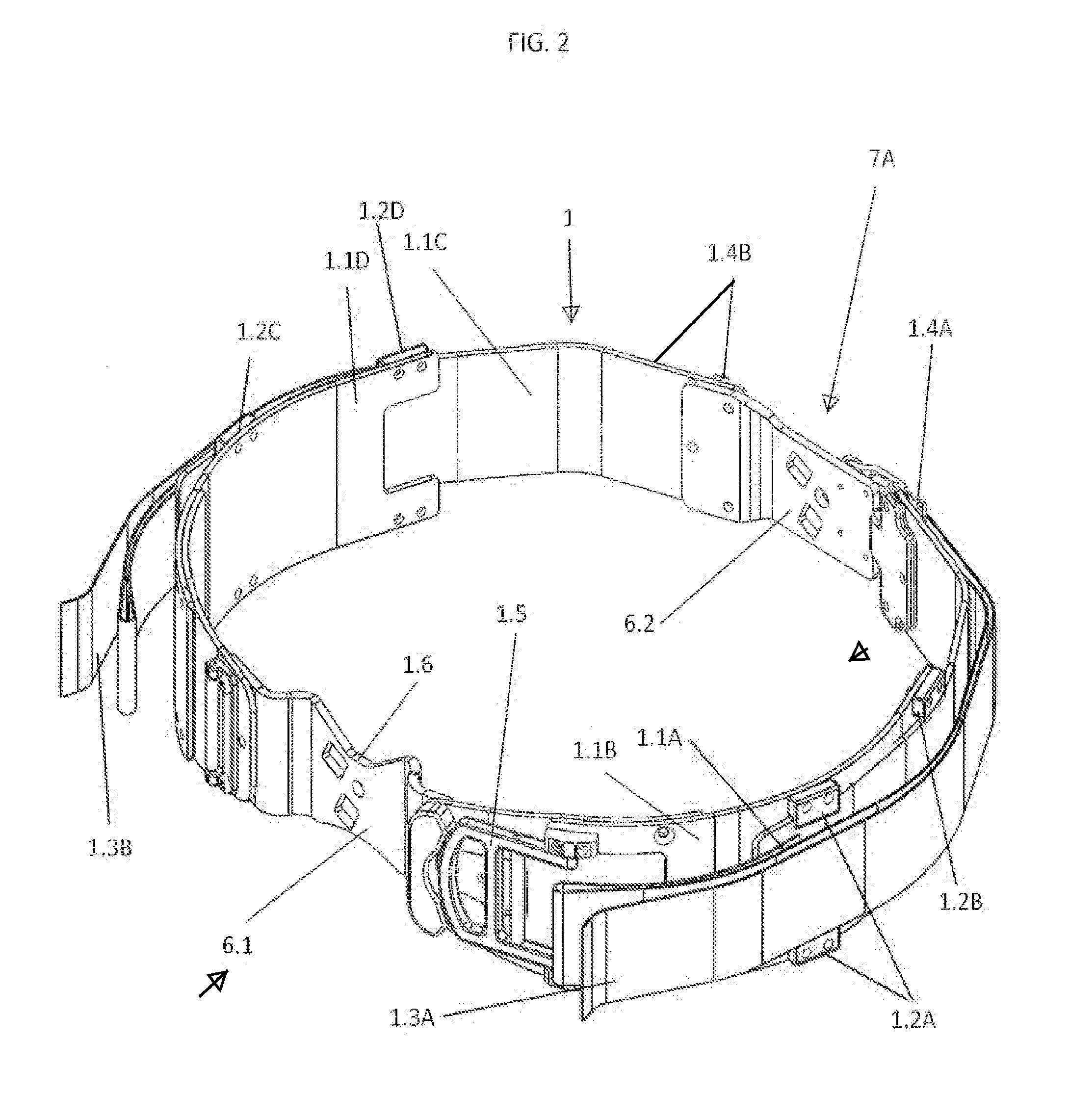
[0025]The invention will generally be referred to as an Exovest. As used herein “Exovest” includes various embodiments of the invention. The Exovest will also be referred to as a support vest or exoskeletal structure. An illustrative embodiment of the invention will now be described.
[0026]Instead of indiscriminately tightening around, and interfering with, various regions and systems of the human body, an exemplary Exovest transfers its load and torque into anatomically suitable regions that are better able to resist such weights and forces and to transfer them appropriately throughout natural bodily load-carrying systems. Additionally, the Exovest interferes relatively minimally with respiration, circulation, transpiration, and movement, including locomotion.
[0027]The Exovest fits a flexible exoskeletal structure around the human frame that generally conforms to the body's natural movements, allowing forces to be applied to selected areas, and permitting varying attachment points f...
PUM
 Login to View More
 Abstract
Description
Claims
Application Information
 Login to View More