
Motion training device, program, and display method
- Summary
- Abstract
- Description
- Claims
- Application Information
AI Technical Summary
Benefits of technology
Problems solved by technology
Method used
Image

Examples
Embodiment Construction
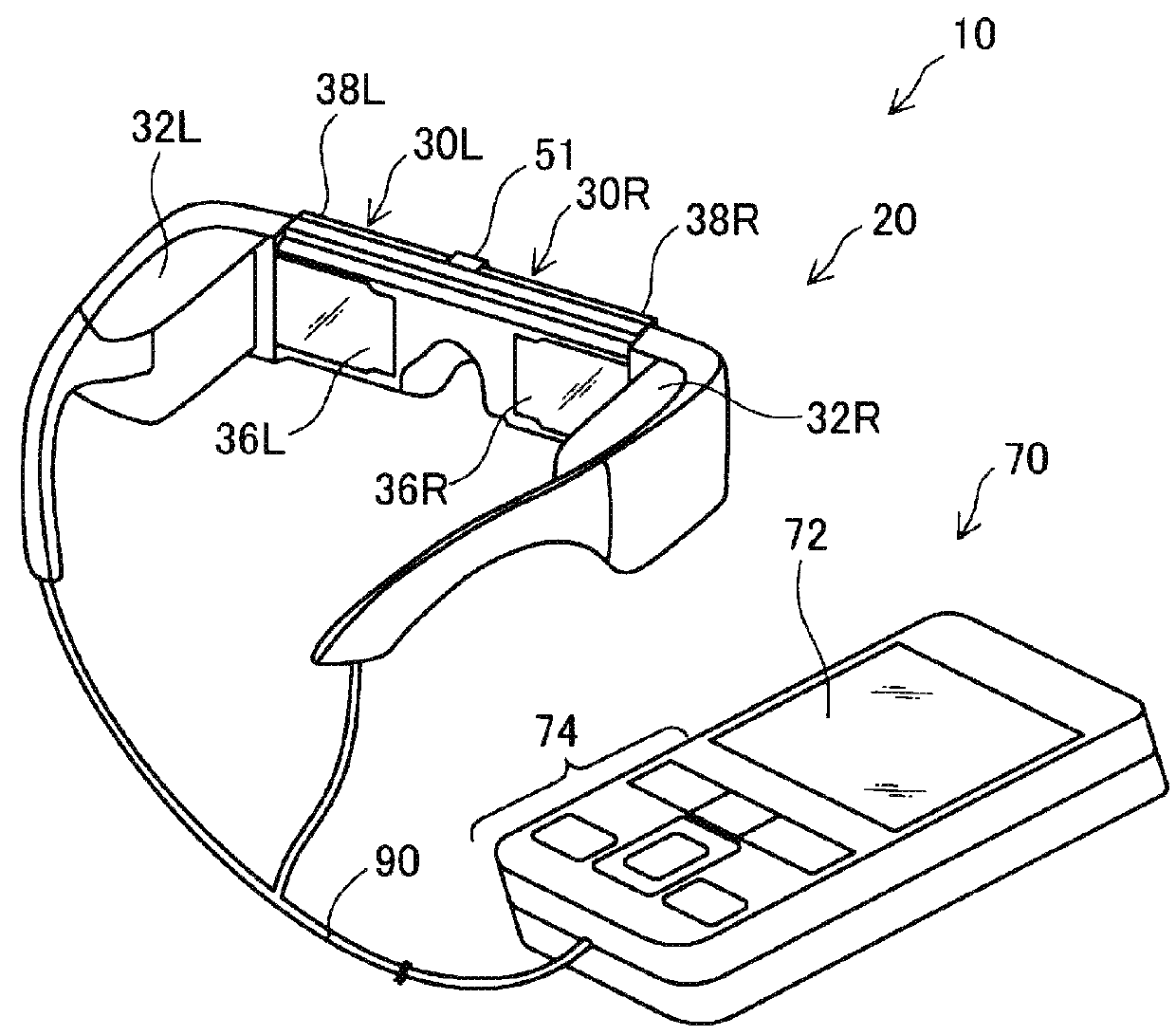
[0022]FIG. 1 shows the configuration of a Head Mounted Display (HMD) 10. The term “HMD” is an abbreviation of head mounted display. The HMD 10 executes display processing, described later, and thus realizes a display method for motion training and functions as a motion training device. Motion training is carried out, for example, for rehabilitation of a hand (hereinafter also referred to as rehab).
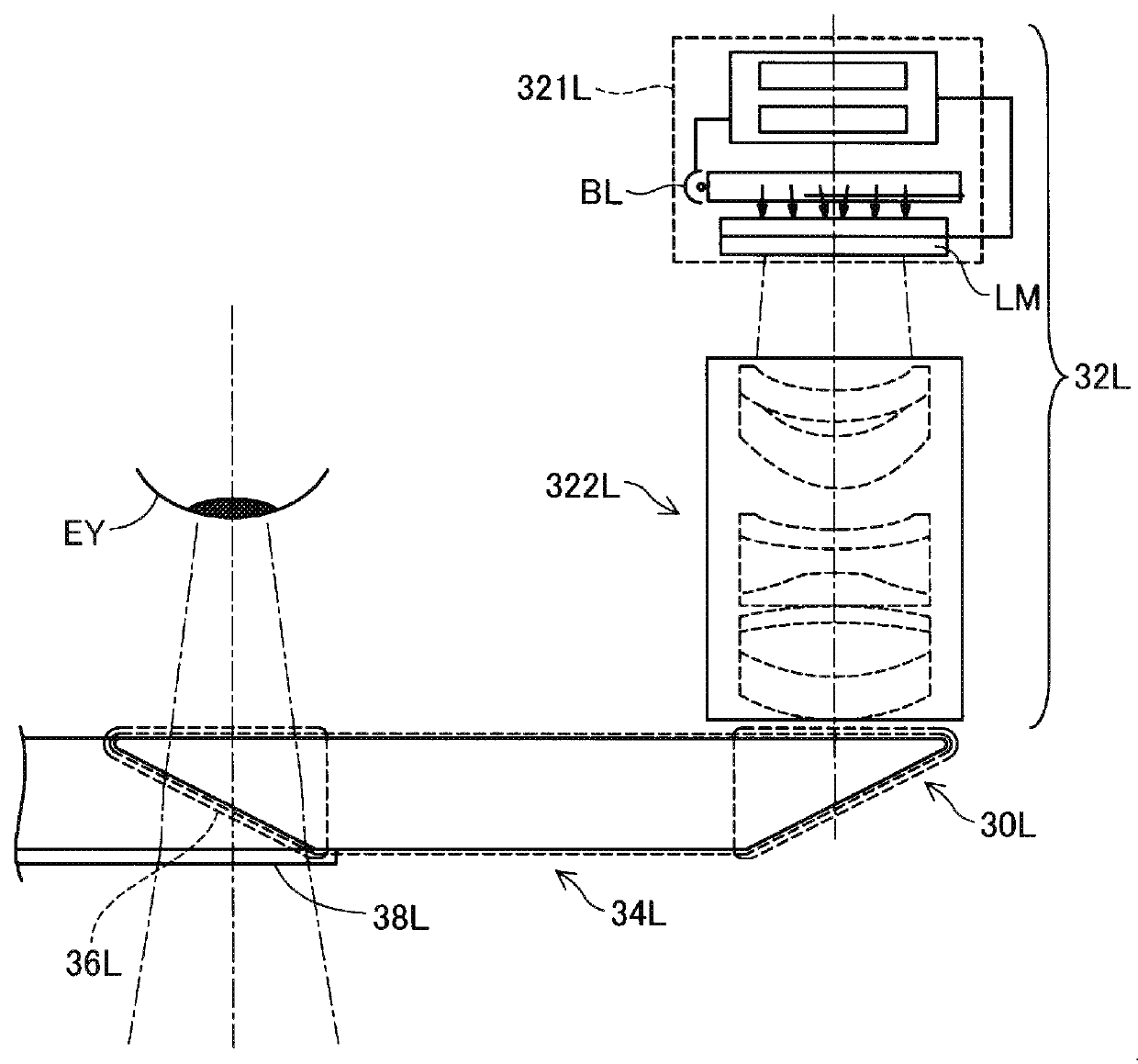
[0023]The HMD 10 is an optical transmission-type (optical see-through) display on which the user can simultaneously see both a virtual image and real space.
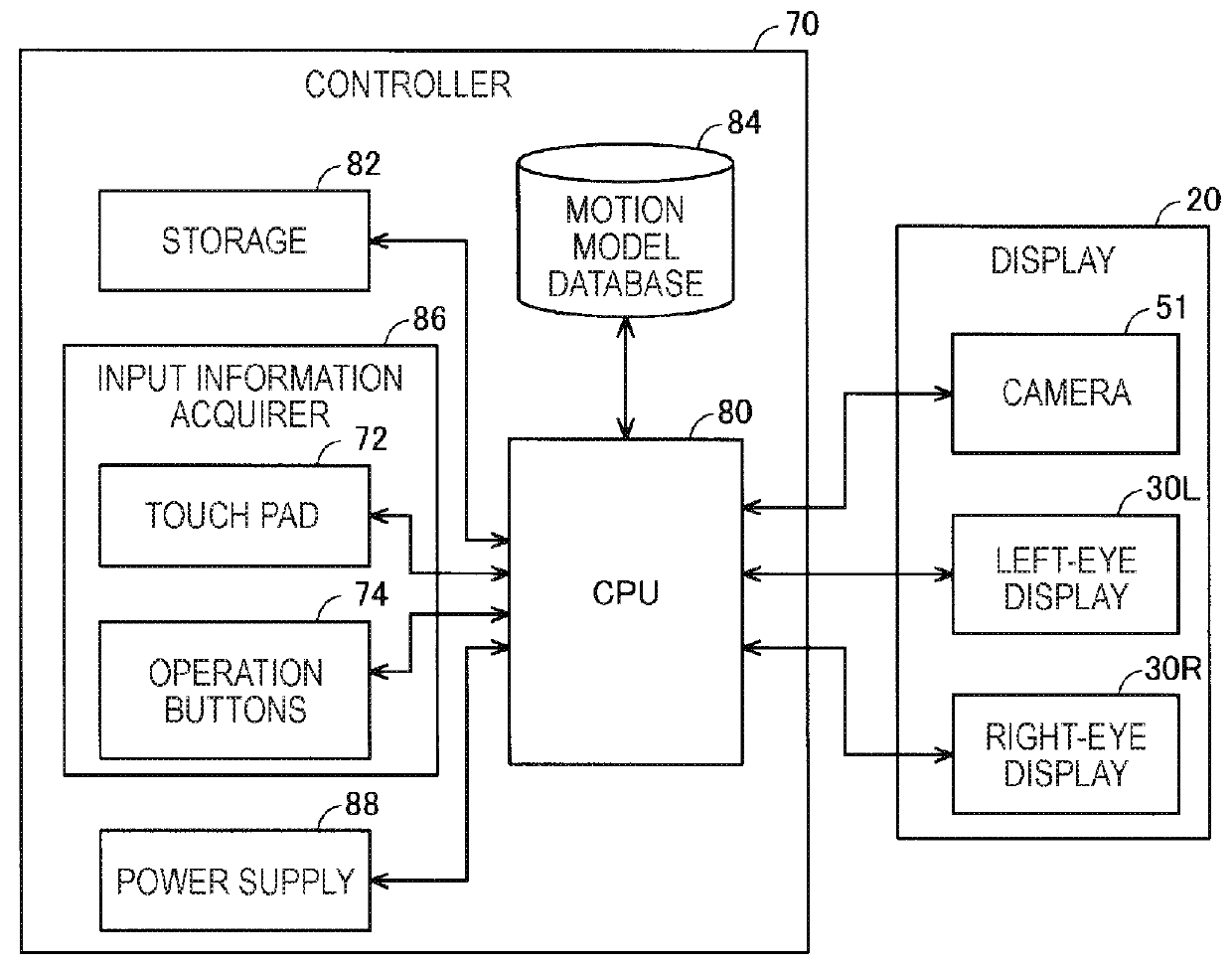
[0024]The HMD 10 includes a display device 20 shaped like eyeglasses, and a controller 70. The display device 20 and the controller 70 are connected via a wire or wirelessly so as to be able to communicate with each other. In this embodiment, the display device 20 and the controller 70 are connected via a cable 90. The controller 70 communicates a signal of an image (image signal) and a signal for control (control signal) with the displ...
PUM
 Login to View More
 Abstract
Description
Claims
Application Information
 Login to View More