

Residence-Based Digital Identity and Strong Authentication System
a digital identity and strong authentication technology, applied in the field of residency-based digital identity and strong authentication system, can solve the problems of personal privacy and security issues, create significant security challenges, and confuse internet users with a wide range of technology solutions,
- Summary
- Abstract
- Description
- Claims
- Application Information
AI Technical Summary
Benefits of technology
Problems solved by technology
Method used
Image

Examples
Embodiment Construction
[0015]In the following description, references are made to various embodiments in accordance with which the disclosed subject matter can be practiced. Some embodiments may be described using the expressions one / an / another embodiment or the like, multiple instances of which do not necessarily refer to the same embodiment. Particular features, structures or characteristics associated with such instances can be combined in any suitable manner in various embodiments unless otherwise noted.
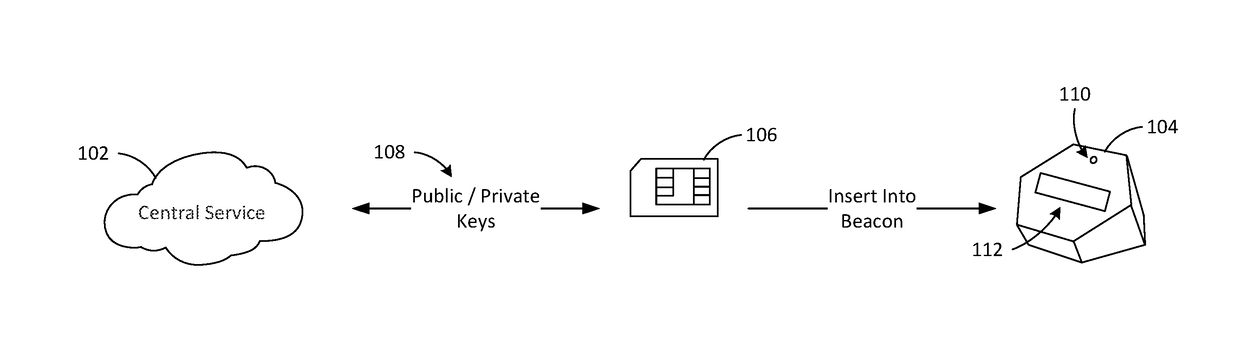
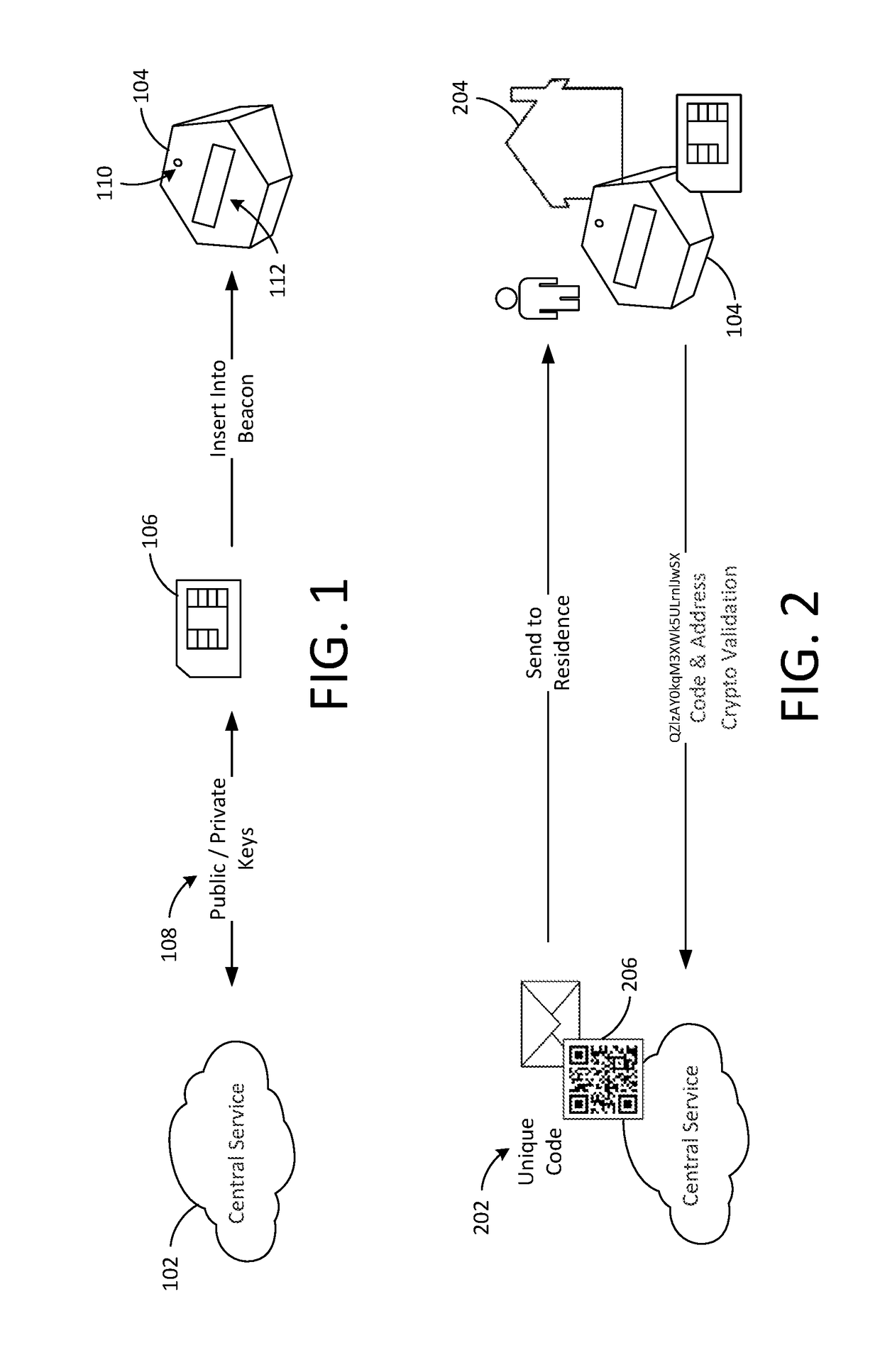
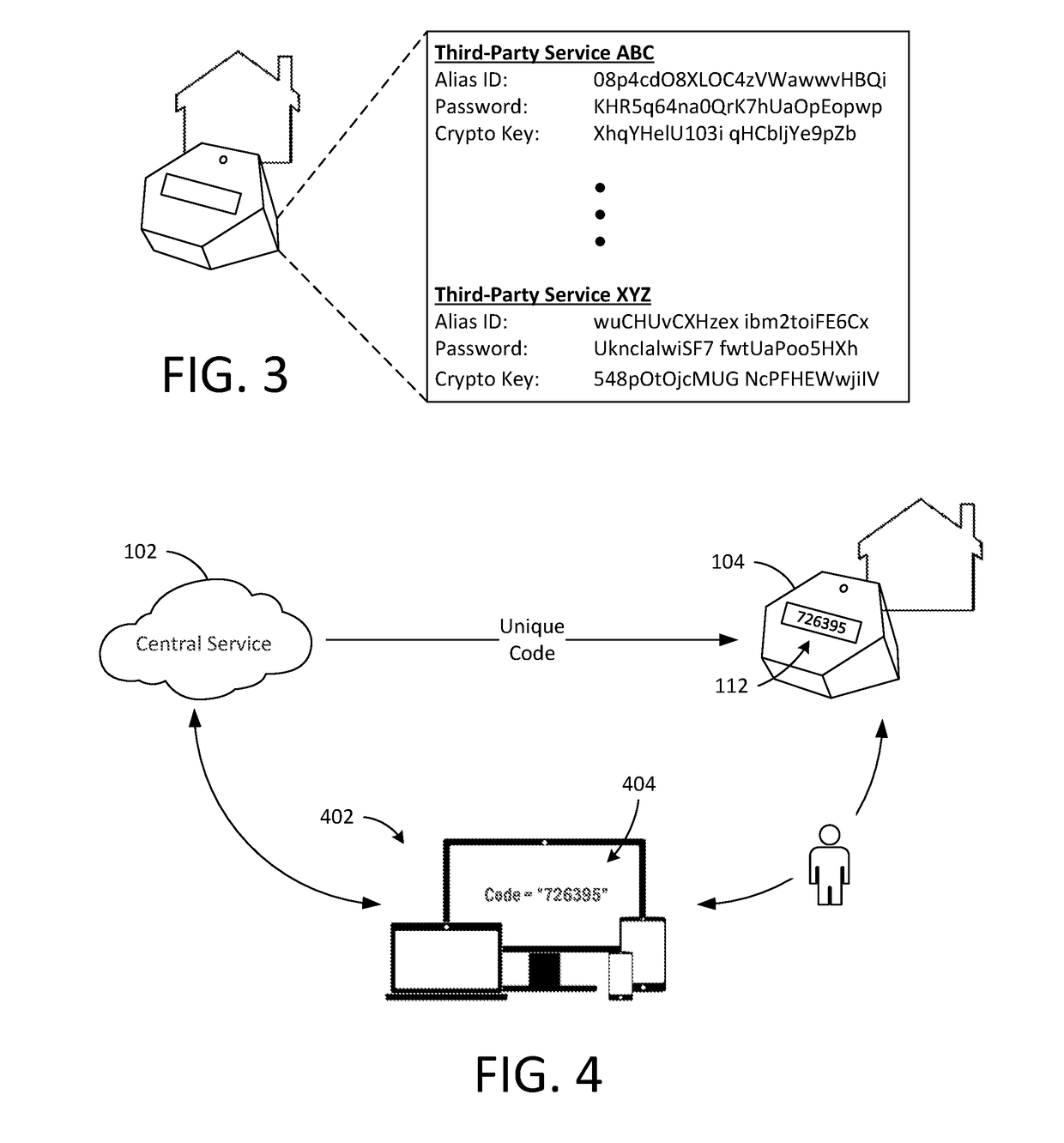
[0016]A system includes a central, cloud-based, online service, referred to as a central service, which can manage user accounts. The system also includes dedicated, always-on, always-connected, cryptographically unique devices, referred to as beacons, located within the physical residences of its users. The term beacon is used in this specification merely as a fanciful name for a component of the system, and no association between the use of the term and dictionary definitions of the term or uses of t...
PUM
 Login to View More
 Abstract
Description
Claims
Application Information
 Login to View More