
Additively-manufactured periodic structures to achieve effective low-k materials in RF applications
- Summary
- Abstract
- Description
- Claims
- Application Information
AI Technical Summary
Benefits of technology
Problems solved by technology
Method used
Image

Examples
Embodiment Construction
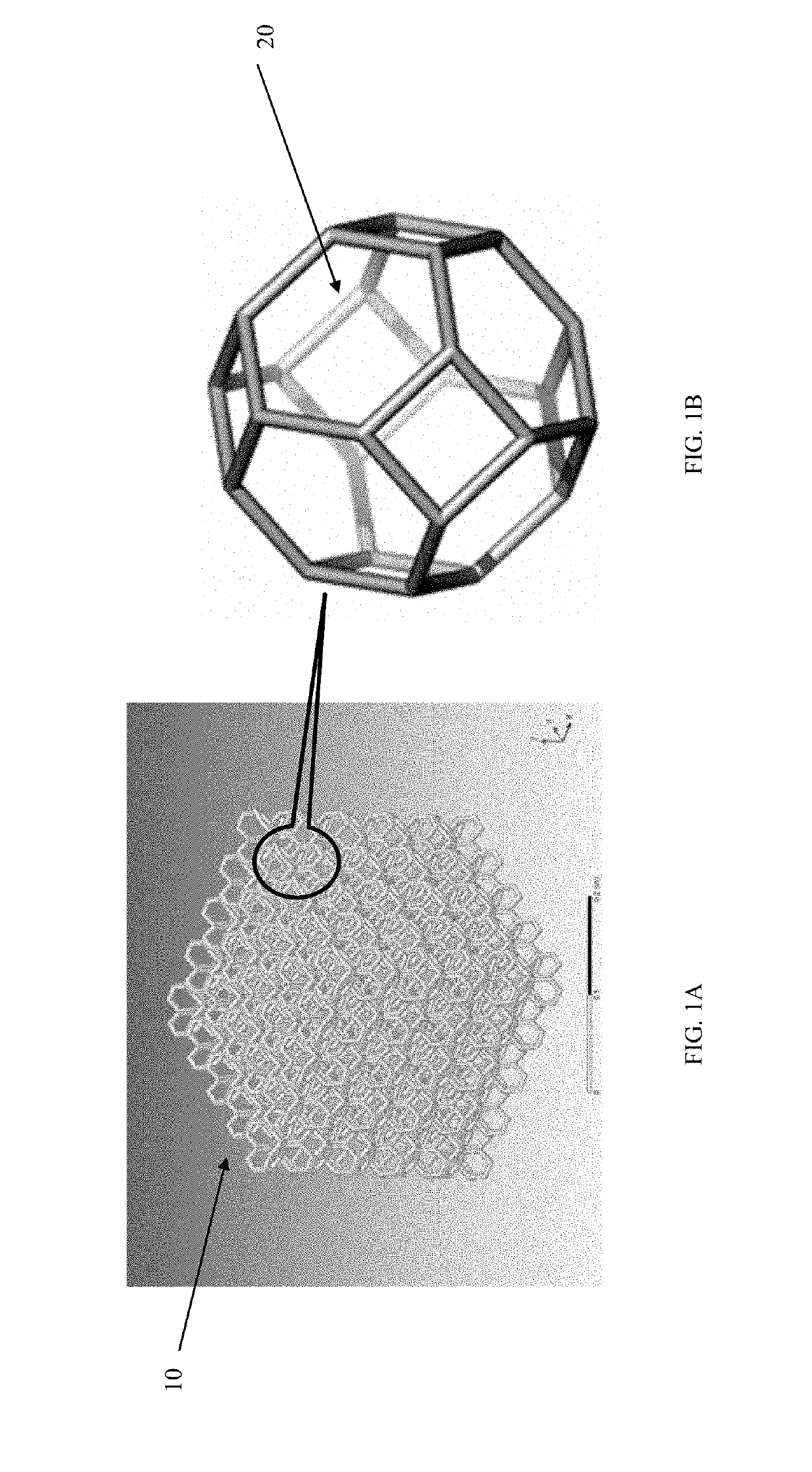
[0028]A radome is a structural, weatherproof enclosure that protects a radar antenna. A radome is generally constructed of material that minimally attenuates the electromagnetic signal transmitted or received by the antenna, so as to be effectively transparent to radio waves. In one embodiment of the present disclosure, additive manufacturing is used to create complex shapes necessary for such application with an inexpensive automated process. However, current materials used in additive manufacturing do not have the required RF material properties (i.e., low-K) in their bulk form as compared to traditional syntactic foams to allow for direct replacement of the traditional low-K materials.
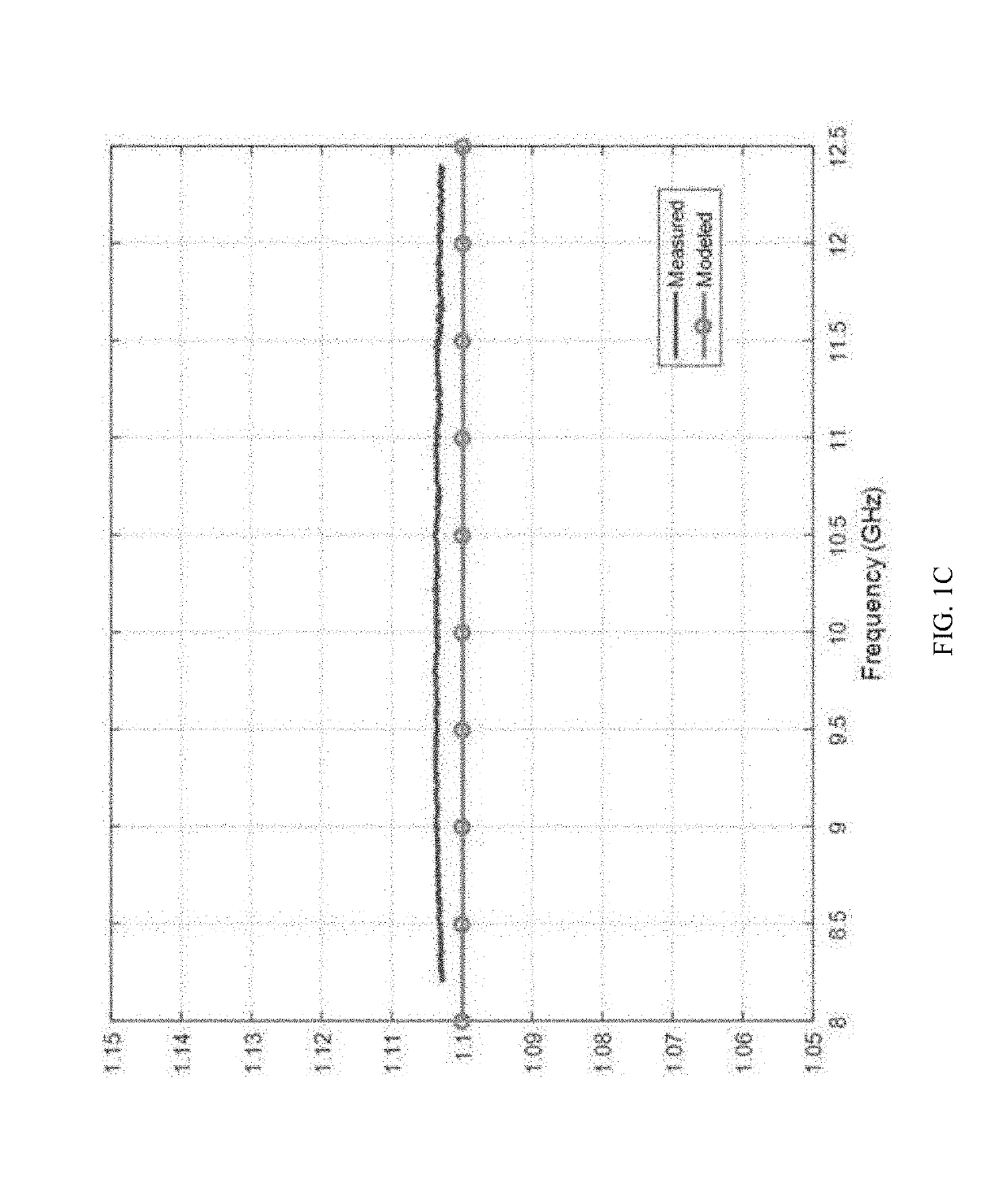
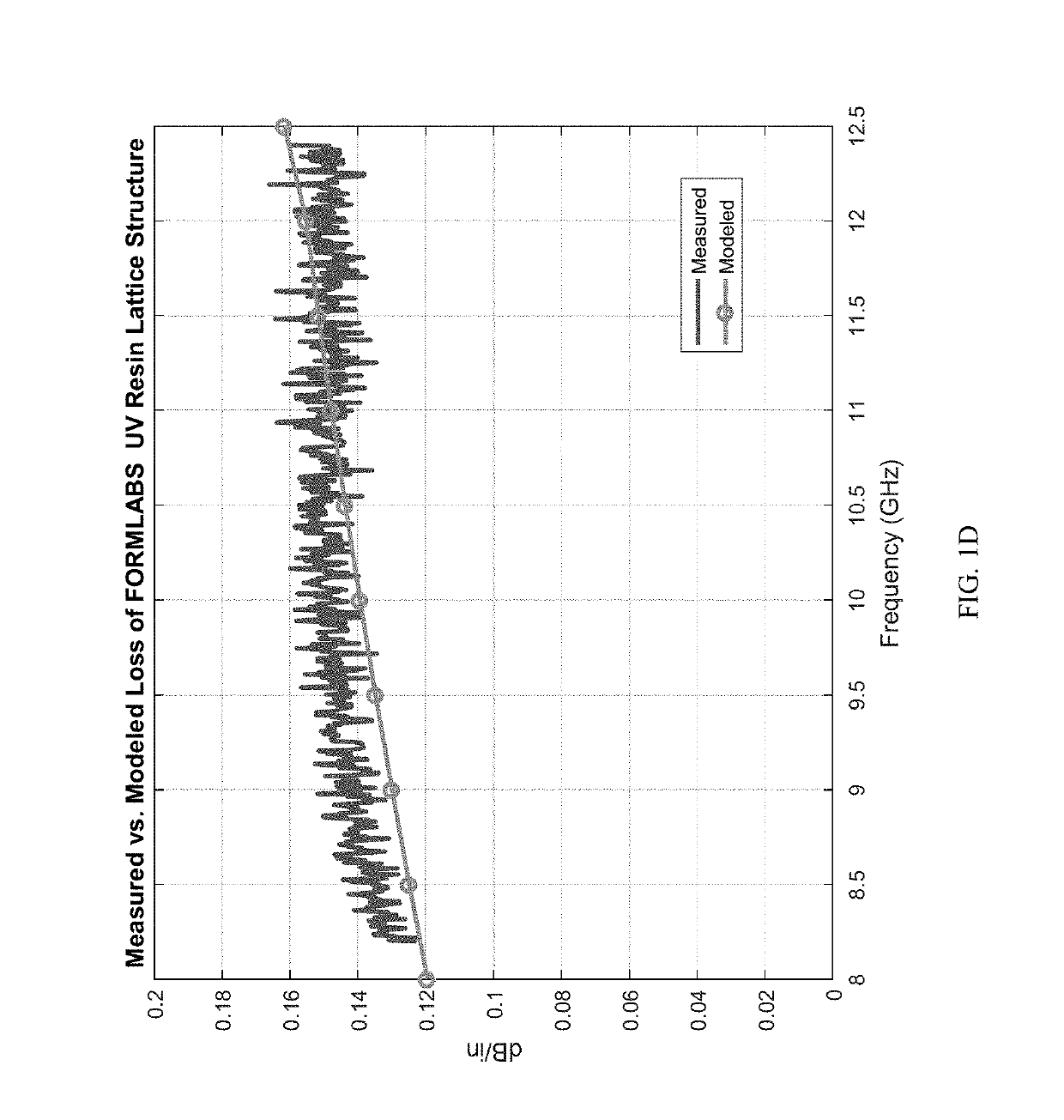
[0029]Thus, in certain embodiments of the present disclosure additive manufacturing allows for the direct fabrication of very complex geometries such as uniform and non-uniform (i.e. gradient) periodic lattice structures. By carefully engineering these complex lattice structures, being largely compr...
PUM
| Property | Measurement | Unit |
|---|---|---|
| Structure | aaaaa | aaaaa |
| Wave | aaaaa | aaaaa |
| Dielectric constant | aaaaa | aaaaa |
Abstract
Description
Claims
Application Information
 Login to View More