
A Novel Prostate Apoptosis Response-4 (Par-4) Protein Entity with an Extended Duration of Action for Therapeutic Treatment of Cancer
a prostate apoptosis and protein entity technology, applied in the field of polypeptide molecules, can solve the problems of reducing the tumor-suppression activity of par-4, and achieve the effect of enhancing the biological half-li
- Summary
- Abstract
- Description
- Claims
- Application Information
AI Technical Summary
Benefits of technology
Problems solved by technology
Method used
Image

Examples
examples
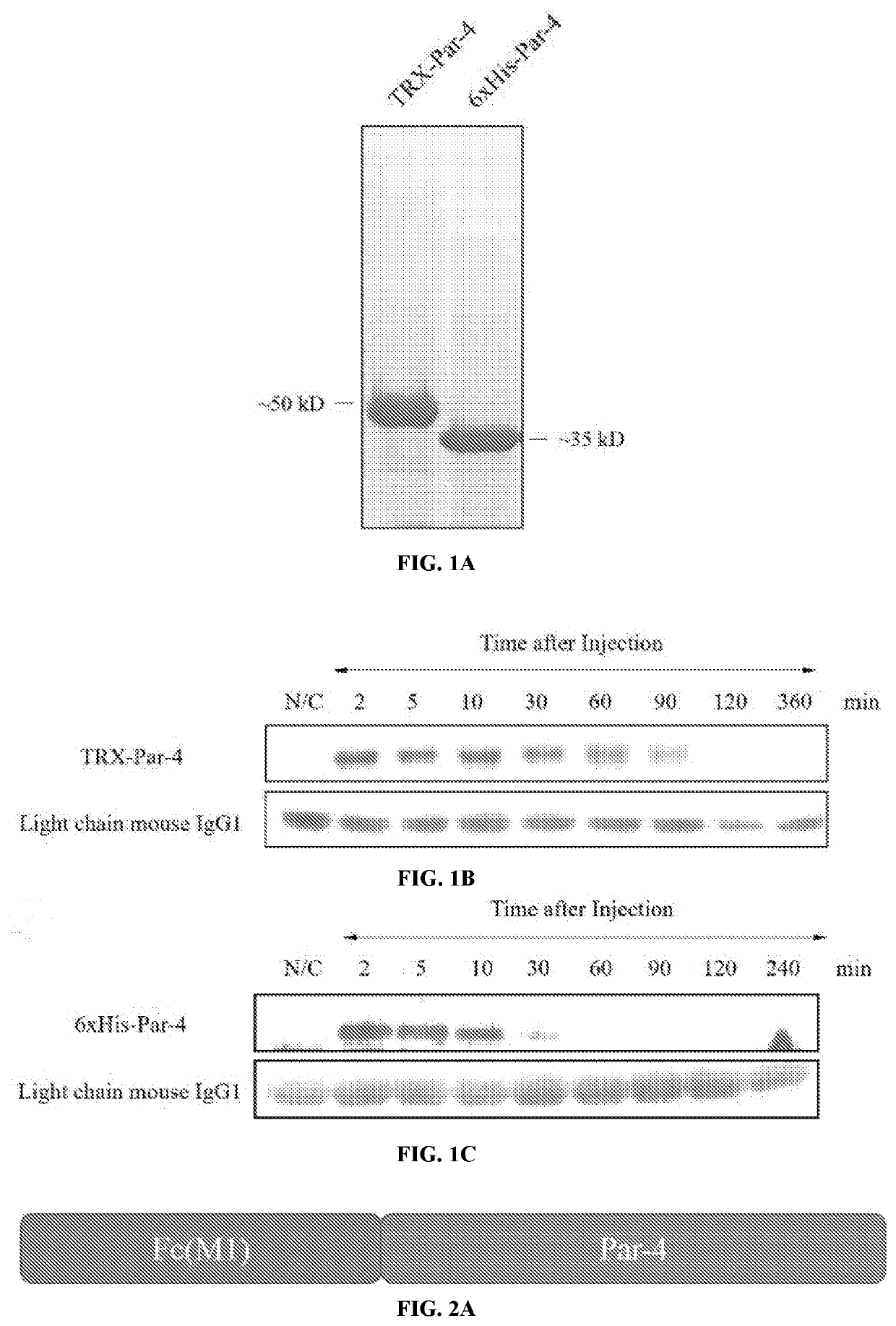
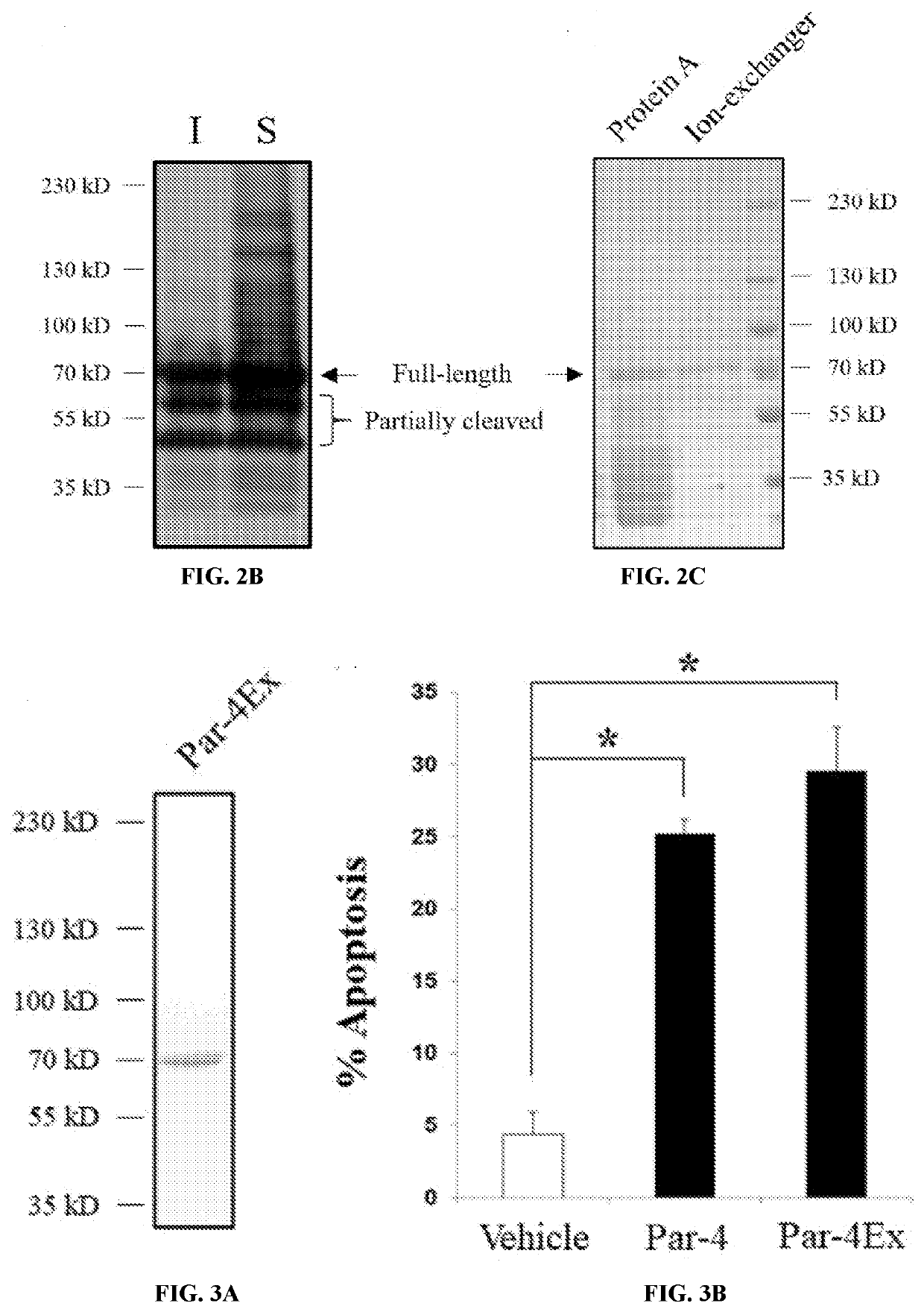
[0105]Par-4Ex protein design. Design of a desirable Par-4Ex as a therapeutic candidate must account for few issues. For example, the molecular weight of a desirable Par-4Ex must be significantly larger than that of Par-4 (˜40 kDa). For another example, the extra amino-acid residues of the extended protein could impact binding with GRP78 and, hence, make the extended protein (Par-4Ex) inactive against cancer cells. With such issue in mind and considering that the SAC domain is closer to the C-terminus, the present inventors added the extra amino-acid residues to the N-terminus of Par-4 for studies as described in these examples.
[0106]Further, with a view toward prolonging the biological half-life of Par-4, it is desirable to avoid the possible immunogenicity of the extended protein (Par-4Ex) for human. For this reason, the present inventors selected the extra amino-acid residues from a human protein fragment, but without the unnecessary biological function of the human protein. The f...
PUM
| Property | Measurement | Unit |
|---|---|---|
| Fraction | aaaaa | aaaaa |
| Fraction | aaaaa | aaaaa |
Abstract
Description
Claims
Application Information
 Login to View More