
Method and apparatus for measuring the permeability to water of pervious sheets
a technology of pervious sheet and water permeability, which is applied in the direction of measuring devices, suspensions and porous material analysis, instruments, etc., can solve the problems of unclean pervious sheet material, achieve better dynamics, reduce density, and be sensitive to variation
- Summary
- Abstract
- Description
- Claims
- Application Information
AI Technical Summary
Benefits of technology
Problems solved by technology
Method used
Image

Examples
Embodiment Construction
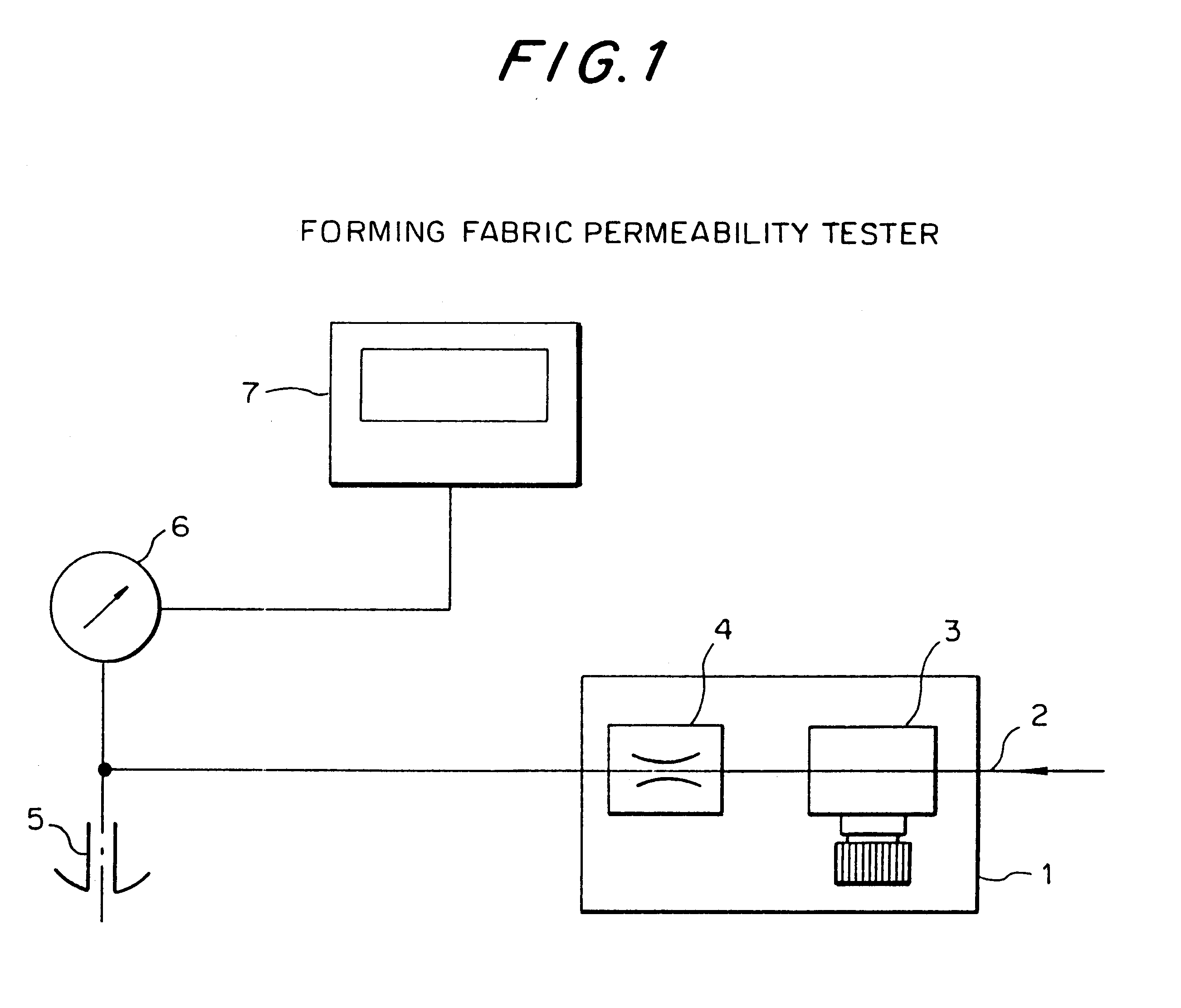
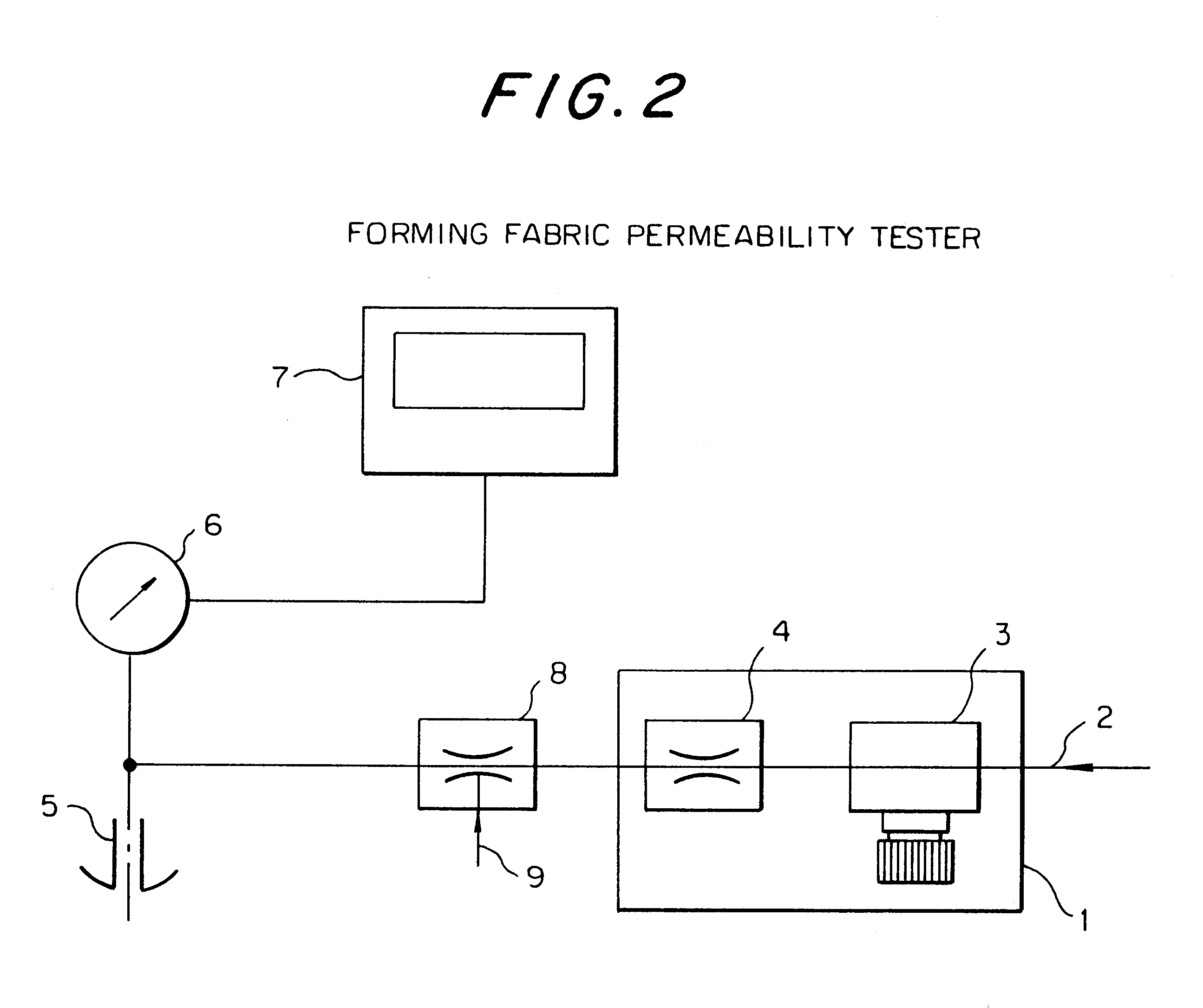
The apparatus represented in FIG. 1 comprises a constant flow device 1 to which water is supplied through a line 2.
The constant flow device 1 comprises a pressure regulator 3 and a flow regulator 4, the former providing a specified pressure to the water flowing into the latter, such as from 50 kPa to 1000 kPa, more preferably from 100 kPa to 600 kPa. By means of the flow regulator 4, the volume rate of flow of the water may be regulated to a desired value, such as from 5 to 100 ml / sec, preferably from 20 to 50 ml / sec.
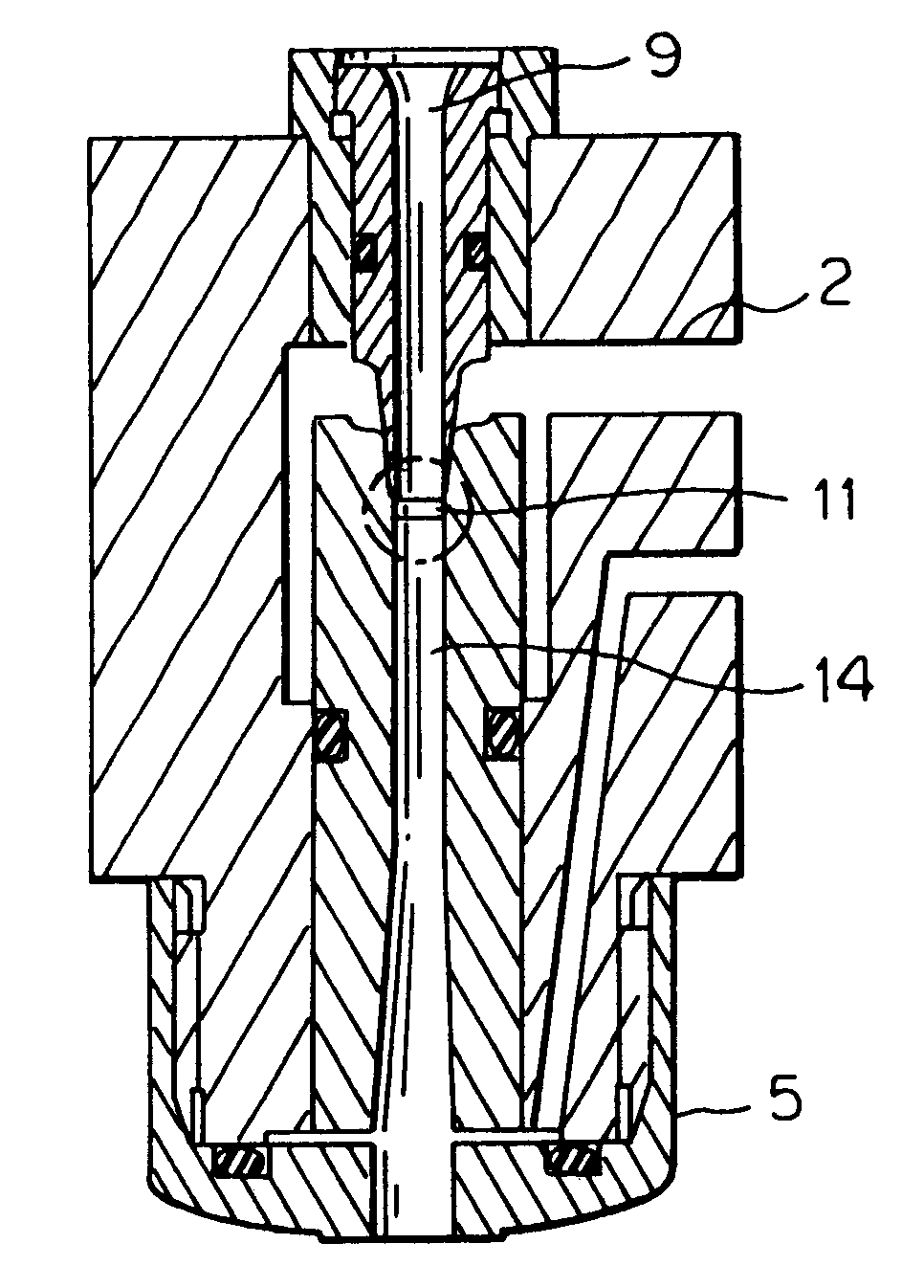
The constant flow device 1 is coupled through the water flow line 2 to a nozzle 5, the latter further being coupled to a pressure gauge 6, also referred to as permeability gauge. The permeability gauge 6 registers the pressure of the water within the nozzle 5, the registered values optionally being transmitted to a recording device 7. The pressure values registered within the nozzle 5 usually are from 0 to 100 kPa.
The nozzle 5 has an outlet orifice diameter of 2-15 mm, ...
PUM
 Login to View More
 Abstract
Description
Claims
Application Information
 Login to View More