In view of the above, the object of the invention is to provide improved overview on service charges for a subscriber to a digital cellular communication network.
According to a preferred embodiment of the invention the charging indication information means is adapted to receive charging information at the beginning of a service, and then to terminate the transfer after confirmation of
receipt thereof. Only in case charging information changes during a service the transfer charging information is re-established. This embodiment of the present invention is particularity adapted to long duration services where in addition the amount of unstructured supplementary service
data messages should be minimized. Further, the dynamic
adaptation of charging information allows for improved
estimation accuracy, in particular during
roaming between different charging areas.
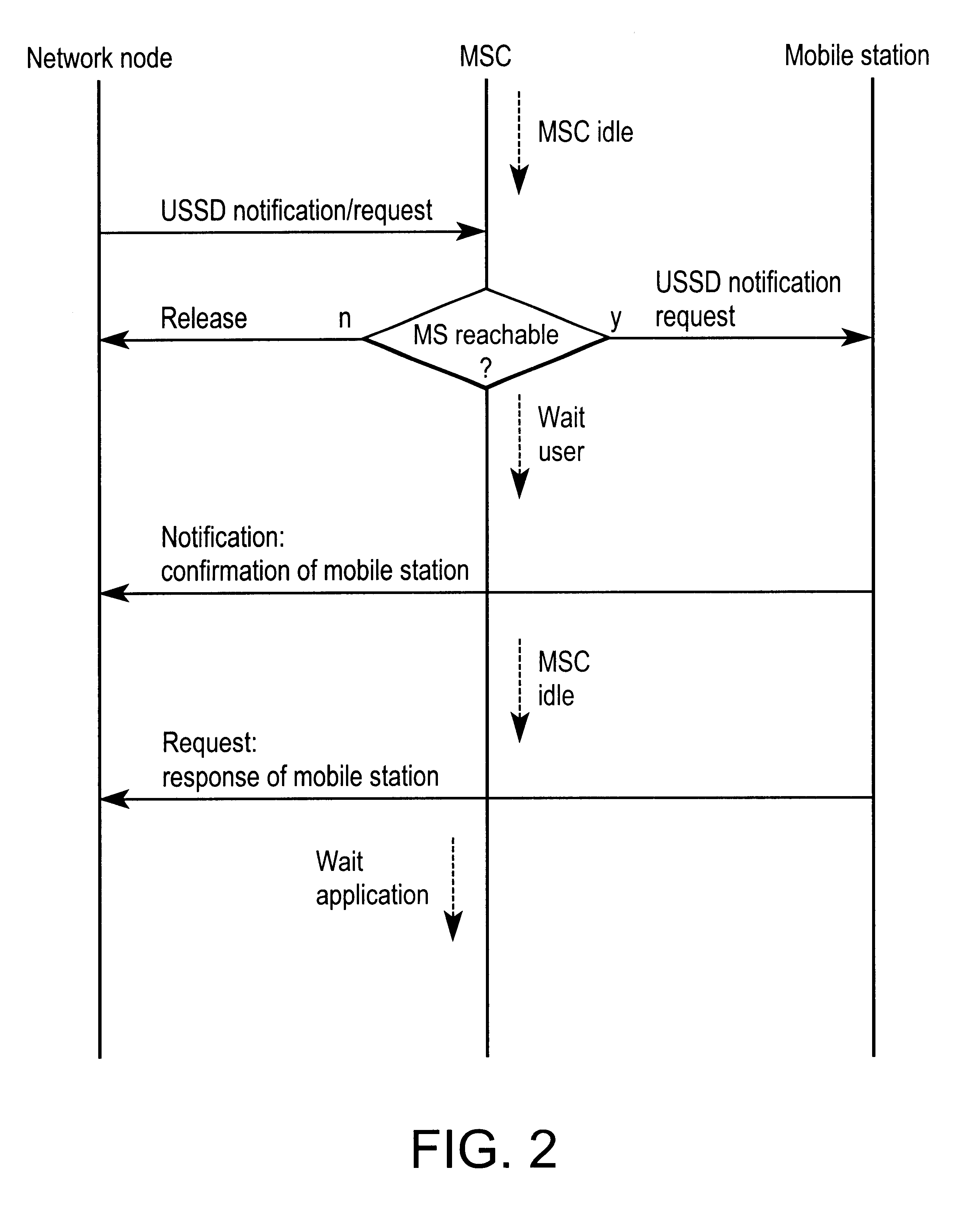
According to a further preferred embodiment of the present invention the charging information is provided continuously from a network node to derive an estimate of service charges on the basis of time-specific, location-specific, or service-specific criteria, respectively. Therefore, the use of unstructured supplementary service
data messages allows the provision of charging information without any particular implementation overhead at the mobile
station side.
According to a further preferred embodiment of the present invention the charging information is received before establishment of a service to derive an estimate of service charges on the basis on time-specific, location-specific, or service-specific criteria, respectively. Therefore, the use of unstructured supplementary service data messages allows the provision and retrieval of charging information also in non-operative states of the mobile station, e.g., out of call.
The architecture of the inventive digital cellular communication network allows improved charging information without
impact on the architecture of the mobile stations
roaming therein. Corresponding to user preferences it is possible to select communication times that are cheaper, in particular for services not requiring immediate delivery, e.g., suplementary short message services SMS. Thus, the operator may attract calls by offering lower tariffs in low usage times.
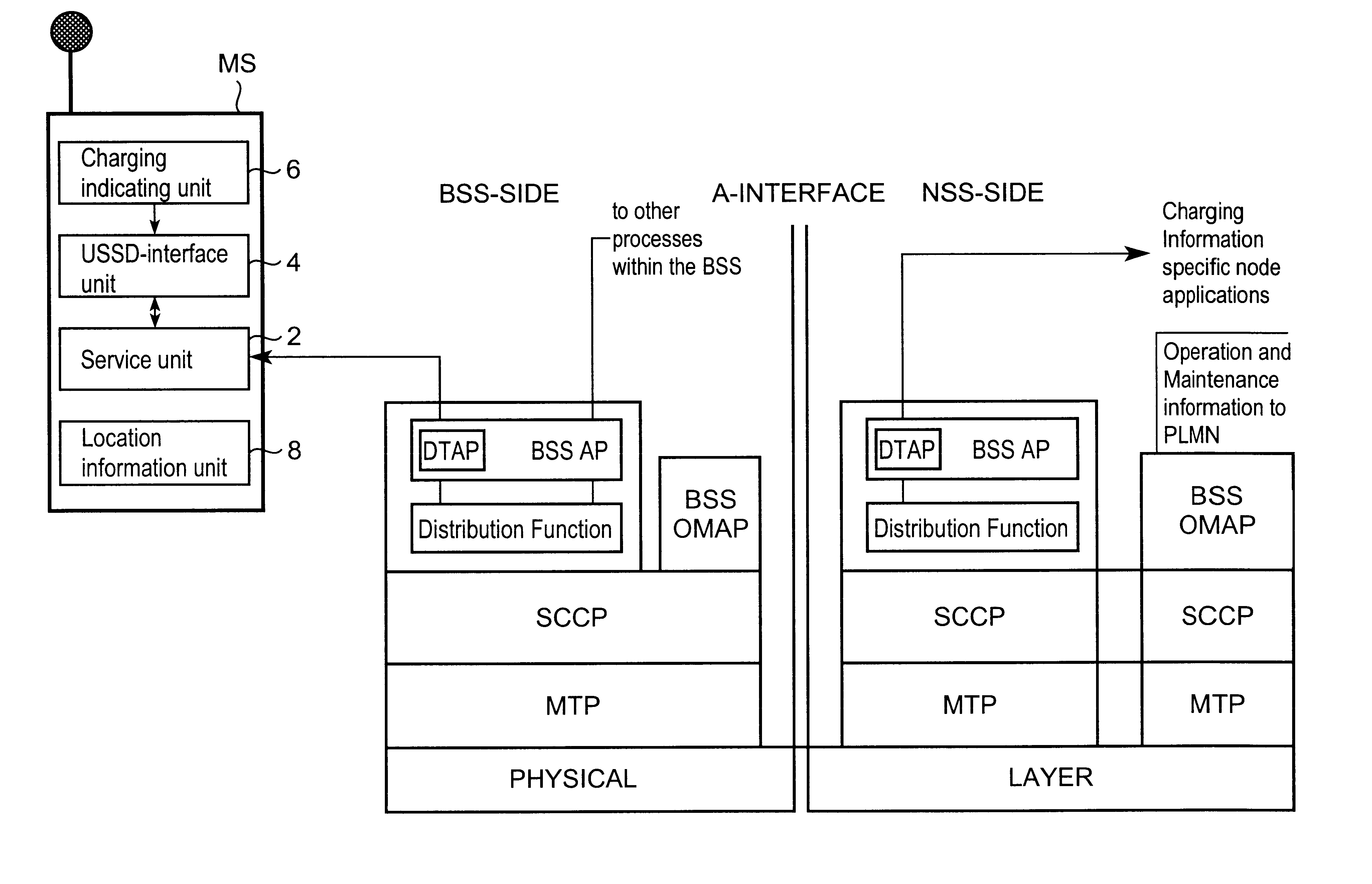
According to a further preferred embodiment of the present invention the mobile station MS roaming in the inventive digital cellular communication network is implemented as outlined above to
handle local operator generated charging information and charging information processed offline, e.g., during
call forwarding to the called mobile station MS. This embodiment of the present invention takes into account that the forwarding of services to a called mobile station and the charging therefore is usually executed in network nodes which therefore may best estimate related charging costs. Therefore, the mobile stations MS should only be adapted to receive the correct charging information, however, without any overhead to carry out an
estimation of the charging costs in the mobile station MS itself. Further, it is possible to minimize the communication necessary for the indication of charging information since related tasks are executed at places where the information is immediately available.


 Login to View More
  Login to View More