
Stress reduction pacing mode for arrhythmia prevention
a pacing mode and arrhythmia technology, applied in the field of heart disease diagnosis and treatment, can solve the problems of not being desirable to continuously pace at a pacing rate, most hemodynamically effective, not being desirable to continuously pace in certain patients, etc., to achieve the effect of relieving stress and preventing arrhythmias
- Summary
- Abstract
- Description
- Claims
- Application Information
AI Technical Summary
Benefits of technology
Problems solved by technology
Method used
Image

Examples
Embodiment Construction
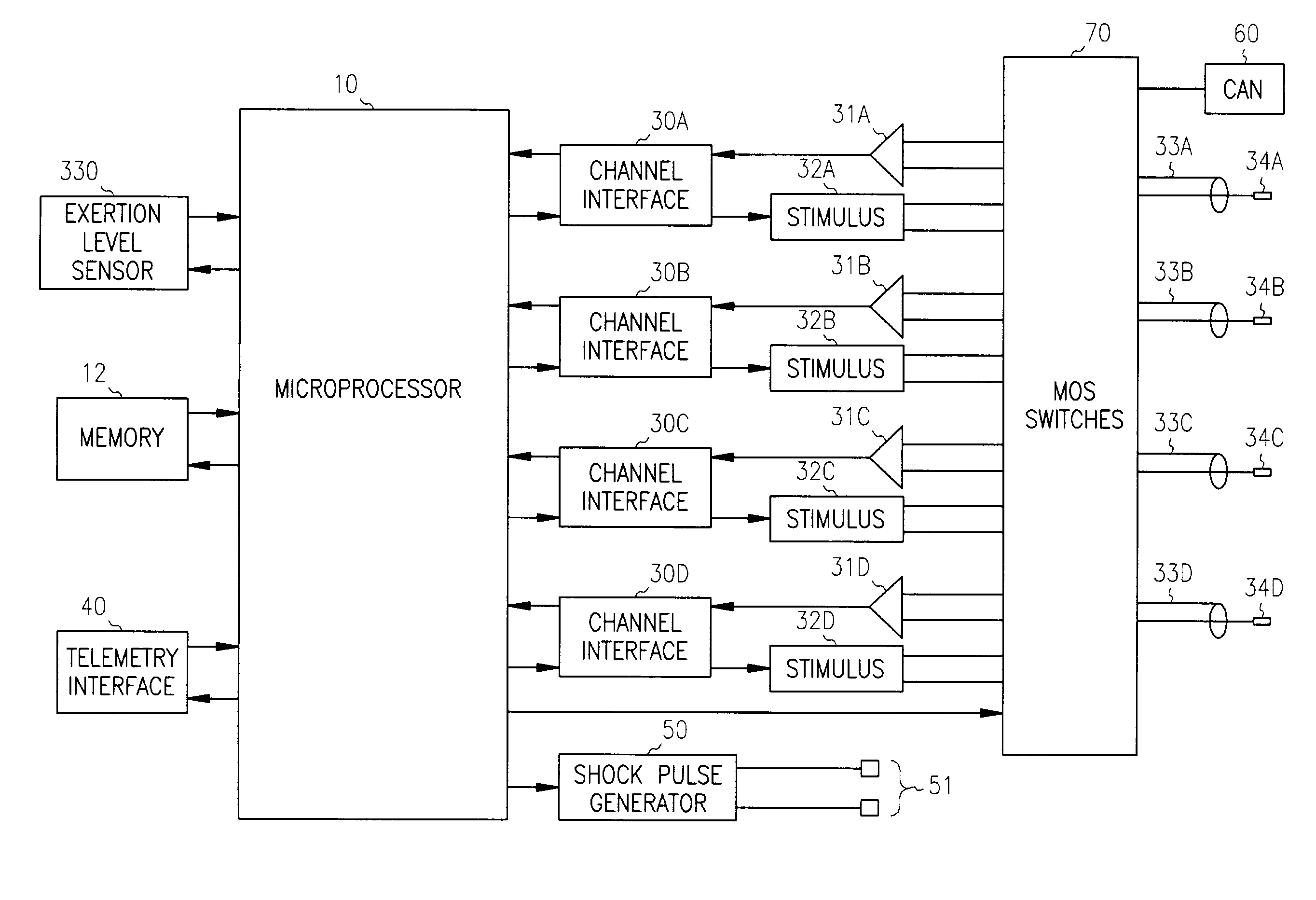
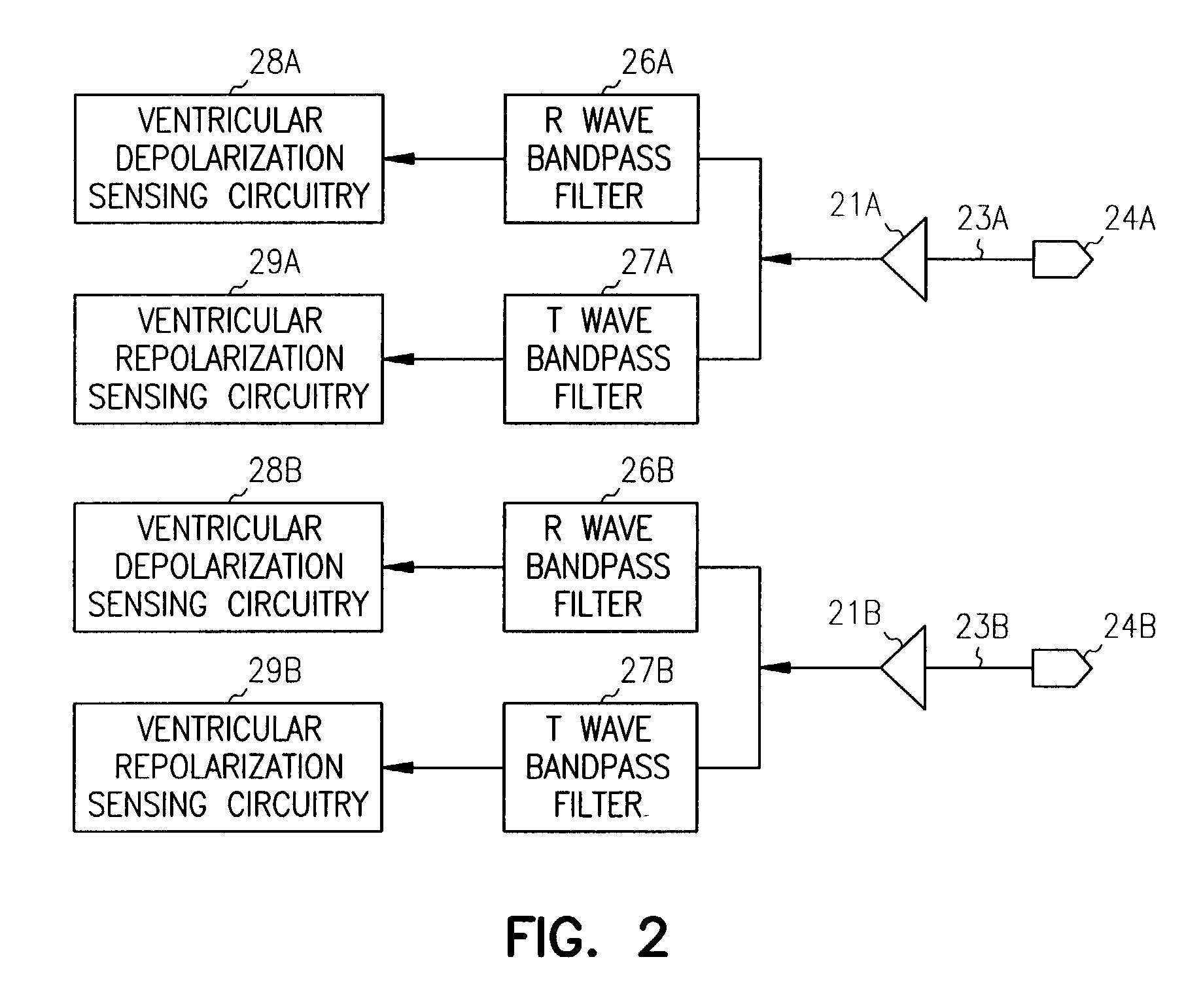
[0010]It is known that in certain patients, cardiac arrhythmias tend to arise in particular myocardial regions when those regions are subjected to mechanical and / or hypoxic stresses such as occur during systolic contractions. In accordance with the present invention, multi-site pacing is used to change the distribution of wall stress experienced by the ventricle during systole in order to mechanically unload those vulnerable regions and render them less likely to initiate an arrhythmia. An implanted cardiac rhythm management device may be configured to deliver such pacing therapy in response to the occurrence of a pre-arrhythmic condition as detected by a variety of means.
1. Stress Reduction Pacing Therapy
[0011]The degree to which a heart muscle fiber is stretched before it contracts is termed the preload. The maximum tension and velocity of shortening of a muscle fiber increases with increasing preload. The increase in contractile response of the heart with increasing preload is kn...
PUM
 Login to View More
 Abstract
Description
Claims
Application Information
 Login to View More