
Packable battering ram
a battering ram and packaging technology, applied in the field of forced entry devices, can solve the problems of not being able to act as cutting, chopping, or prying devices, and the design of typical battering rams, and achieve the effects of convenient packing and deployment, minimal hindrance to movement or function, and convenient transportation
- Summary
- Abstract
- Description
- Claims
- Application Information
AI Technical Summary
Benefits of technology
Problems solved by technology
Method used
Image

Examples
Embodiment Construction
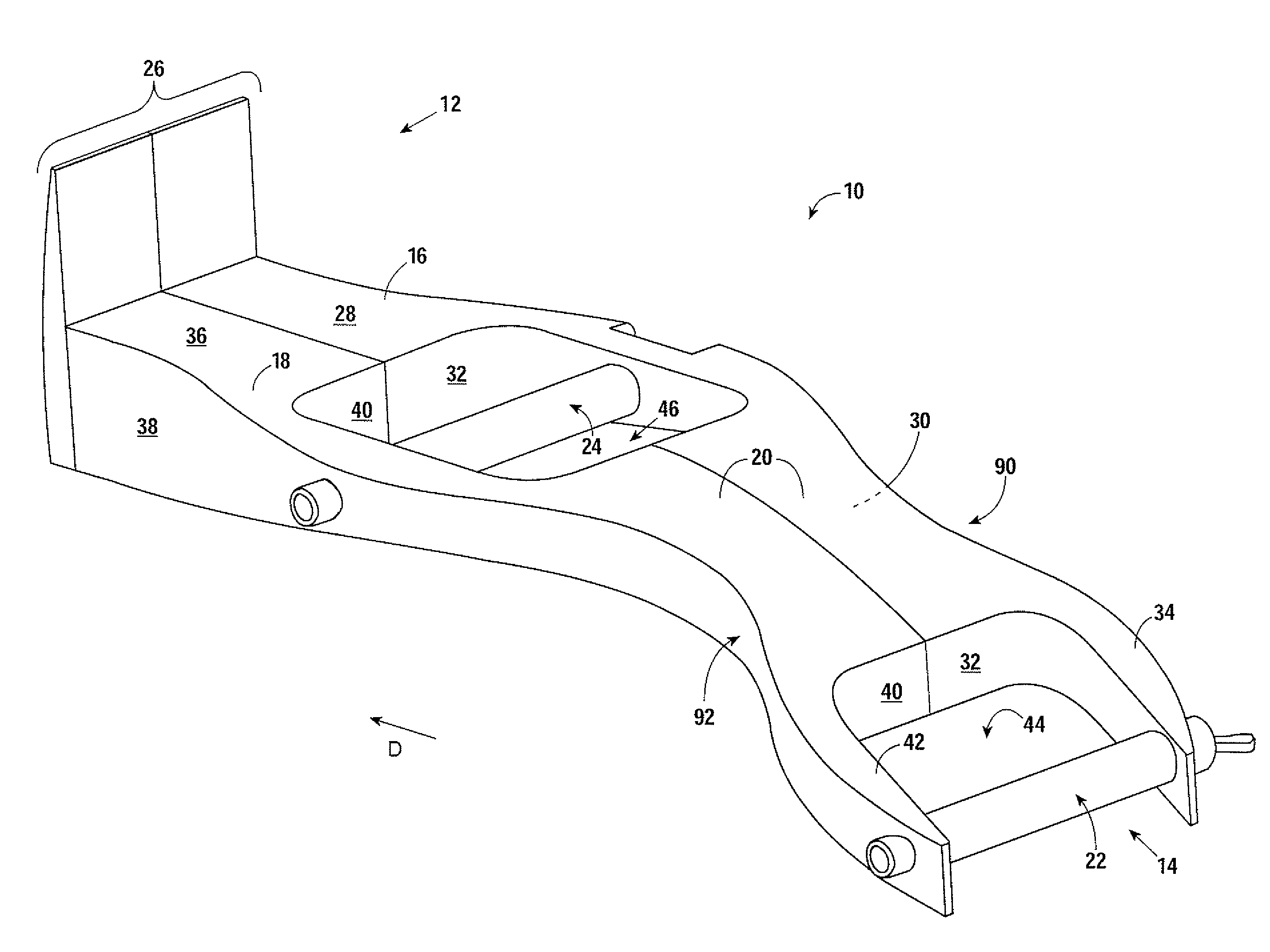
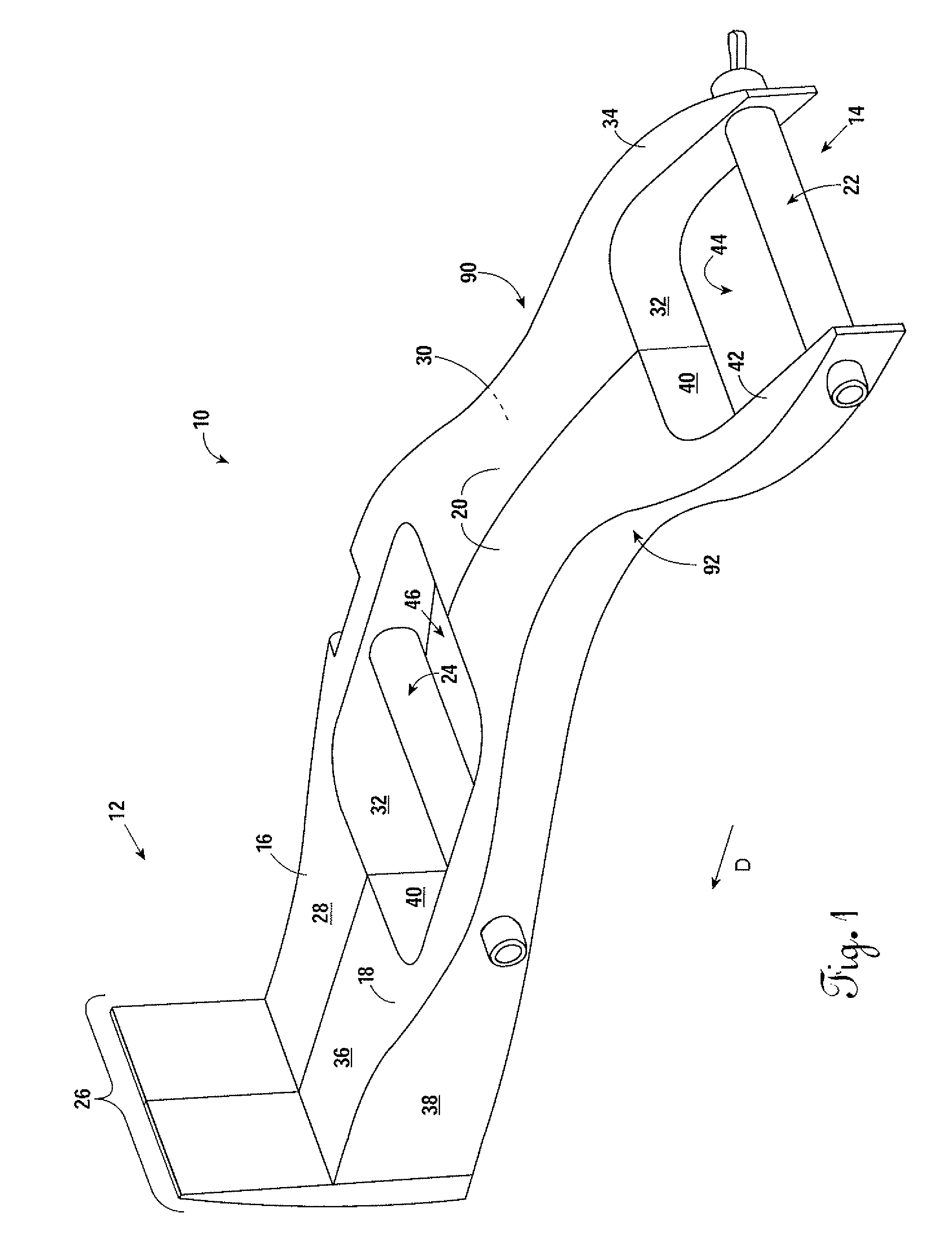
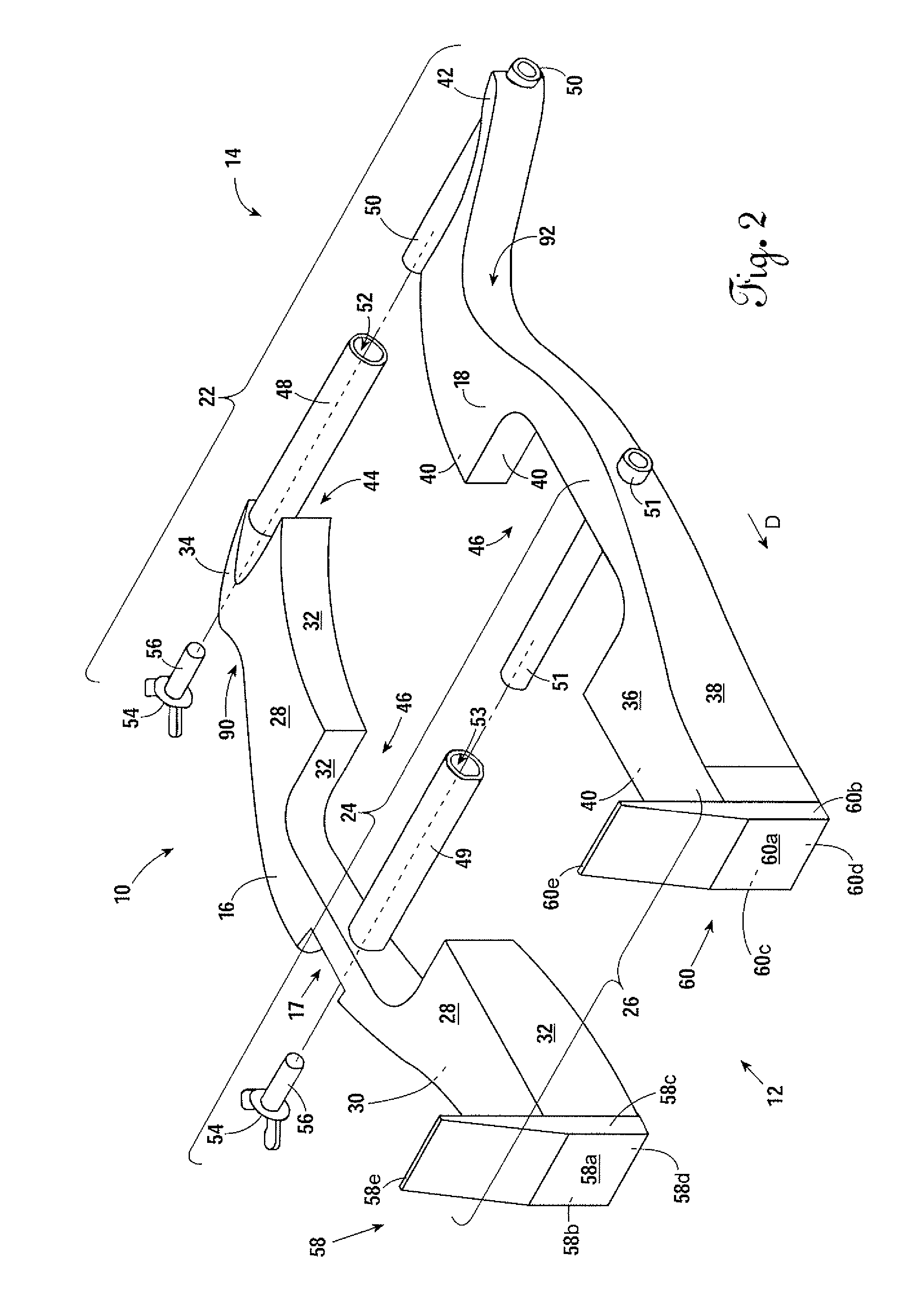
[0018]FIG. 1 is a perspective view of the preferred embodiment of a packable battering ram 10 that incorporates the limitations of the present invention. The battering ram 10 has a ramming end 12 and a handle end 14, and further includes a first body member 16 and a second body member 18 that is substantially symmetrical in shape to the first body member 16. The first and second body members 16, 18, which together compose the main body 20, are connected with a first handle assembly 22 at the handle end 14 and a second handle assembly 24 positioned between the ramming end 12 and the first handle assembly 22. A ramming head 26 is attached to the first and second body members 16, 18 at the ramming end 12.
[0019]The first body member 16 has a top surface 28, an outer sidewall 30, and an inner sidewall 32. A first side member 34 is integrally formed into the first body member 16 to expose the inner sidewall 32 proximal to the handle end 14. Similarly, the second body member 18 has a top s...
PUM
| Property | Measurement | Unit |
|---|---|---|
| weight | aaaaa | aaaaa |
| weight | aaaaa | aaaaa |
| curvature | aaaaa | aaaaa |
Abstract
Description
Claims
Application Information
 Login to View More