
Antenna array formed by a network of transceivers
a transceiver and network technology, applied in the field of communication systems, can solve the problems of increasing increasing the cost of sensors and the associated transceiver hardware, and reducing the number of network users, so as to improve the data rate, reduce the observability, and increase the spectral reuse
- Summary
- Abstract
- Description
- Claims
- Application Information
AI Technical Summary
Benefits of technology
Problems solved by technology
Method used
Image

Examples
Embodiment Construction
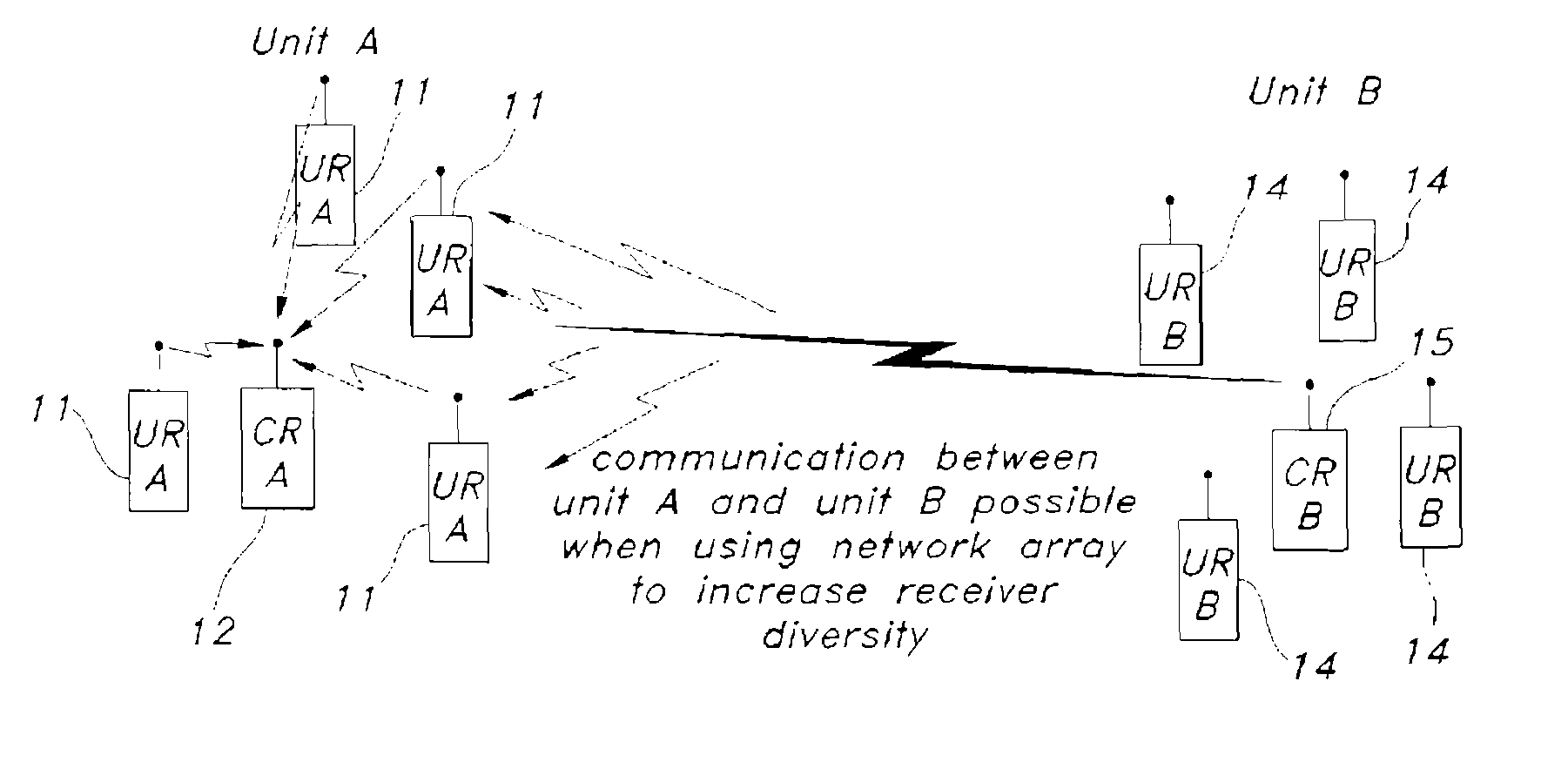
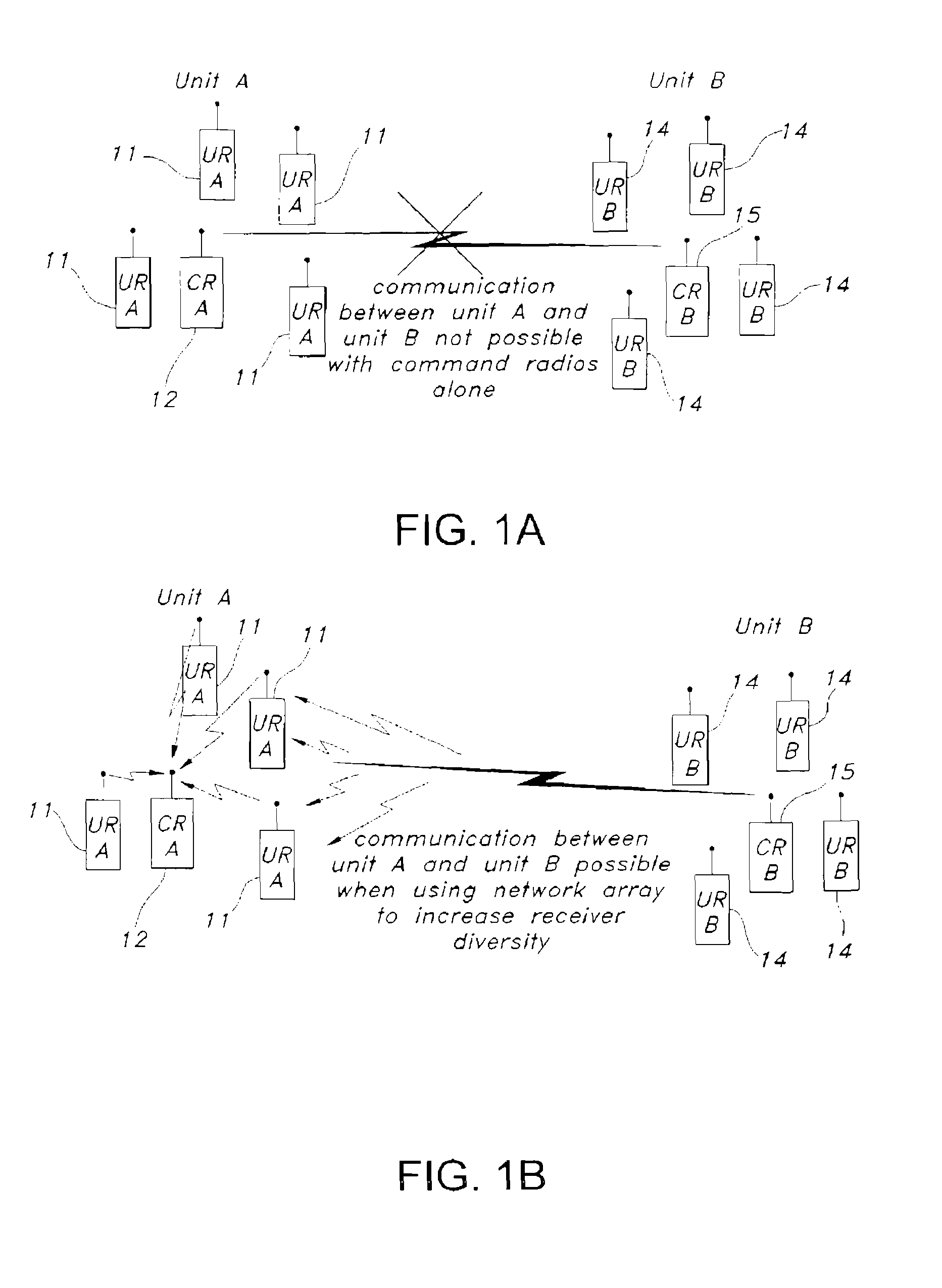
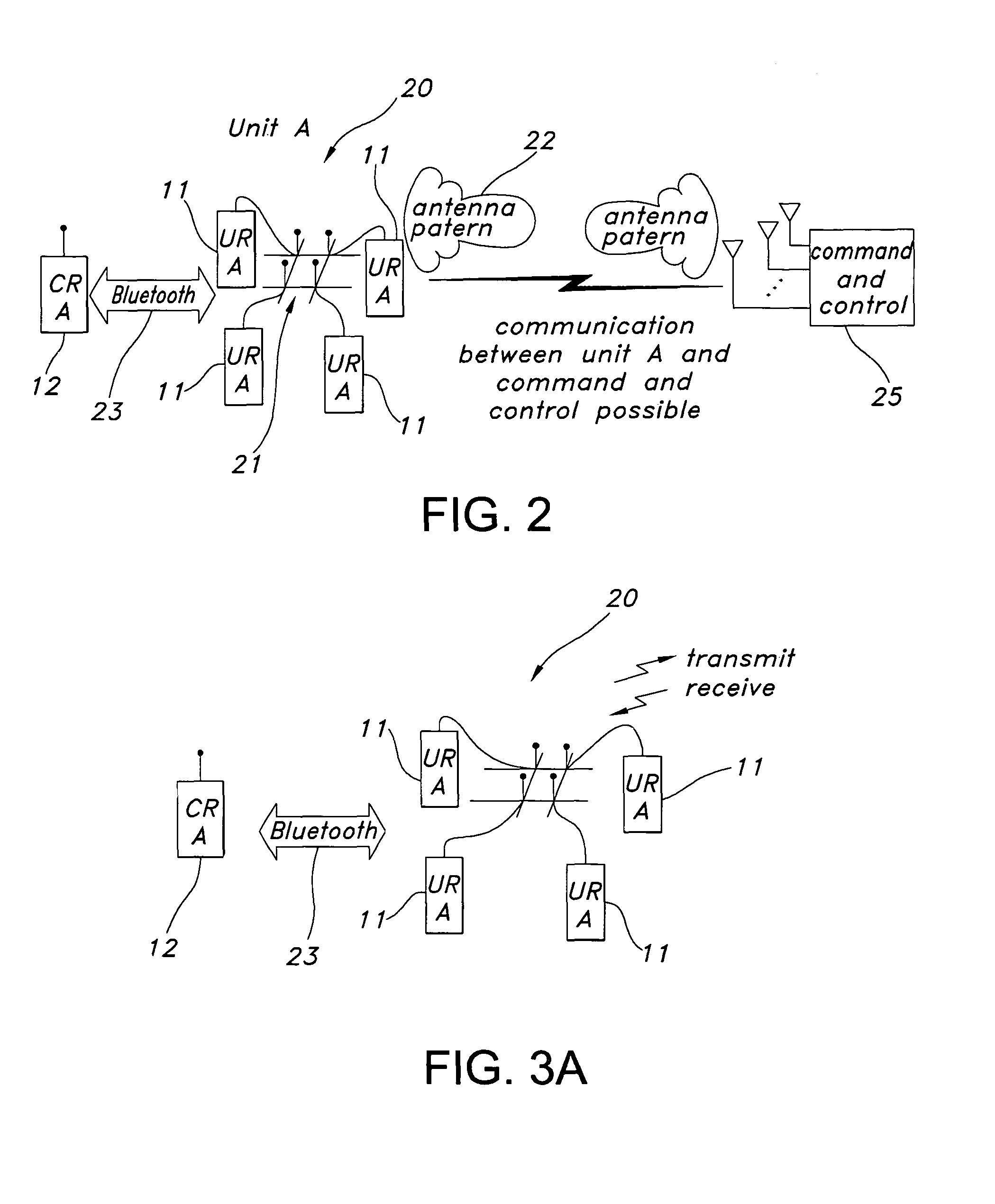
[0026]The invention described herein is for an antenna array formed by utilizing individual transceivers to form a network array. The network array may be supported by signal processing and a data link.
[0027]The use of multi-element antenna arrays to enhance communications is a topic of intense research. Multi-element antenna arrays are connected to transceivers integrated to a single processor to benefit from digital beam forming (DBF) or space-time algorithms. Two common types of spacing for elements of antenna arrays are greater than half-wavelength and typically multiple wavelength spacing for space-time diversity and less than or equal to half-wavelength spacing for DBF.
[0028]MIMO processing often implies antenna elements of an array having multiple wavelength separation. The objective is to encourage and make use of independent multipath propagation to create parallel channels in the same band. Multipath decorrelates signals creating the parallel channels thereby increasing sy...
PUM
 Login to View More
 Abstract
Description
Claims
Application Information
 Login to View More