
Capture node for use in an audiovisual signal routing and distribution system
a technology of audiovisual signal and capture node, which is applied in the field of audiovisual signal routing and distribution systems, can solve the problems of inability to send multiple input audiovisual signals to the same output device, inability to support all video formats, and incomplete video switches, etc., and achieves simple format conversion between source and display, high quality video, and ease of installation.
- Summary
- Abstract
- Description
- Claims
- Application Information
AI Technical Summary
Benefits of technology
Problems solved by technology
Method used
Image

Examples
Embodiment Construction
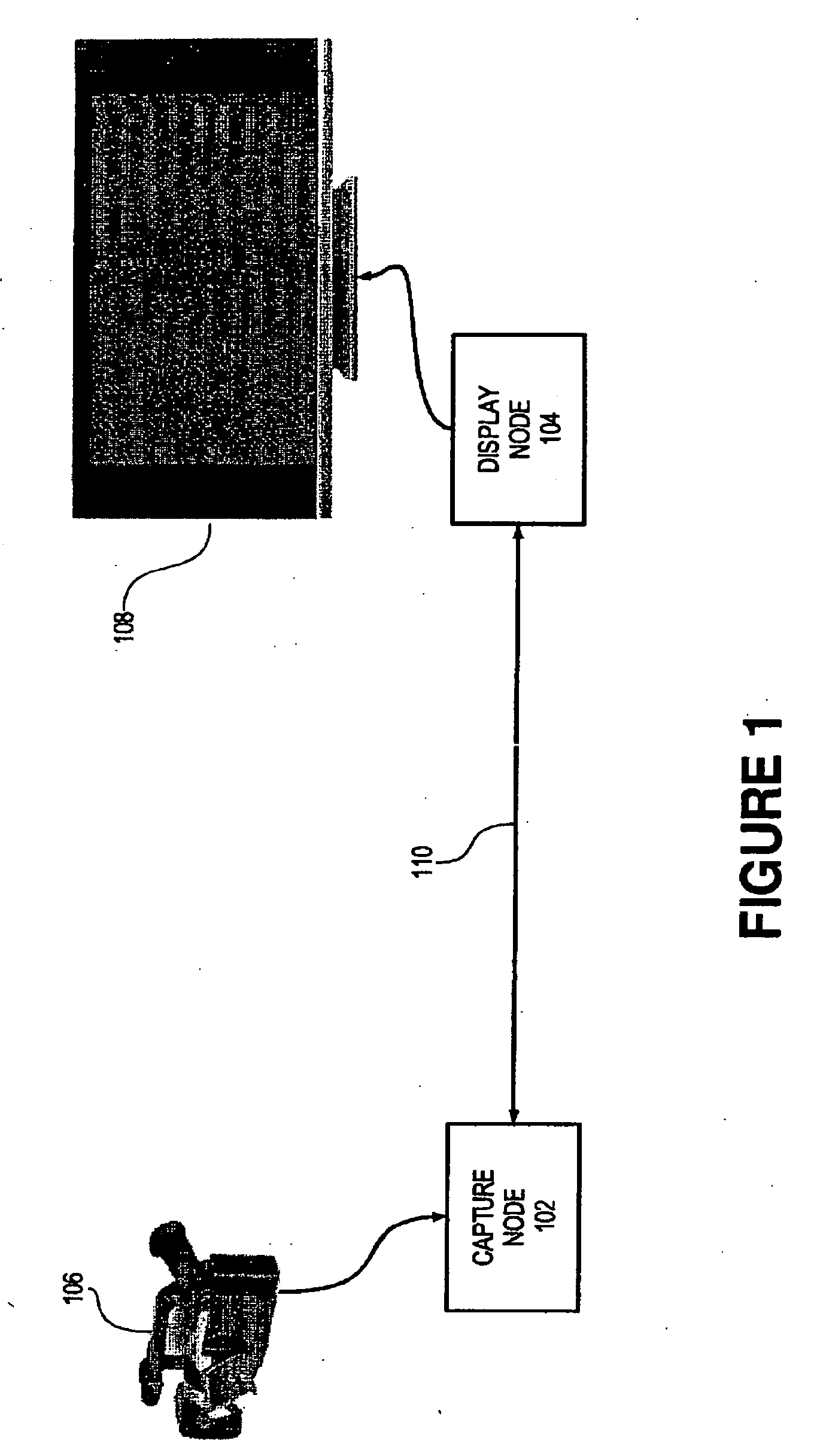
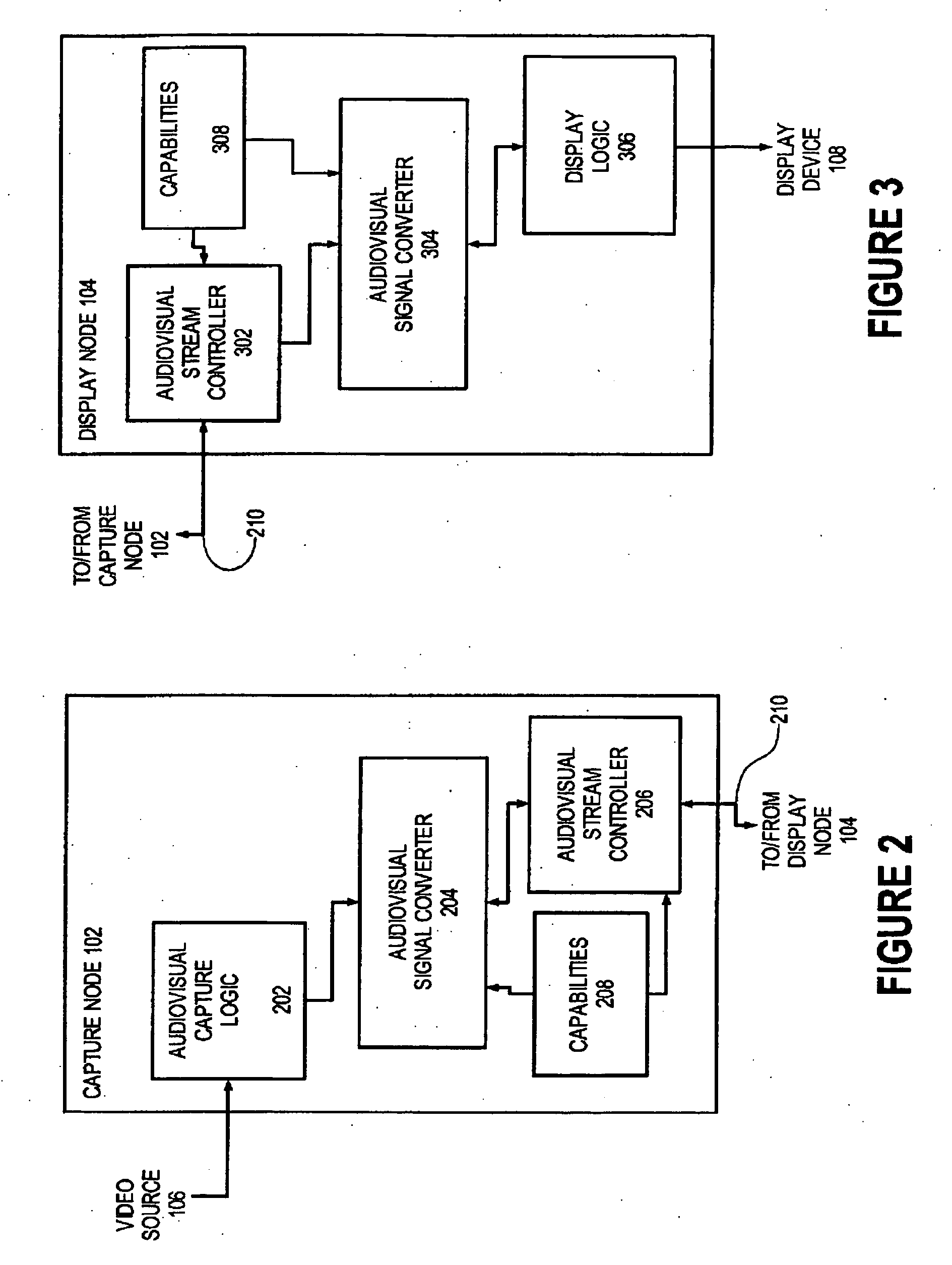
[0030] In accordance with the present invention, a capture node 102 (FIG. 1) and a display node 104 cooperate to transmit an audiovisual signal from a video source 106 to a display device 108 according to one or more digital audiovisual data formats, sometimes referred to herein as audiovisual interchange formats. Capture node 102 receives an audiovisual signal in a native format from source 106 and converts the audiovisual signal to a selected video interchange format for transmission to display node 104. Display node 104 receives the digital audiovisual signal in the selected video interchange format, converts the audiovisual signal to a displayable format supported by display device 108, and sends the audiovisual signal in the displayable format to display device 108.
[0031] As used herein, a “node” is any device or logic which can communicate through a network.
[0032] To facilitate appreciation and understanding of the following description, the various audiovisual signal format...
PUM
 Login to View More
 Abstract
Description
Claims
Application Information
 Login to View More