
Signal processing apparatus
a signal processing and signal technology, applied in the field of signal processing, can solve the problems of distorting the measured signal, ineffective conventional filtering techniques in extracting either the primary or secondary signal, and erratic energy attenuation
- Summary
- Abstract
- Description
- Claims
- Application Information
AI Technical Summary
Benefits of technology
Problems solved by technology
Method used
Image

Examples
Embodiment Construction
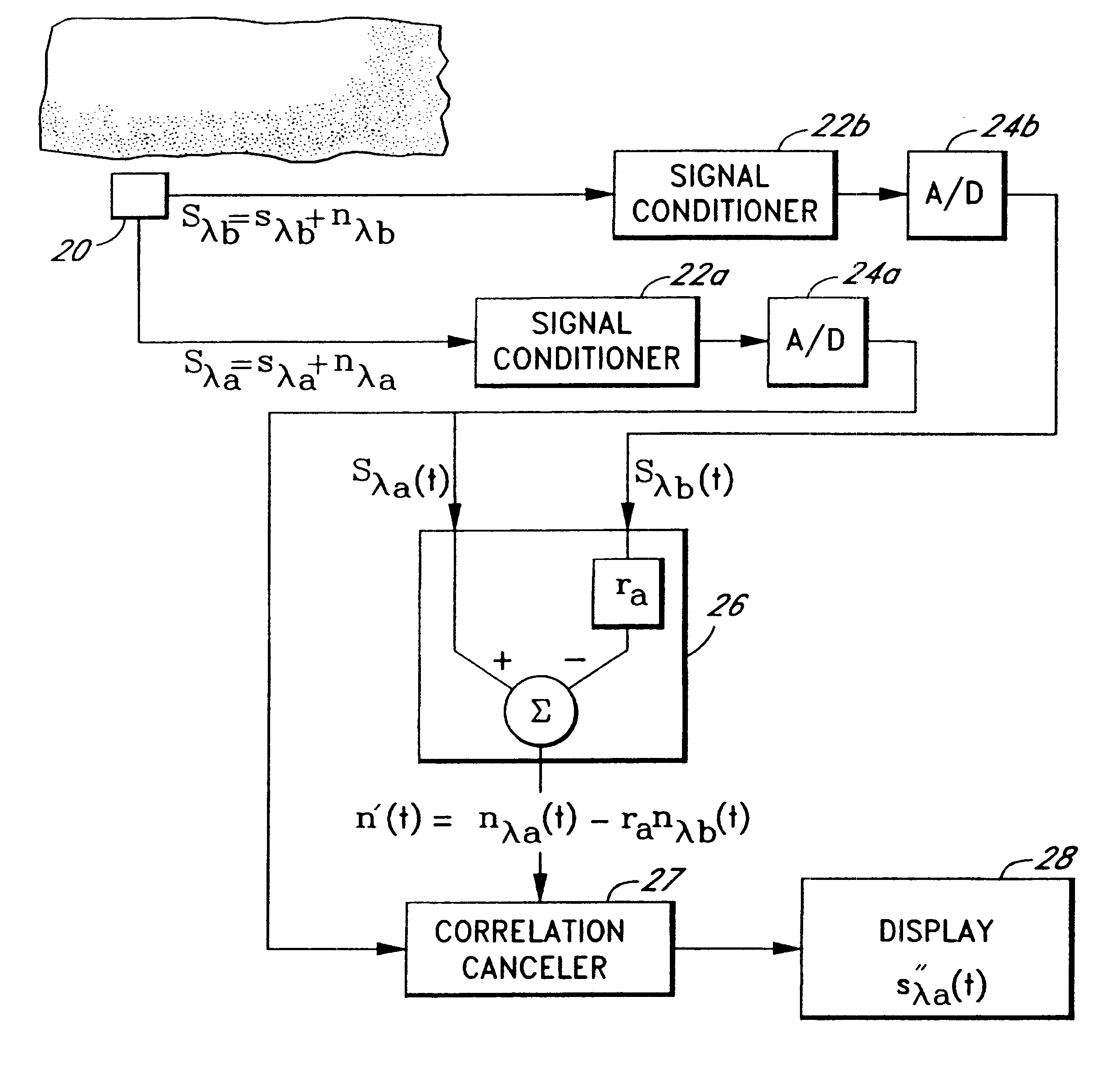
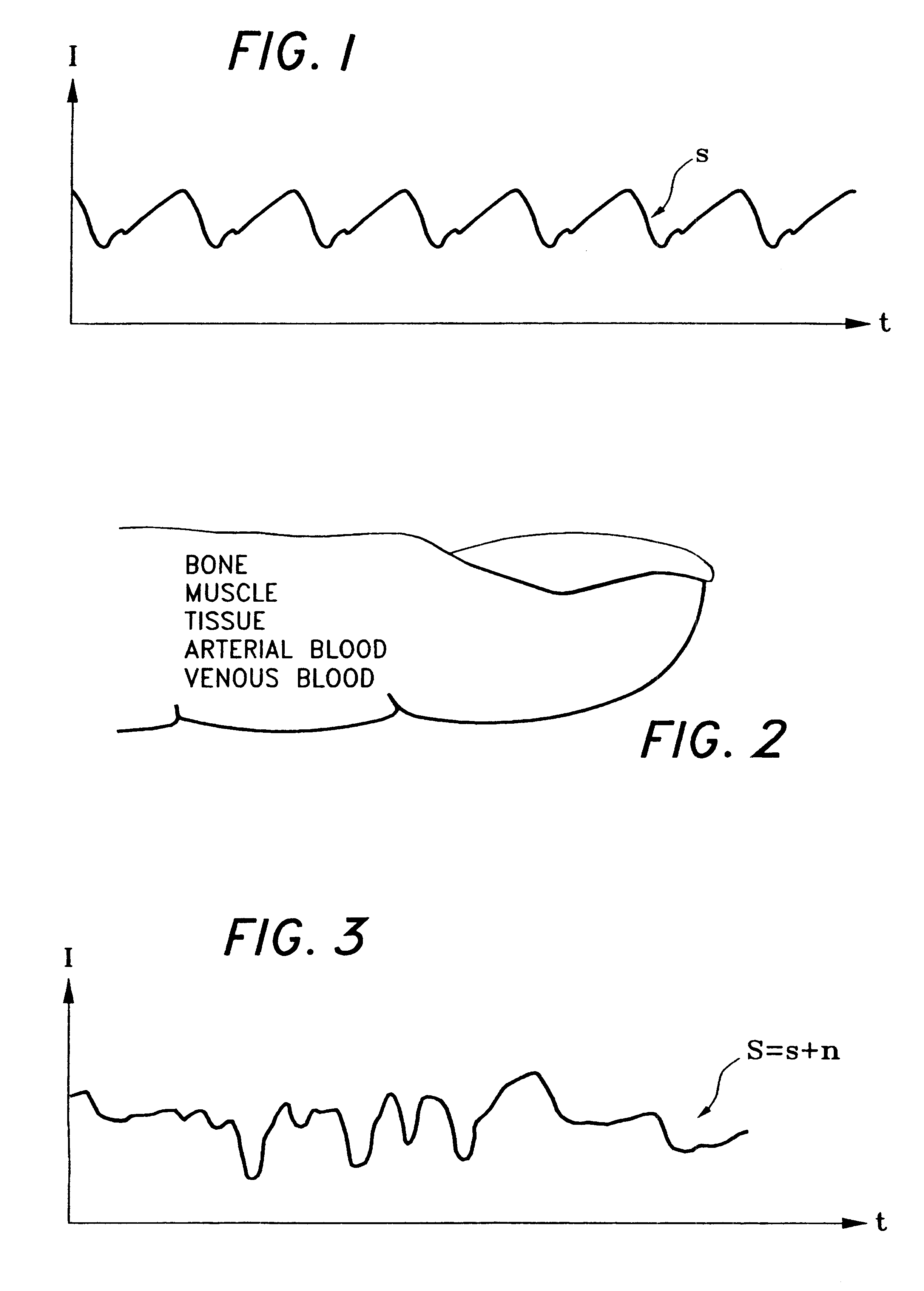
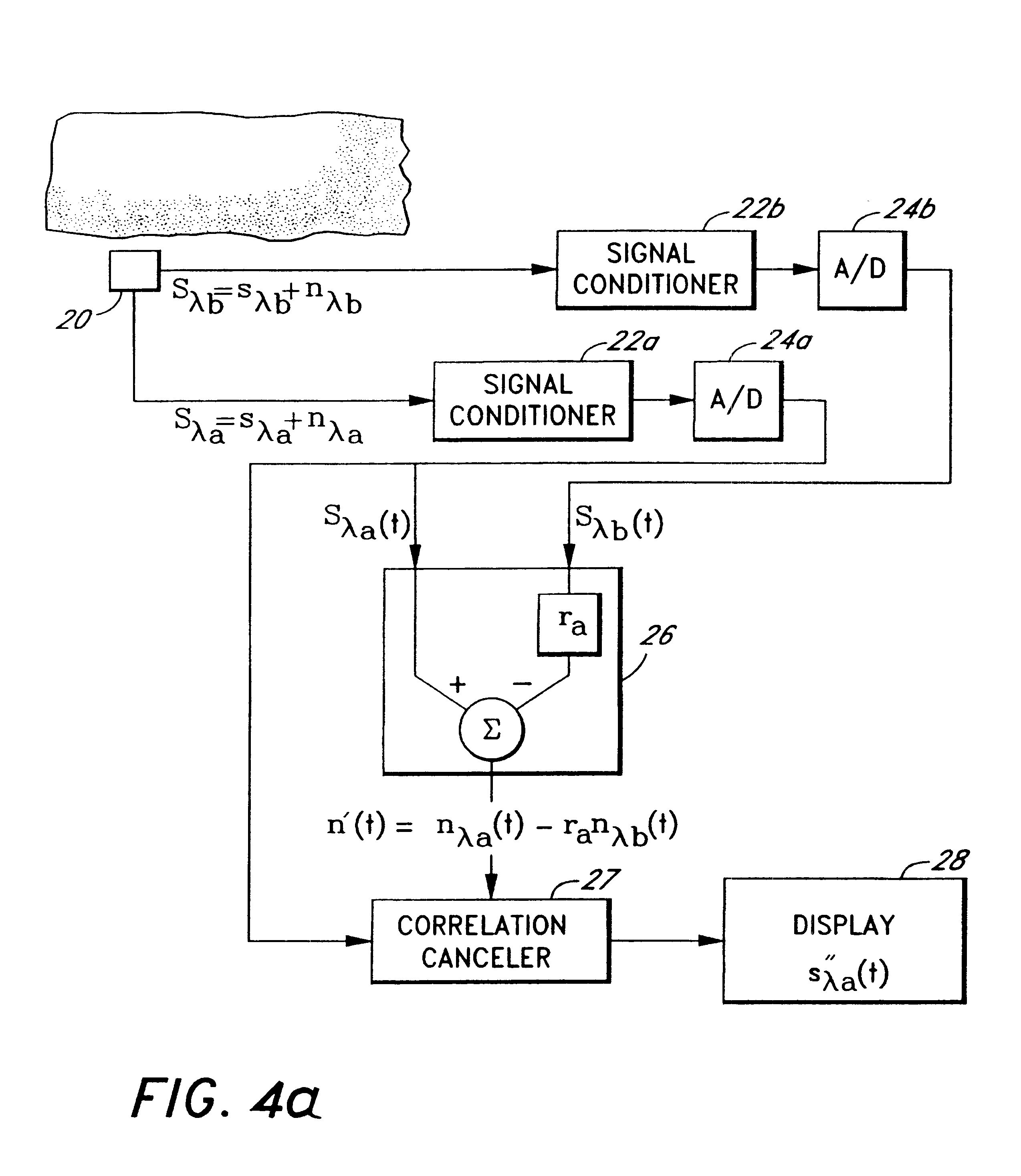
The present invention involves a system which utilizes first and second measured signals that each contain a primary signal portion and a secondary signal portion. In other words, given a first and second composite signals S.sub.1 (t)=s.sub.1 (t)+n.sub.1 (t) and S.sub.2 (t)=s.sub.2 (t), the system of the present invention can be used to isolate either the primary signal portion s(t) or the secondary signal portion n(t). Following processing, the output of the system provides a good approximation n"(t) to the secondary signal portion n(t) or a good approximation s"(t) to the primary signal portion s(t).
The system of the present invention is particularly useful where the primary and / or secondary signal portion n(t) may contain one or more of a constant portion, a predictable portion, an erratic portion, a random portion, etc. The primary signal approximation s"(t) or secondary signal approximation n"(t) is derived by removing as many of the secondary signal portions n(t) or primary si...
PUM
 Login to View More
 Abstract
Description
Claims
Application Information
 Login to View More