
Preparation method for (2S, 3aR, 7aS)-octahydro indole-2-benzyl formate
A technology of benzyl formate and indoline, which is applied in the field of preparation of pharmaceutical intermediates, can solve the problems of carry-in, difficult separation of impurities, severe selective hydrogenation reaction, etc., and achieves high yield, good optical activity, and improved reaction. effect of speed
Patent Information
- Authority / Receiving Office
- CN · China
- Current Assignee / Owner
- Publication Date
- 2012-01-18
Smart Images
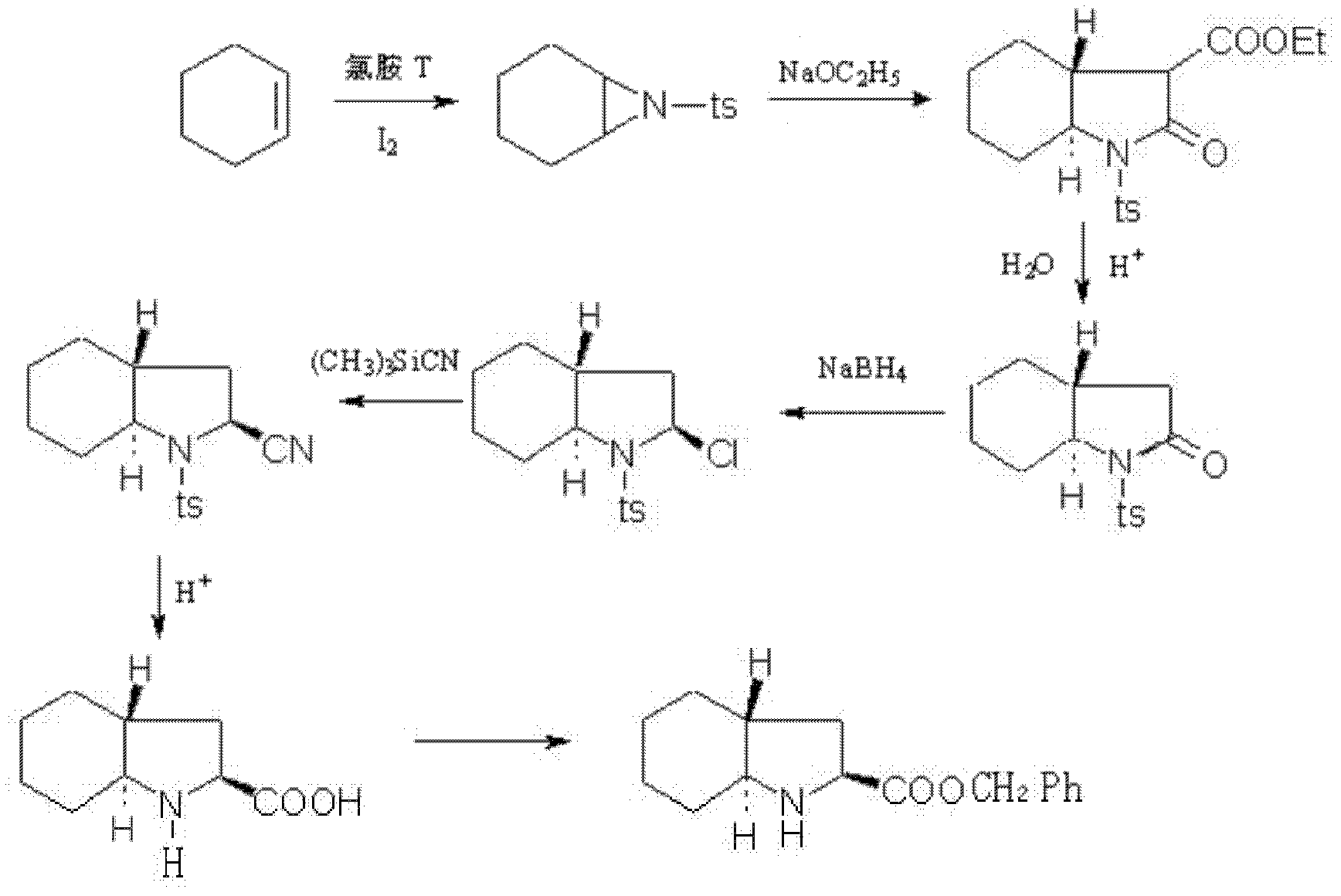
Figure 1 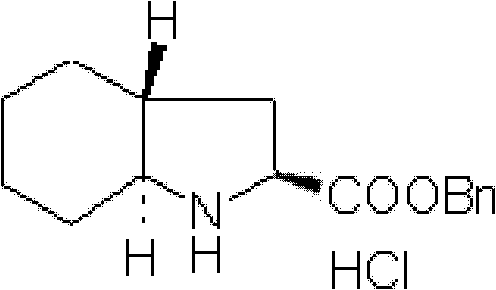
Figure 2 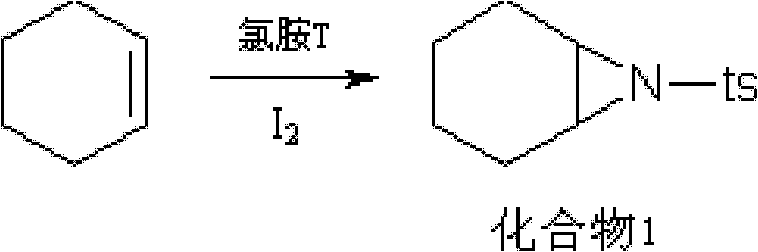
Figure 3
Abstract
Description
technical field
[0001] The invention relates to a preparation method of a pharmaceutical intermediate. Background technique
[0002] Cardiovascular disease is one of the most serious diseases in the world, and its morbidity and mortality have surpassed tumor diseases to rank first in the world. In recent years, the long-acting angiotensinase inhibitor trandolapril has attracted the attention of many researchers because of its ability to treat a variety of cardiovascular diseases. The drug has the advantages of significant curative effect, long duration of action, and few side effects. Recently, it has also been found that trandolapril can effectively improve peripheral neuropathy in normotensive patients. (2S, 3aR, 7aS)-benzyl octahydroindole-2-carboxylate (structural formula is shown below) is the key intermediate of trandolapril, which can be synthesized through two-step reaction. There are three chiral centers in the structure, and its optical purity directly affects th...
Examples
Embodiment 1
[0035] 1. Cis-addition reaction:
[0036] Chloramine-T (1.775mol), cyclohexene (4.4mol), I 2 (0.11mol) was added in 1491ml of acetonitrile, reacted at natural room temperature for 24 hours, and evaporated the solvent under reduced pressure to obtain 453.5g of the red oily product of this step, yield: 102%, 1 H NMR (CDCl 3 , 300MHz) δ(ppm): 1.16~1.26(m, 2H); 1.33~1.45(m, 2H); 2.42(s, 3H); 2.96(s, 2H); 7.46~7.57(m, 3H); 7.31 (d, 2H, J=7.78Hz); 7.80(d, 2H, J=6.7Hz);
[0037] 2. Closed-loop hydrolysis reaction:
[0038] Diethyl malonate (2.72mol) was added into a solution of tetrahydrofuran (1650ml) dissolved with sodium ethoxide (3.48mol), heated to reflux for 45 minutes, and slowly added dropwise to tetrahydrofuran (1767ml) of the product (453.5g) obtained in step (1). ) solution, reflux reaction for 15 hours, down to room temperature, and decompression to remove the solvent; add ethyl acetate to dissolve the resulting product, add 1256ml of water, stir and dissolve, adjust ...
Embodiment 2
[0052] 1. Cis-addition reaction:
[0053] Chloramine-T (1.775mol), cyclohexene (3.55mol), I 2 (0.10mol) was added in 1491ml of acetonitrile, reacted at natural room temperature for 24 hours, and evaporated the solvent under reduced pressure to obtain 444.6g of the red oily product of this step, yield: 100%, 1 H NMR (CDCl 3 , 300MHz) δ(ppm): 1.16~1.26(m, 2H); 1.33~1.45(m, 2H); 2.42(s, 3H); 2.96(s, 2H); 7.46~7.57(m, 3H); 7.31 (d, 2H, J=7.78Hz); 7.80(d, 2H, J=6.7Hz);
[0054] 2. Closed-loop hydrolysis reaction:
[0055] Diethyl malonate (2.7mol) was added into a solution of tetrahydrofuran (1345ml) dissolved with sodium ethoxide (3.3mol), heated to reflux for 30 minutes, and slowly added dropwise to tetrahydrofuran (1732ml) of the product (444.6g) obtained in step (1). ) solution, reflux reaction for 15 hours, down to room temperature, and evaporate the solvent under reduced pressure; add ethyl acetate to dissolve the resulting product, then add 1112ml of water, stir and diss...
Embodiment 3
[0069] 1. Cis-addition reaction:
[0070] Chloramine-T (1.775mol), cyclohexene (5.3mol), I 2 (0.14mol) was added in 1491ml of acetonitrile, and the natural room temperature was reacted for 24 hours under the condition of 25° C., and the solvent was evaporated under reduced pressure to obtain 462.4 g of the red oily product of step (1), yield: 104%, 1 HNMR (CDCl 3 , 300MHz) δ(ppm): 1.16~1.26(m, 2H); 1.33~1.45(m, 2H); 2.42(s, 3H); 2.96(s, 2H); 7.46~7.57(m, 3H); 7.31 (d, 2H, J=7.78Hz); 7.80(d, 2H, J=6.7Hz);
[0071] 2. Closed-loop hydrolysis reaction:
[0072] Diethyl malonate (3.2mol) was added into a solution of tetrahydrofuran (2000ml) dissolved with sodium ethoxide (4.8mol), heated to reflux for 2h, and slowly added dropwise to tetrahydrofuran (1800ml) of the product (462.4g) obtained in step (1) solution, reflux reaction for 18 hours, down to room temperature, and evaporate the solvent under reduced pressure; add 1800ml of ethyl acetate, 1380ml of water, stir and dissolv...