
Method for producing laminated film
一种制造方法、薄膜的技术,应用在层叠薄膜领域,能够解决透明导电性薄膜白化等问题
Patent Information
- Authority / Receiving Office
- CN · China
- Patent Type
- Patents(China)
- Current Assignee / Owner
- Publication Date
- 2014-06-18
Smart Images
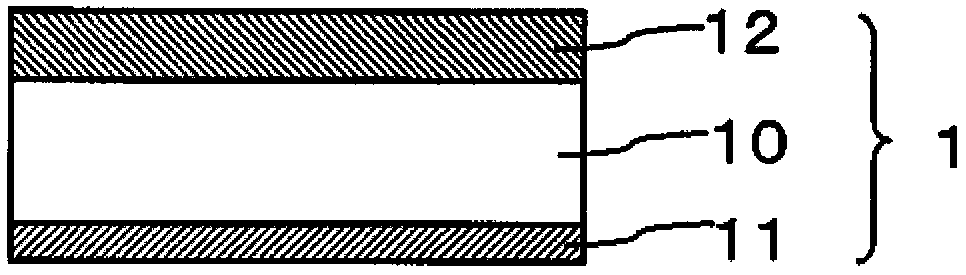
Figure 1 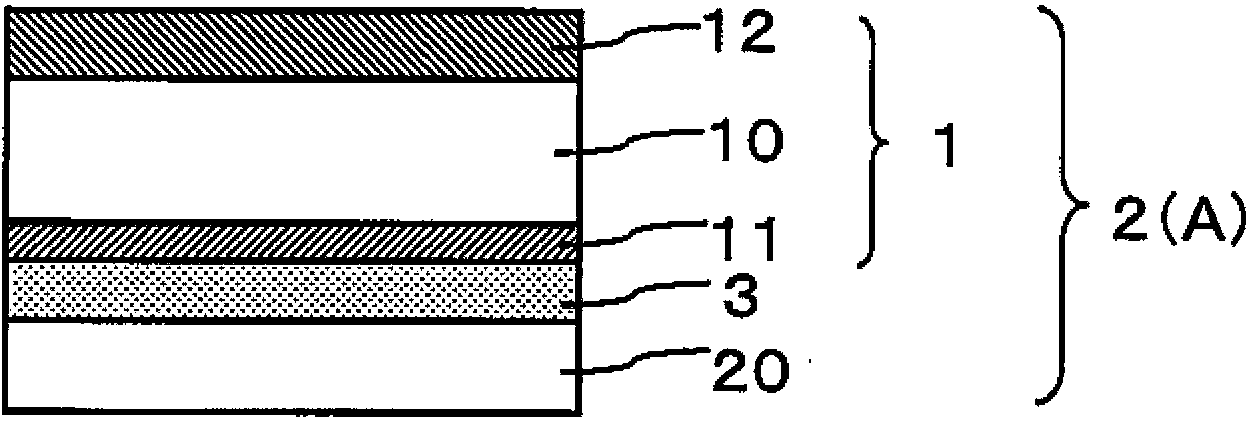
Figure 2 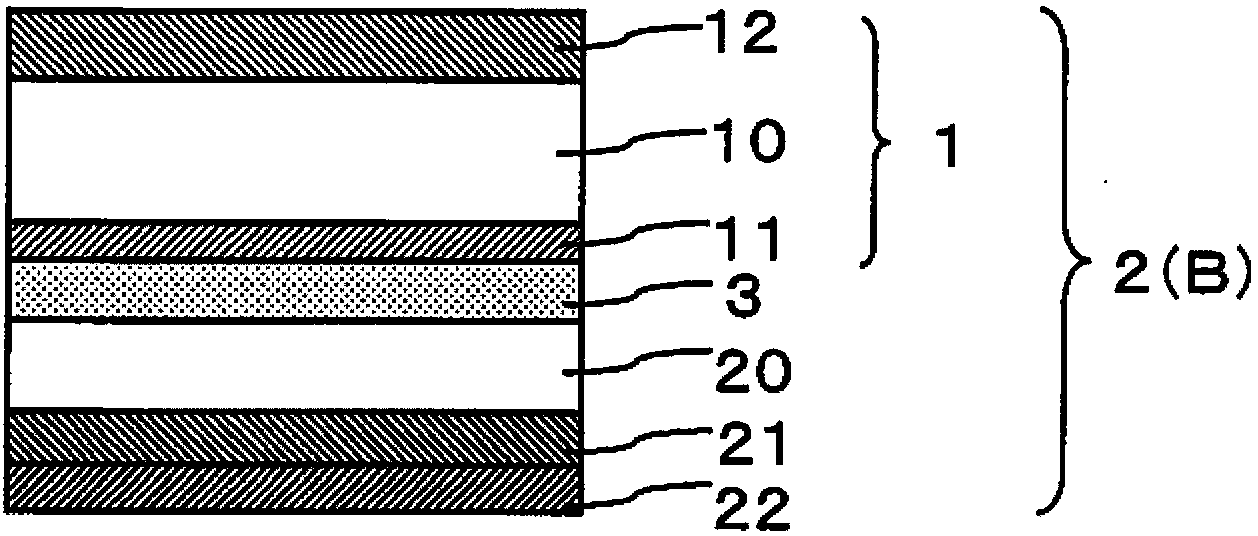
Figure 3
Abstract
Description
technical field
[0001] The present invention relates to a method for producing a laminated film (first laminated film) having a cured layer on one or both surfaces of a heat-shrinkable first transparent resin film. The first laminated film obtained by this production method is used to form a second laminated film by laminating a heat-shrinkable second transparent resin film on the cured layer via an adhesive layer. It can be used in various applications such as optical applications.
[0002] For example, when the second transparent resin film has a transparent conductive film, the second laminated film can be used as a laminate of transparent conductive films. The transparent conductive film can be used as a transparent electrode in a display system such as a liquid crystal display or an electroluminescent display, or a touch panel such as an optical system, an ultrasonic system, an electrostatic capacitance system, or a resistive film system. In addition, transparent conduc...
Examples
Embodiment 1
[0105] (Formation of hard coat layer)
[0106] As a hard coat forming material, it was prepared as follows: Add 5 parts by weight of 1-hydroxy-cyclohexyl-phenyl to 100 parts by weight of acrylic and polyurethane resin (UNIDIC17-806 manufactured by DAINIPPON INK AND CHMICALS INCORPORATED (DIC)) Ketone (IRGACURE184, manufactured by Ciba Specialty Chemicals Co., Ltd.) was diluted with toluene to a concentration of 30% by weight as a photopolymerization initiator.
[0107] The material for forming the hard coat layer was applied as a first transparent resin film on one side of a polyethylene terephthalate film having a thickness of 125 μm, and dried at 90° C. for 3 minutes. Thereafter, use a high-pressure mercury lamp at a cumulative light intensity of 300mJ / cm 2 Under UV irradiation, a hard coat layer with a thickness of 7 µm was formed.
[0108] (Preparation of the first lamination film: Formation of the cured layer)
[0109] Prepare a cured layer forming material containing ...
Embodiment 2
[0117] In the preparation of the first laminated film (formation of the cured layer) in Example 1, except for the use of 2-hydroxy-1-{4-[4-(2-hydroxy-methyl-propionyl)benzyl]phenyl}- 2-Methyl-propan-1-one (IRGACURE127, manufactured by Ciba Specialty Chemicals, 10% thermal weight loss temperature in the thermal weight loss test: 263°C) was used as a photopolymerization initiator, and a second laminated film was obtained in the same manner as in Example 1. . In addition, crystallization treatment was performed in the same manner as in Example 1.
reference example 1
[0121] 1-Hydroxy-cyclohexyl-phenyl ketone (IRGACURE184, manufactured by Ciba Specialty Chemicals, Inc., 10% thermal weight loss temperature in the thermal weight loss test: 154°C) was used in the production of the first laminated film of Example 1 (formation of the cured layer) A second laminated film was obtained in the same manner as in Example 1, except that the drying temperature of the coating layer was changed to 80° C. as the photopolymerization initiator, and heat treatment was performed at 150° C. for 1 minute after ultraviolet irradiation. In addition, crystallization treatment was performed in the same manner as in Example 1.
[0122] The following evaluations were performed on the first laminated film obtained in Examples and Comparative Examples and the second laminated film (transparent conductive laminated film) subjected to the crystallization treatment. The results are shown in Table 1. In addition, Table 1 describes the thermal weight loss of the photoinitia...