
A kind of stabilization method of organic nanostructure
A nano-structure and organic technology, applied in the field of organic polymer and nano-material science, can solve the problems that there are no relevant reports on the stabilization of organic nano-structures, and achieve long-term non-destructive preservation, simple operation process and wide application range
Patent Information
- Authority / Receiving Office
- CN · China
- Patent Type
- Patents(China)
- Current Assignee / Owner
- Publication Date
- 2020-07-28
Smart Images
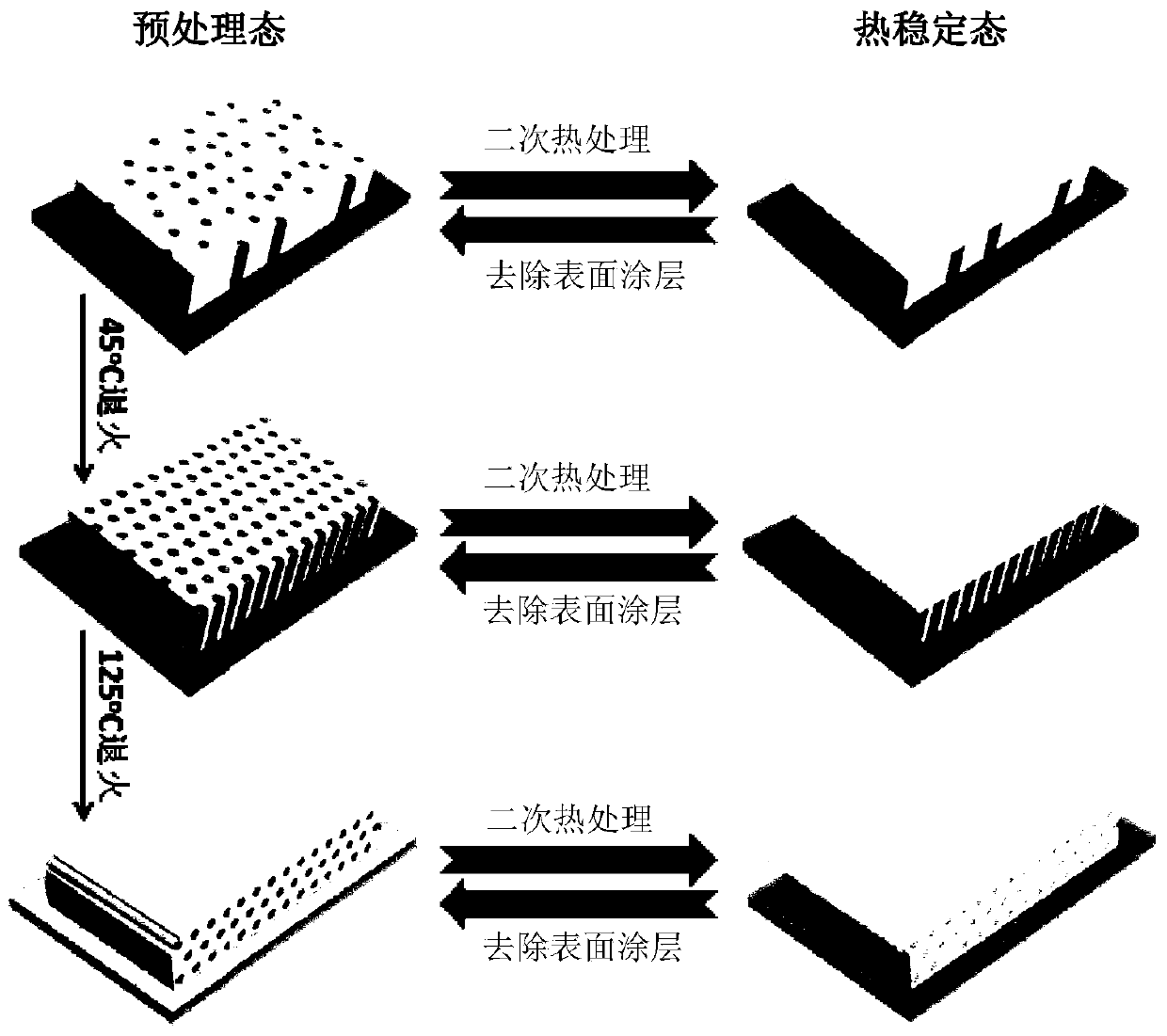
Figure 1 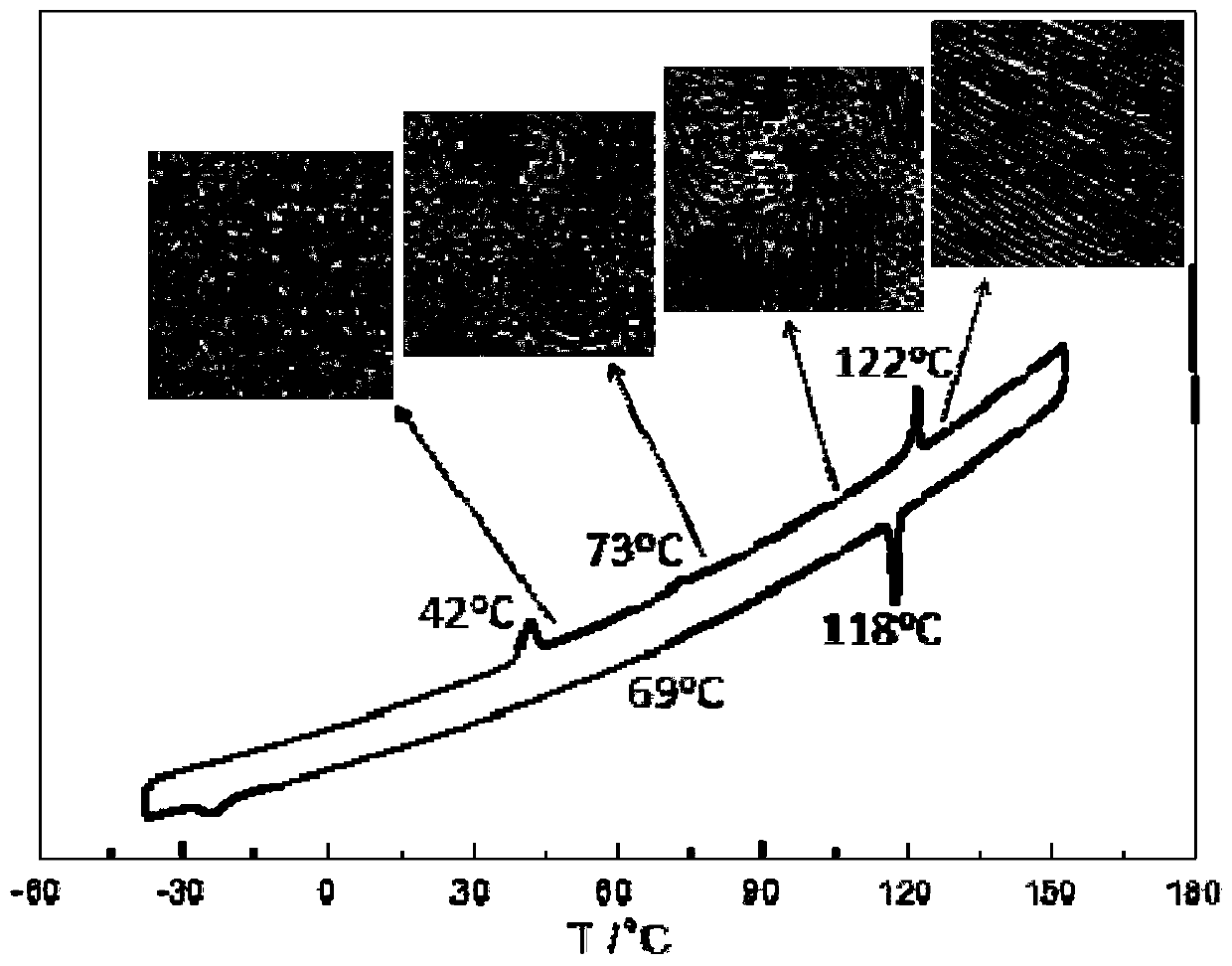
Figure 2 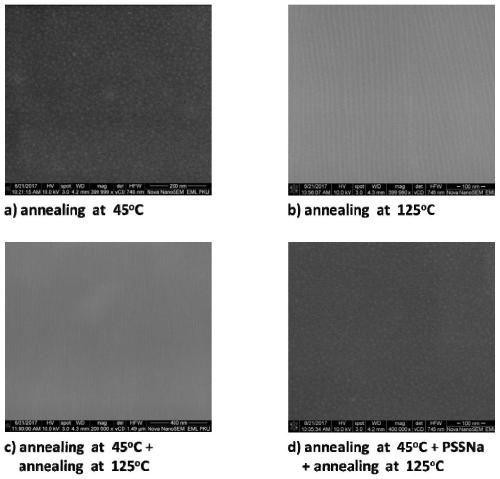
Figure 3
Abstract
Description
technical field
[0001] The invention relates to an organic nanostructure regulation technology, in particular to a method for stabilizing an organic nanometer pattern based on a water-soluble polymer coating, and belongs to the field of organic macromolecule and nanomaterial science. Background technique
[0002] A block copolymer refers to a polymer formed by covalently bonding two or more polymer blocks at one or more nodes. When there is a large difference in the properties of different blocks, the block copolymer will form a phase separation structure in the block state or film state, and the separation structure between the blocks, the size of the dispersed phase is between 10 ~100nm, so it is called microphase separation structure. The block copolymer in the film state will form spherical phase, columnar phase, lamellar phase, bicontinuous equal microphase separation structure with the change of the volume fraction of each component in the system, and then form rich r...
Examples
Embodiment 1
[0029]
[0030] 1. Preparation of phase separation structure:
[0031] Dissolve the block copolymer A-b-C represented by formula I a) in a good organic solvent such as toluene or tetrahydrofuran to obtain a clear homogeneous solution. After the copolymer is fully dissolved, filter the solution, and use spin coating, rod coating or dipping The filtrate is evenly coated on the clean substrate by pulling and other methods to form a copolymer film. After the thin film is annealed at different temperatures, regular and ordered nano phase separation structures with different morphologies can be obtained. The nanopillars formed by the dispersed phase generally have a diameter of 5-50nm, a length of 20nm-20μm, and a period of 10-100nm, or form an in-plane arrangement parallel to the substrate, which is displayed as a striped morphology in the AFM phase diagram; Or form an out-of-plane arrangement perpendicular to the substrate, which is displayed as a dot-like morphology in the AF...
Embodiment 2
[0041]
[0042] 1, the preparation of phase separation structure: adopt the block copolymer PEO-b-PM in formula II a) 11 AzPy prepares the copolymer film, and the preparation method is the same as that of Example 1.
[0043] 2. Stabilization of nanopatterns by surface coating: except that polyvinylpyrrolidone (PVP) in formula II b) is used instead of the water-soluble polymer used for the surface coating, the others are the same as in Example 1.
[0044] 3. Long-term non-destructive storage of samples: the same as in Example 1.
[0045] 4. Preparation of complex nano-patterns: the same as in Example 1.
Embodiment 3
[0047]
[0048] 1. Preparation of phase-separated structure: the copolymer film was prepared by using the block copolymer PS-b-PNIPAAm in formula III a), and the preparation method was the same as that in Example 1.
[0049] 2. Stabilization of nanopatterns by the surface coating: except that the water-soluble polymer used in the surface coating is replaced by polyethylene oxide (PEO) in formula III b), the others are the same as in Example 1.
[0050] 3. Long-term non-destructive storage of samples: the same as in Example 1.
[0051] 4. Preparation of complex nano-patterns: the same as in Example 1.