
Fluorine-substituted organic micro-molecular hole-transport material and application thereof
A hole transport material and small molecule technology, applied in the field of organic photoelectric functional materials, can solve the problems of cumbersome synthesis steps of Spiro-OMeTAD, increased complexity and cost of battery preparation process, low carrier mobility and conductivity, etc. Achieve the effects of improving photoelectric conversion efficiency and current density, good hole transport performance, high hole mobility and conductivity
Patent Information
- Authority / Receiving Office
- CN · China
- Patent Type
- Applications(China)
- Current Assignee / Owner
- Publication Date
- 2018-08-31
- Estimated Expiration
- Not applicable · inactive patent
Smart Images
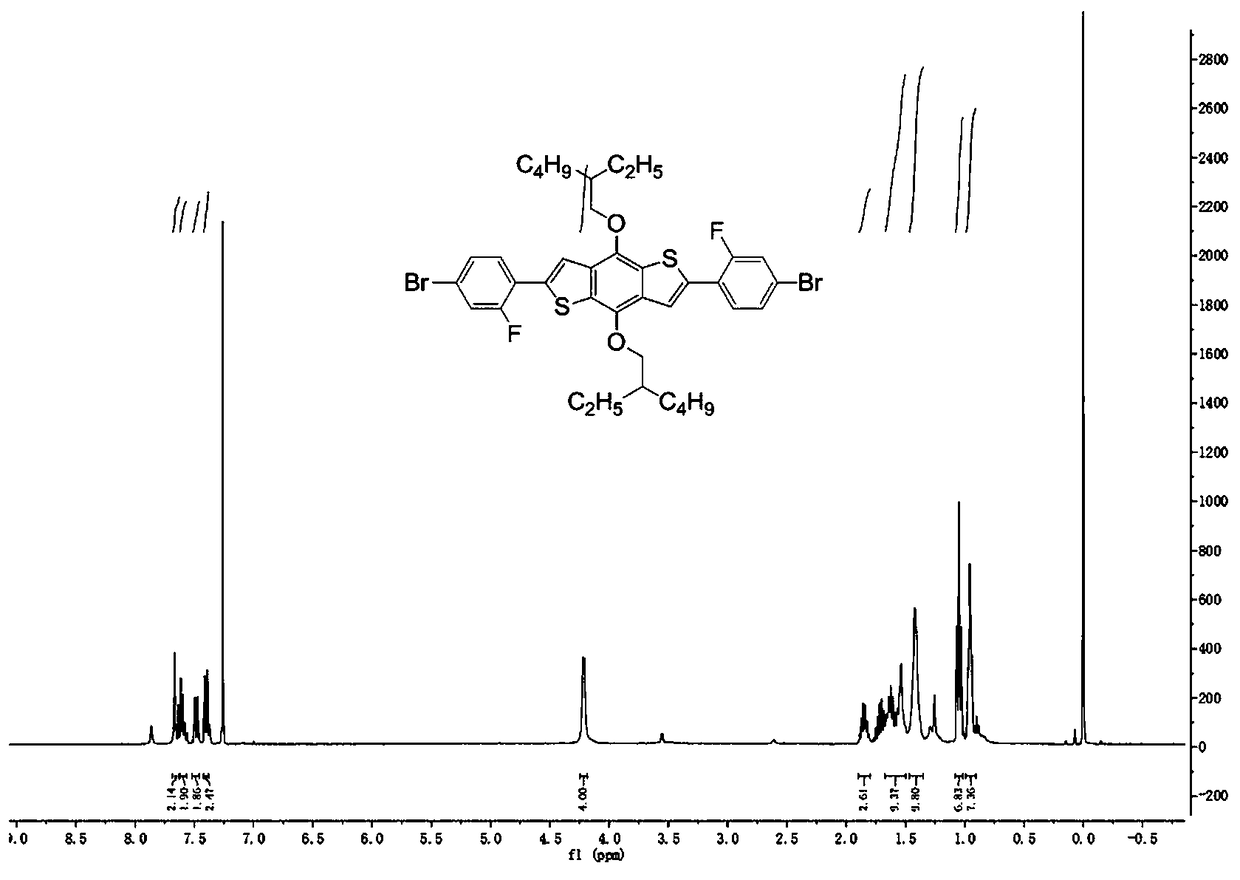
Figure 1 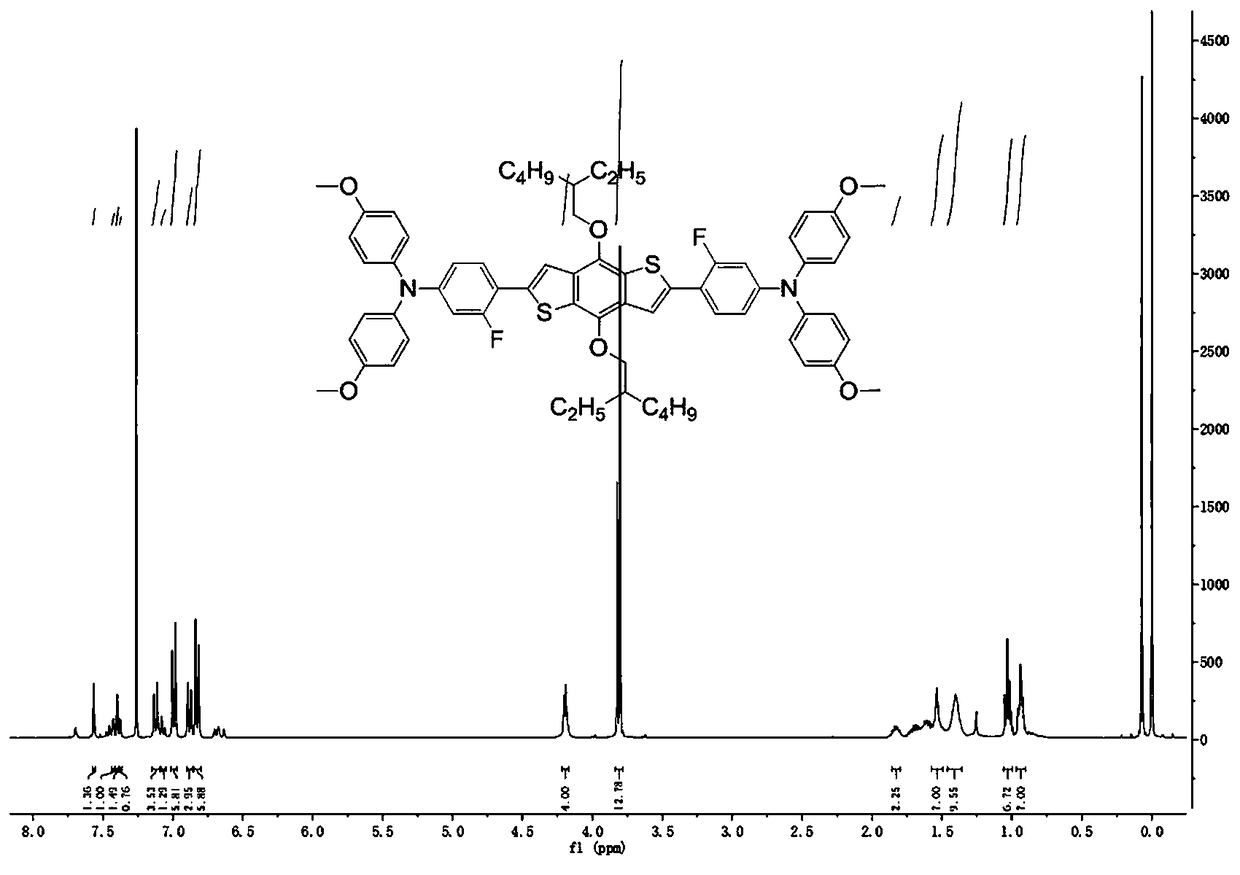
Figure 2 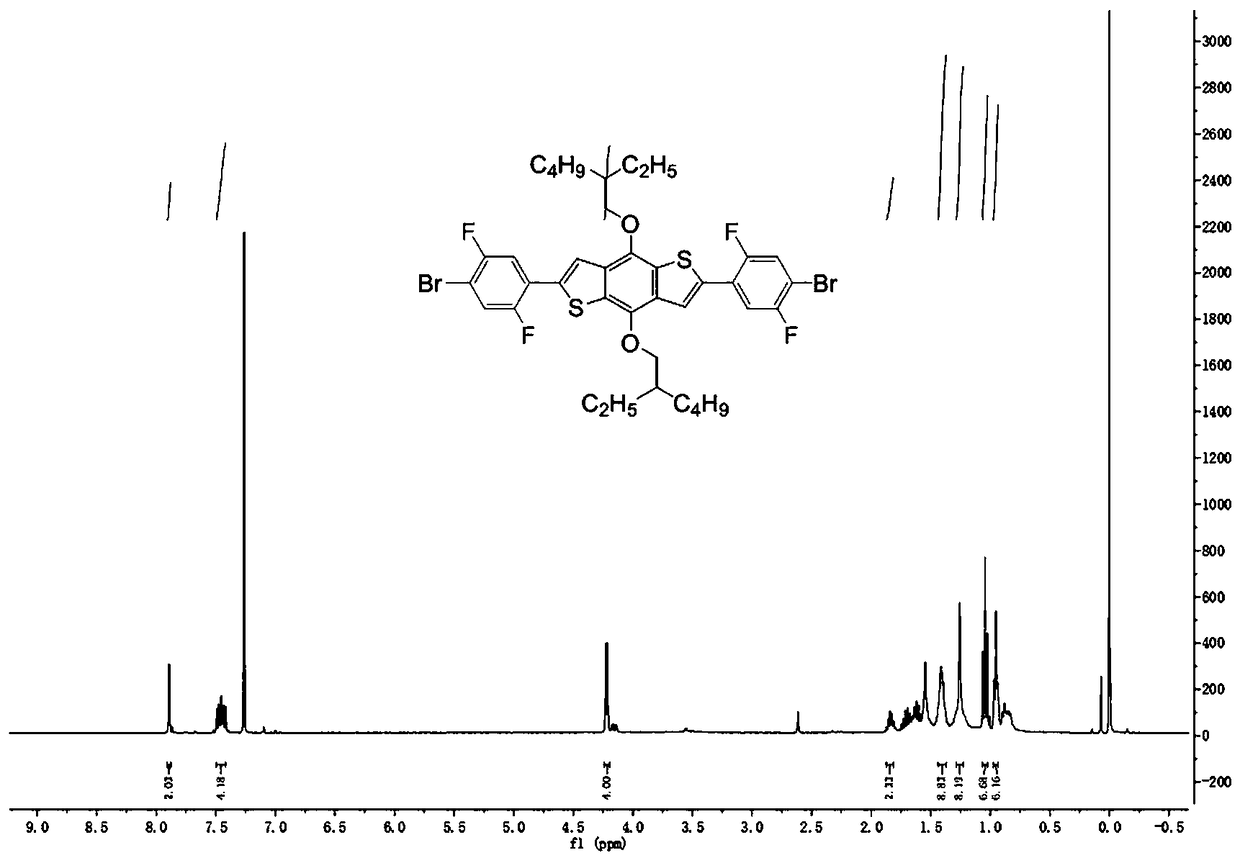
Figure 3
Abstract
Description
technical field
[0001] The invention belongs to the field of organic photoelectric functional materials, in particular to a fluorine-substituted hole transport material and its application. Background technique
[0002] Organic-inorganic hybrid perovskite solar cells (PSCs) have attracted worldwide attention and research due to their high photoelectric conversion efficiency (PCE) and low fabrication cost. In recent years, the rapid development of perovskite solar cells has exceeded 22%, comparable to commercial silicon-based solar cells, showing great application prospects.
[0003] Hole transport materials (HTMs) can effectively promote hole transport and collection, reduce charge recombination, and play an important role in PSCs. 2,2',7,7'-Tetrakis(N,N-di-p-methoxyphenylamine)-9,9'-spiro-bifluorene (Spiro-OMeTAD) is currently the most widely used and most efficient spacer Cave transport material. However, Spiro-OMeTAD has many disadvantages. First of all, the synthesis...
Examples
Embodiment 1
[0047] A fluorine-substituted organic small molecule hole transport material i-1, the synthesis route is as follows:
[0048]
[0049] (1) Under nitrogen, 1,1'-[4,8-bis[(2-ethylhexyl)oxy]benzo[1,2-b:4,5-b']dithiophene-2 ,6-diyl]bis[1,1,1-trimethyltin] (0.5g, 0.65mmol), 1,4-dibromo-2-fluorobenzene (1.0g, 3.9mmol), tetrakis(triphenyl Phosphine)palladium (Pd(PPh 3 ) 4 ) (22.5 mg, 19.5 μmol) and toluene (100 mL) were added to a 250 mL round bottom flask. React at 80°C for 6h, cool to room temperature after the reaction, dichloromethane (CH 2 Cl 2 ) extraction, the organic phase was washed with brine, anhydrous MgSO 4 Dry and concentrate by rotary evaporation to remove the solvent. Crude product with CH 2 Cl 2 and n-hexane column chromatography (hexane: CH 2 Cl 2 =4:1 (v / v)), a yellow-green intermediate (270mg, yield 53%) was obtained. 1 H NMR (400 MHz, CDCl 3 ): δ=7.655 (s, 2H), 7.634-7.561 (m, 2H), 7.499-7.471 (dd, 2H), 7.411-7.390 (d, 2H), 4.220-4.207 (d,4H), 1.88...
Embodiment 2
[0052] A fluorine-substituted organic small molecule hole transport material i-2, the synthesis route is as follows:
[0053]
[0054] (1) The process is the same as in Example 1, but the raw material 1,4-dibromo-2-fluorobenzene is replaced by 1,4-dibromo-2,5-fluorobenzene to obtain a yellow intermediate product (266mg, yield 50% ). 1 H NMR (400 MHz, CDCl 3 ): δ=7.655 (s, 2H), 7.634-7.561(m, 2H), 7.499-7.471 (dd, 2H), 7.411-7.390 (d, 2H), 4.220-4.207 (d, 4H), 1.885-1.824 (m, 2H), 1.753-1.535 (m, 8H) , 1.424 (m, 8H), 1.068-1.031 (t,6H), 0.959 (t, 6H).
[0055] (2) The process was the same as in Example 1, and an orange-yellow powder (847 mg, yield 80%) was finally obtained. 1 H NMR (400MHz, CDCl 3 ): δ=7.565 (s, 1H), 7.431-7.425 (d, 1H), 7.393 (s, 1H), 7.378-7.374(d, 1H), 7.135-7.112 (d, 3H), 7.101-7.058 (t , 2H), 7.004-6.982 (d, 6H), 6.893-6.871 (d, 3H), 6.837-6.815 (d, 6H), 4.204-4.190 (d, 4H), 3.822-3.802(d, 12H), 1.869 -1.800 (m, 2H), 1.755-1.570 (m, 8H) , 1.404 (m...