
Method for preparing solid red-to-yellow-up conversion copolymer system
一种共聚物、固态的技术,应用在固态红-转-黄上转换共聚物体系的制备领域,能够解决转换效率低、需要除氧等问题,达到高效转换效率、解决固态上转换效率低的效果
Patent Information
- Authority / Receiving Office
- CN · China
- Patent Type
- Applications(China)
- Current Assignee / Owner
- Publication Date
- 2019-02-01
- Estimated Expiration
- Not applicable · inactive patent
Smart Images
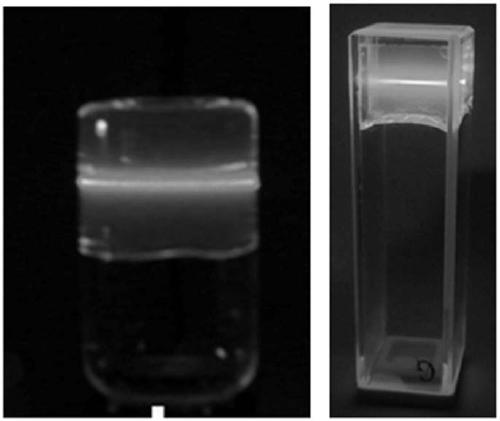
Figure 1 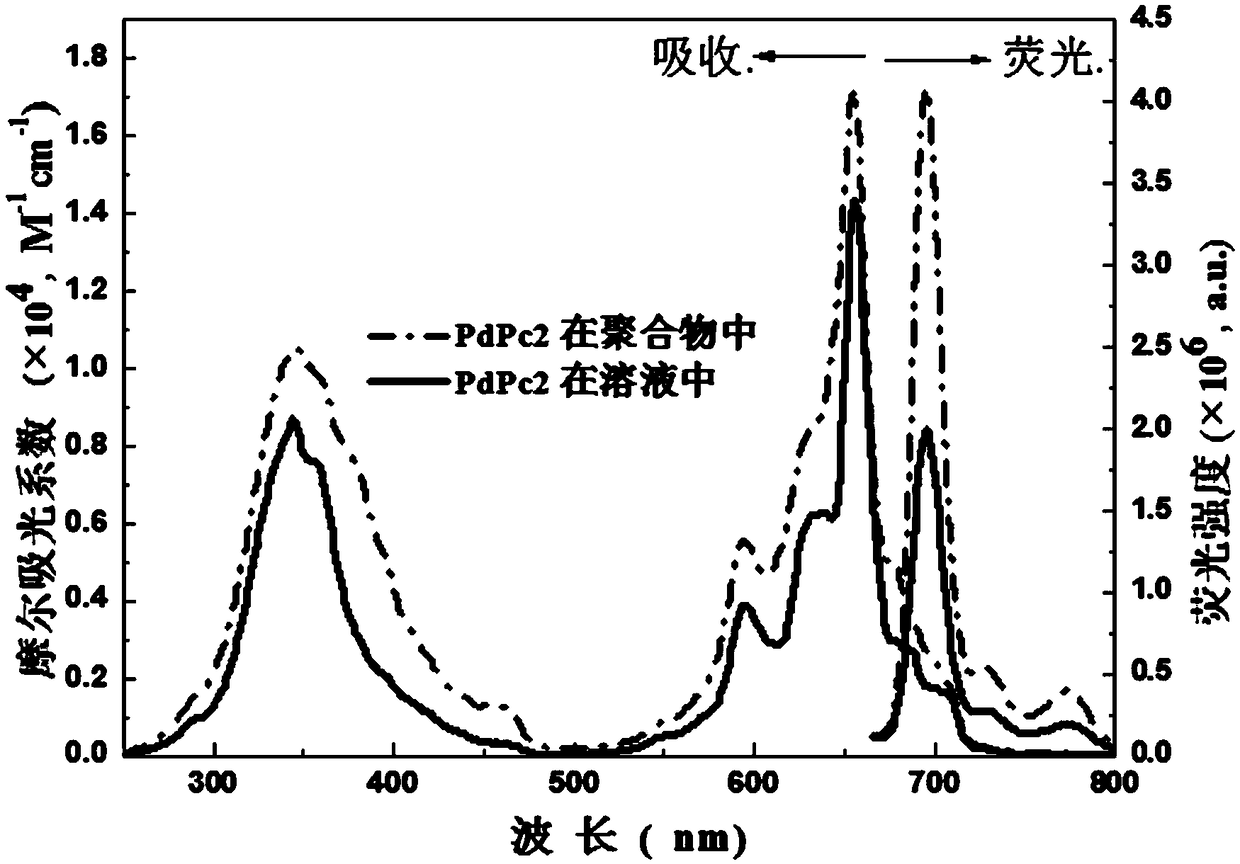
Figure 2 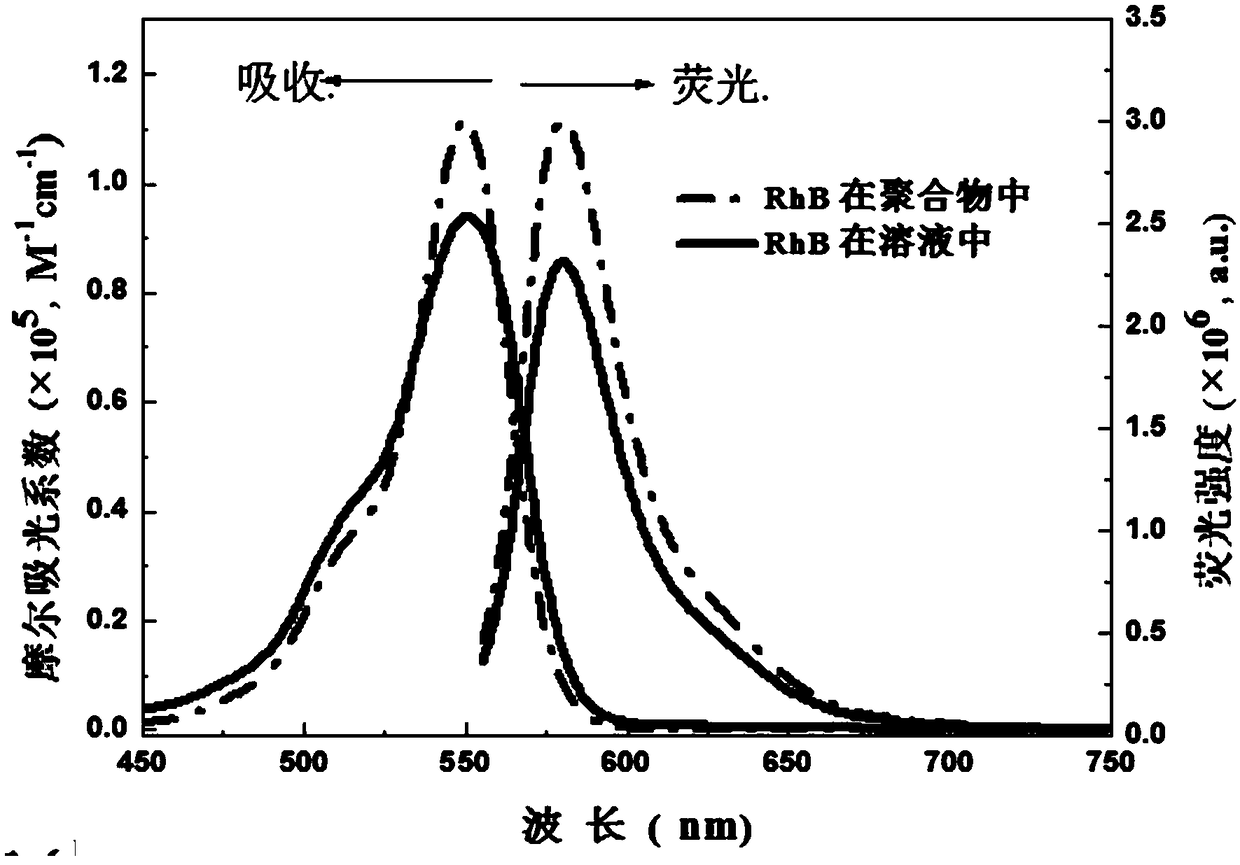
Figure 3
Abstract
Description
[0001] The present invention is a divisional application of the invention titled solid red-transfer-yellow up-conversion copolymer system and its preparation method and application, the application date is February 6, 2017, and the application number is 2017100659794, which belongs to the preparation method part. technical field
[0002] The invention belongs to the field of triplet annihilation upconversion, and specifically relates to a preparation method of a solid red-transition-yellow upconversion copolymer system. Background technique
[0003] Materials based on triplet-triplet annihilation upconversion (TTA-UC) usually consist of a sensitizer and a luminescent agent dissolved in an organic solvent to form a two-component system. The mechanism is: (1) irradiation of low-energy excitation light, the sensitizer The energy absorbed by the excitation light is converted from its ground state (S 0 ) to the singlet excited state ( 1 S*), and then transition to the triplet ex...
Examples
Embodiment 1
[0055] (1) Two-component upconversion solution (PdPc 2 / luminescent agent) configuration: the sensitizer (PdPc 2 ) Mother liquor (concentration is 4×10 -5 mol / L) and luminescent agent mother solution (concentration is 1×10 -2 mol / L) are mixed according to a certain molar ratio and degassed to obtain a two-component solution of sensitizer / luminescent agent. The solvents involved in all the above solutions are spectrally pure n-propanol / ethylene glycol (v / v, 1 / 2).
[0056] The luminescent agent can be any one of the following rhodamine derivatives:
[0057]
[0058] (2) Preparation of solid-state up-conversion copolymer system: In a nitrogen atmosphere, 2-hydroxyethylene methyl acrylate (HEMA) and 3-(methacryloyloxy)propyltrimethoxysilane (TMSPMA) Mix according to 1:1 (mass ratio), add 0.5% (mass ratio) of azobisisobutyronitrile as an initiator, and then add a two-component solution (the molar ratio of sensitizer and luminescent agent is 1:3000), Vacuumize (30 min) afte...
Embodiment 2
[0079] According to the preparation method of Example 1, wherein HEMA and TMSPMA are mixed at 1:2 (mass ratio), 0.5% (mass ratio) of azobisisobutyronitrile is added as an initiator, and then a two-component solution (sensitizer The molar ratio of the luminescent agent and the luminescent agent is 1:3000) to prepare a solid-state up-conversion copolymer system. When the luminescent agent is RhB, RhBS, and Rh6G, the up-conversion efficiencies are 9.6%, 12.3%, and 2.9%, respectively. Correspondingly, under other conditions being the same, the upconversion efficiencies of the luminescent agents RhB, RhBS and Rh6G in the solution state are: 6.8%, 8.7% and 2.2%, respectively. Comparing Example 1 with Example 2, it can be seen that the ratio of the two polymer monomers has little influence on the up-conversion efficiency of the solid-state up-conversion system; meanwhile, under the same conditions, the up-conversion efficiency of the solid-state up-conversion system is greater than U...
Embodiment 3
[0081] According to the preparation method of Example 1, the solvents involved in the sensitizer and luminescent agent solutions are both spectroscopically pure propanol / ethylene glycol (v / v, 1 / 6); HEMA and TMSPMA are 1:4 (mass ratio ) mixed, adding 0.5% (mass ratio) of azobisisobutyronitrile as an initiator, and then adding a two-component solution (the molar ratio of sensitizer and luminescent agent is 1:3000) to prepare a solid-state up-conversion copolymer system , when the luminescent agent is RhB, RhBS, and Rh6G, the up-conversion efficiency is 9.4%, 11.8%, and 2.6%, respectively. Correspondingly, under other conditions being the same, the upconversion efficiencies of the luminescent agents RhB, RhBS, and Rh6G in the solution state were: 6.4%, 8.3%, and 1.9%, respectively. Comparing Example 1 with Example 3, it can be seen that as the ratio of solvent n-propanol / ethylene glycol changes, the up-conversion efficiency of the solution state also decreases; meanwhile, under t...