
Enterobacter xiangfang zjb-17001 and its application
A technology of ZJB-17001 and Enterobacter xiangfang, which is applied to Enterobacter xiangfang ZJB-17001 and its application fields, can solve the problems of non-conversion of D-glufosinate, waste of raw materials, large amount of catalyst, etc., and achieve important application prospects , easy to cultivate and collect applications, and the effect of mild catalytic reaction conditions
Patent Information
- Authority / Receiving Office
- CN · China
- Patent Type
- Patents(China)
- Current Assignee / Owner
- Publication Date
- 2020-08-21
Smart Images
Figure 1 
Figure 2 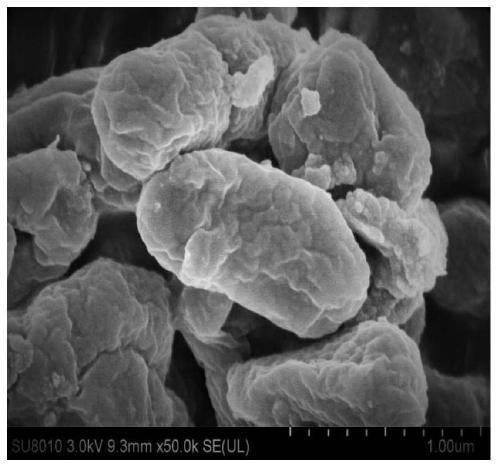
Figure 3
Abstract
Description
technical field
[0001] The present invention relates to a bacterial strain producing amidohydrolase——Enterobacterxiangfangensis ZJB-17001, and its N-phenylacetyl-DL in catalyzing N-phenylacetyl amino acid to prepare chiral amino acid and catalytic amino acid derivative -Applications of amino acid derivatives in the preparation of N-phenylacetyl-L-amino acid derivatives. Background technique
[0002] The chemical name of L-glufosinate-ammonium is: 4-[hydroxyl (methyl)phosphono]-L-homoalanine, which is a structural analog of L-glutamic acid and can inhibit glutamine synthetase (GS ) activity, the accumulation of ammonia in plants, the accumulation of high-concentration ammonia gas blocks the photorespiration of plants, the destruction of chloroplast structure and the vesicleization of matrix, and the synthesis of amino acids is blocked, resulting in cell membrane damage and cell death, thus killing weeds . It has a broad spectrum and is the second most herbicide-tolerant gen...
Examples
Embodiment 1
[0026] Example 1: Screening of Enterobacter xiangfangensis ZJB-17001
[0027] 1. Primary screening
[0028] The present invention takes soil samples from all over the country, and takes 80 parts of soil samples altogether. The specific method of screening: Weigh 1g of soil sample and place it in 10mL of 0.85% physiological saline, shake it and let it stand still, take the supernatant into the enrichment medium, and cultivate it at 30°C and 150r / min for 2-3 days with shaking . Take 1mL of the enrichment solution and add it to 50mL of fresh enrichment medium, and repeat this process 3 times before separation and purification.
[0029] Bromothymol blue filter paper was selected as the indicator filter paper to detect the colony capable of degrading the substrate. The principle is: the colony containing the target enzyme will produce acidic by-products (phenylacetic acid, acetic acid, formic acid, benzoic acid) after degrading the substrate, thereby changing the local pH value ...
Embodiment 2
[0044] Embodiment 2: identification of bacterial strain ZJB-17001
[0045] 1. Morphological identification:
[0046] The bacterial strain ZJB-17001 screened in Example 1 was inoculated on a solid medium and cultured at 37°C for 24 hours to form round or nearly round, soft texture, smooth surface, flat, neat edges, glossy milky white colonies, 2-4mm in diameter. Observation by Gram staining: short pink rods without spores. Composition of solid medium: sodium chloride 10g / L, peptone 10g / L, yeast powder 5g / L, agar 20g / L, solvent is deionized water.
[0047] 2. Physiological and biochemical identification:
[0048] Using the Biolog (GENⅢ) automatic microbial identification system, 94 kinds of phenotypic tests were carried out on the strain ZJB-17001, including 71 kinds of carbon source utilization detection and 23 kinds of chemical sensitivity detection: the strain ZJB-17001 was inoculated on the BUG plate medium ( BIOLOG UNIVERSAL GROWTH AGAR), cultured at 33°C for 2 days, wa...
Embodiment 3
[0057] Embodiment 3: the preparation of wet thalline
[0058] (1) Incline cultivation:
[0059] Enterobacter xiangfang ZJB-17001 was inoculated into the slant medium, and cultured at 30°C for 48 hours to obtain slant bacteria;
[0060] The final concentration of the slant culture medium is: lactose 8g / L, peptone 6g / L, Na 2 HPO 4 3.2g / L, K 2 HPO 4 1.5g / L, Na 2 EDTA0.06g / L, MnSO 4 0.002g / L, MgSO 4 0.001g / L, ZnSO 4 0.002g / L, FeSO 4 0.01g / L, the agar is 20g / L, the solvent is deionized water, and the pH value is 6.8.
[0061] (2) Seed cultivation
[0062] Pick an inoculation loop of bacteria from the slant and inoculate it into the seed medium, and cultivate it at 30°C for 24 hours to obtain the seed liquid;
[0063] The final concentration of the seed medium consists of: lactose 8g / L, peptone 6g / L, Na 2 HPO 4 3.2g / L, K 2 HPO 4 1.5g / L, Na 2EDTA0.06g / L, MnSO 4 0.002g / L, MgSO 4 0.001g / L, ZnSO 4 0.002g / L, FeSO 4 0.01g / L, the solvent is deionized water, and...