
Salmonella bacteriophage nano magnetic bead conjugate and its enrichment and separation kit
A Salmonella and nano-magnetic bead technology, which is applied in the direction of viruses/bacteriophages, microorganisms, bacteria, etc., can solve the problems of long detection time, false positive amplification, and high antibody cost, and achieve low cost, fast enrichment time, and recognition range wide effect
Patent Information
- Authority / Receiving Office
- CN · China
- Patent Type
- Applications(China)
- Current Assignee / Owner
- Publication Date
- 2019-06-25
Smart Images
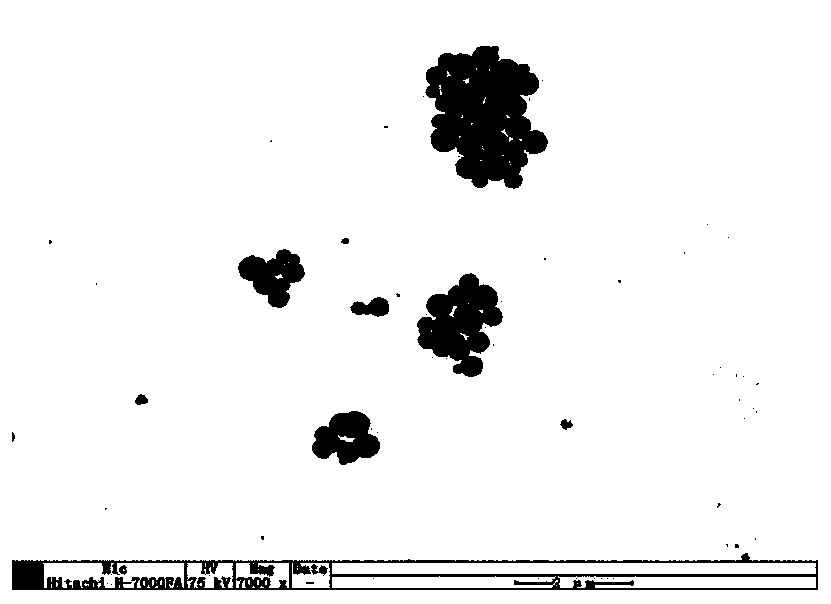
Figure 1 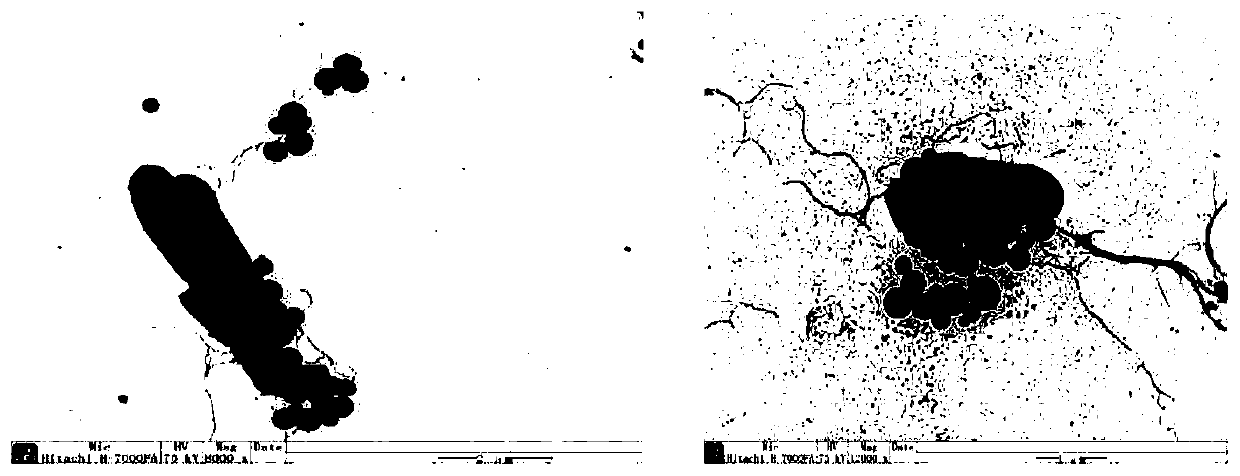
Figure 2 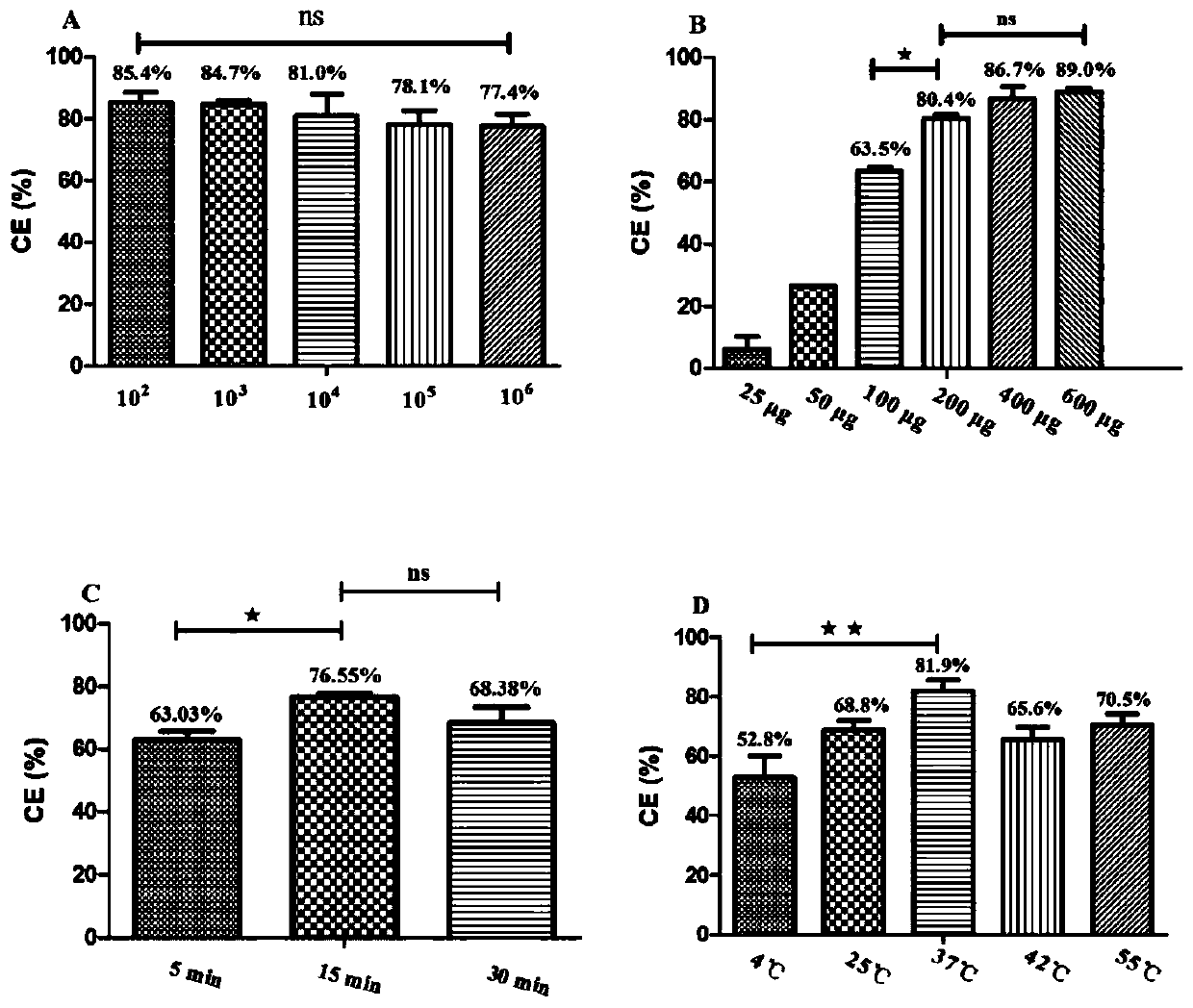
Figure 3
Abstract
Description
technical field
[0001] The invention relates to the field of food safety, in particular to a Salmonella phage nano magnetic bead conjugate and an enrichment and separation kit thereof. Background technique
[0002] Salmonella can parasitize in the intestines of humans and poultry and cause salmonellosis. It is a pathogen with the highest outbreak rate of foodborne diseases and the largest number of patients in the world. There are more than 2,500 serotypes of Salmonella. Among them, Salmonella typhimurium and Salmonella enteritidis are the most common serotypes causing Salmonella food poisoning.
[0003] For the detection of Salmonella in food, the traditional selection medium identification method is mainly used. Its method takes a long time (3-7 days), and the steps are loaded down with trivial details. Therefore, the development direction of detection technology in recent years mainly includes rapid and sensitive detection of Salmonella based on methods such as immunol...
Examples
Embodiment 1
[0053] Example 1 Preparation of Salmonella phage nano-magnetic bead conjugate
[0054] 1. Activation of phage
[0055] Take the phage stock solution from -80°C and streak it on the TSA plate, and pour 4 mL of 0.7% agar TSB medium containing 200 μL of host bacteria in the direction of dilution from high to low. Pick a single phage plaque and incubate in 1 mL TSB medium at 37°C for 6-8 hours, add 20 μL chloroform, and continue culturing for 10 min to release progeny phages. After centrifugation at 8000r / min for 10min, the supernatant was taken and streaked, and cultured at 37°C on a double-layer plate as described above. Pour 4mL of PBS buffer solution onto the plate containing phage plaques overnight at 4°C, pipette the buffer solution into a 10mL centrifuge tube, centrifuge at 8,000rpm for 15min, and filter through a 0.22μm microporous membrane for use.
[0056] 2. NHS activation (activation of carboxyl group of magnetic beads)
[0057] Take 1mL of preserved magnetic beads ...
Embodiment 2
[0060] Example 2 Salmonella phage nano-magnetic bead conjugate performance evaluation
[0061] 1. Magnetic bead observation
[0062] Use purchased magnetic beads (magnetic bead parameter 10 11 pcs / mL), the dried sample was diluted in water first, and dispersed by ultrasonic waves for 30 minutes, then the copper mesh was inserted into the dispersion solution to absorb for 5-10 minutes, and then tested after natural drying.
[0063] 2. Electron microscope observation of bacteria captured by phage nano-magnetic beads
[0064] Take 1mL of the bacterial solution cultured to the logarithmic phase, and centrifuge at 10,000rpm for 10min. Discard the supernatant and resuspend in 1mL PBS buffer. Repeat the above operation three times. Take phage nano-magnetic beads (100 μL, 1 mg / mL) and dilute them 10 times, take 500 μL phage nano-magnetic beads and add them to 500 μL of the above bacterial solution. Adsorption at 37°C for 15min at 120rpm. Remove the sample and add an equal volume...
Embodiment 3
[0065] Example 3 Salmonella phage nano-magnetic bead conjugate use condition optimization
[0066] 1. Determination of the optimal working concentration of Salmonella phage nano-magnetic bead conjugates
[0067] Phage magnetic beads P-MBs (total 1mL), respectively take 600μL, 400μL, 200μL, 100μL, 50μL, 10μL, add to 1mL bacterial culture solution (10 5 CFU / mL or 10 3 CFU / mL), after 15 minutes at 37°C, place it on a magnetic stand for 2-3 minutes to fully absorb the magnetic beads, then take the supernatant and apply it to an XLD plate, and incubate at 37°C for 12 hours for observation.
[0068] 2. Determination of the optimal temperature of Salmonella phage nano-magnetic bead conjugates
[0069] 200 μL of phage magnetic beads P-MBs were added to 1 mL of bacterial culture solution (10 3 CFU / mL), 55, 42, 37, 25, 4°C for 15 minutes, put it on the magnetic stand for 2-3 minutes to fully absorb the magnetic beads, take the supernatant and apply it to an XLD plate, and incubate at...