
Application of miRNA combined marker in preparation of kit for diagnosing and detecting early liver cancer
A technology for early detection of liver cancer, applied in the fields of molecular biology and medical diagnosis, to achieve the effect of accurate results, strong specificity, and reduced errors
Patent Information
- Authority / Receiving Office
- CN · China
- Patent Type
- Applications(China)
- Current Assignee / Owner
- Publication Date
- 2022-03-25
Smart Images
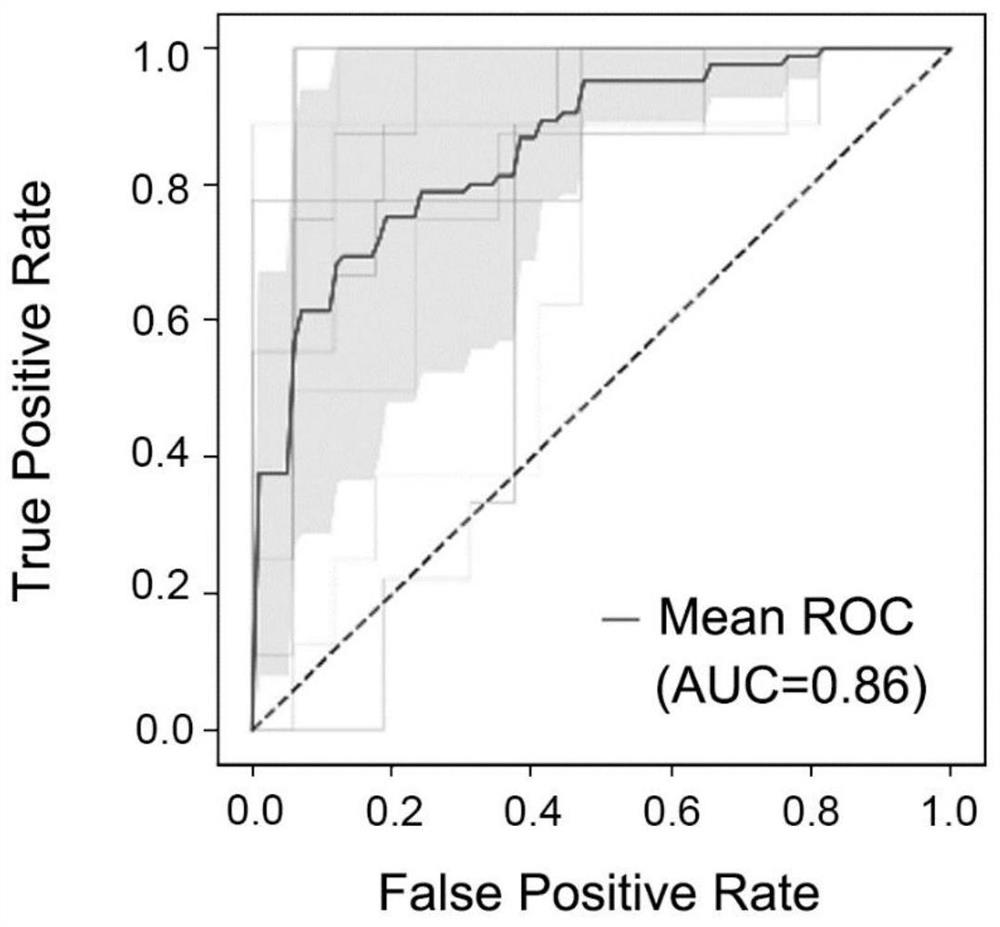
Figure 1 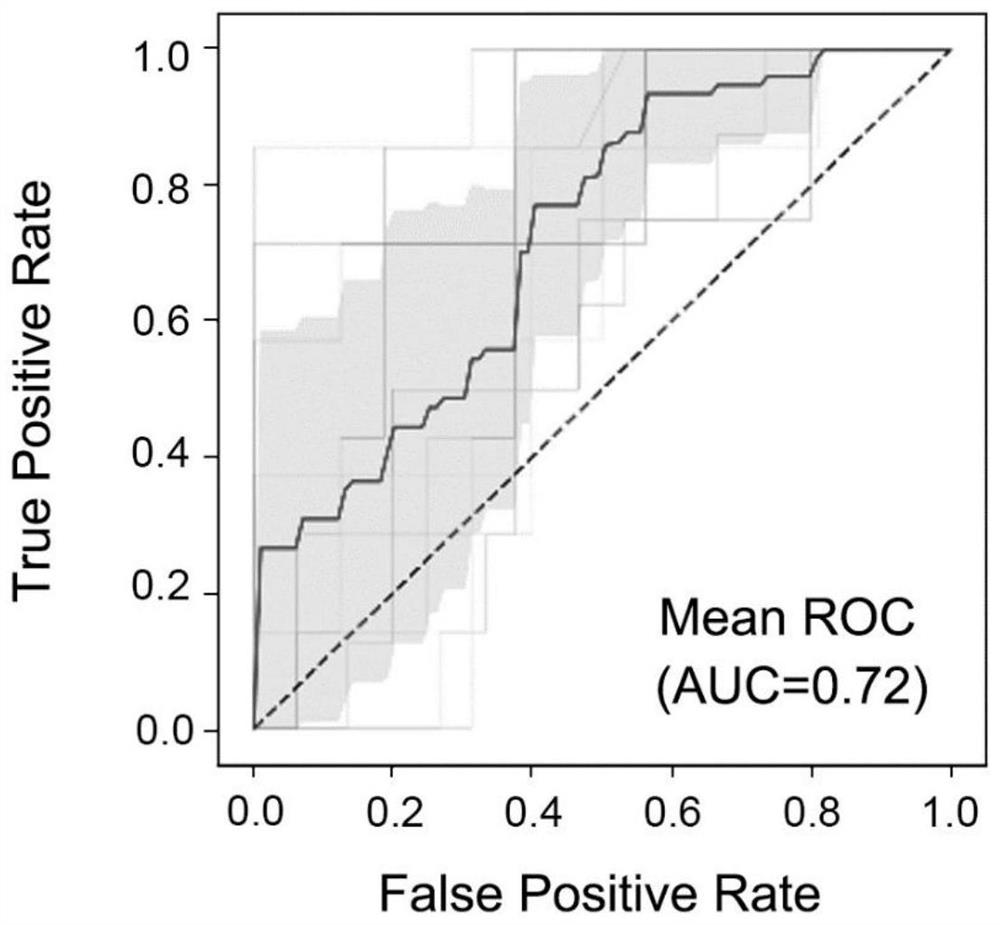
Figure 2 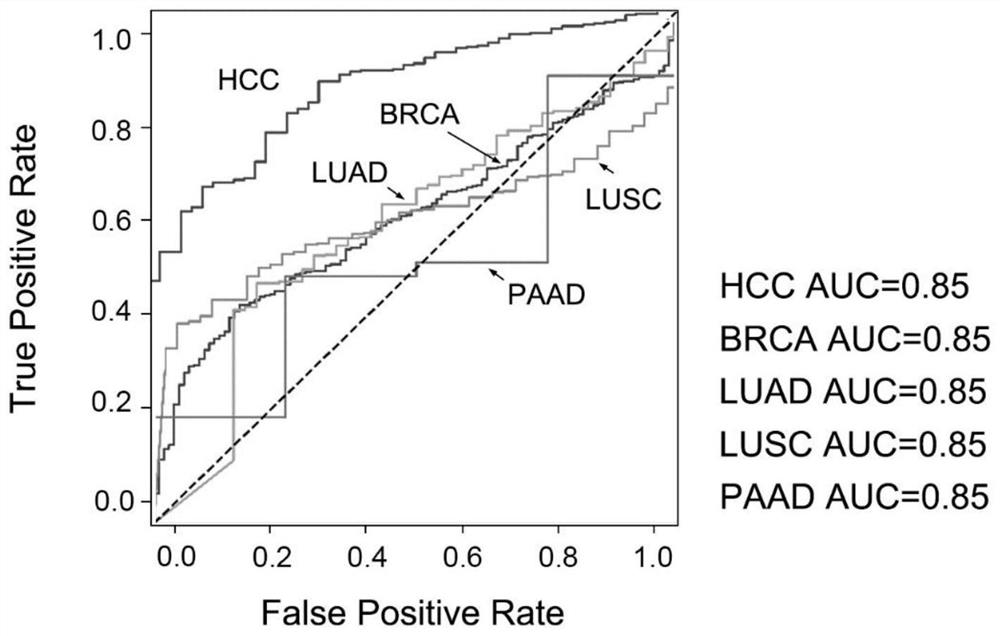
Figure 3
Abstract
Description
technical field
[0001] The invention relates to the fields of molecular biology and medical diagnosis, and relates to the application of a miRNA combined marker, in particular to the application of a miRNA combined marker in the preparation of a kit for diagnosing and detecting early liver cancer. Background technique
[0002] Primary liver cancer is one of the malignant tumors with the highest morbidity and mortality worldwide. Hepatocellular carcinoma (HCC) is the main form of primary liver cancer, which usually evolves from chronic liver diseases such as cirrhosis and HBV infection. The five-year survival rate of early HCC is 50%-70%, while that of patients with advanced liver cancer is only 10%-19%. Therefore, early diagnosis and screening is the key to the treatment of liver cancer. Due to the lack of early diagnostic methods to effectively distinguish between early liver cancer patients and chronic liver disease patients, the current diagnosis of HCC mainly relies on ...
Examples
Embodiment 1
[0021] Example 1 Subject and sample extraction
[0022] The samples were provided by Singapore General Hospital (approved by Singapore SingHealth CIRB B, approval number CIRB Ref: 2007 / 447 / B). Among them, there were 86 cases of HCC patients, 154 cases of non-HCC liver disease patients, and 12 cases of healthy people. Among non-HCC liver disease patients, there were 59 HBV-positive cirrhotic patients, 89 HBV-positive non-cirrhotic patients, and 6 HBV-negative cirrhotic patients.
Embodiment 2
[0023] Example 2 Extraction of exosomes
[0024] Collect 2ml of peripheral blood from the subject with a disposable syringe, quickly transfer it to an EDTA anticoagulant tube, and mix well. Separate the plasma within 2 hours of collection. The specific steps are: 1) transfer the whole blood to a 2ml centrifuge tube, and centrifuge at 500g for 10min at room temperature; 2) take the upper plasma, and centrifuge at 2000g for 10min at 4°C; 3) take the upper plasma, 4°C, Centrifuge at 16,000 g for 10 min; 4) The separated plasma is directly used for exosome extraction or frozen in a -80°C refrigerator.
[0025] Exosomes were extracted according to the instructions of the exosome extraction kit Exo-Quick exosome precipitation solution (EXOQ5SA-1, SBI, United States). 1) Add the plasma to a centrifuge tube, and add Exo-Quick at a ratio of 63 μl for every 250 μl of plasma; 2) Centrifuge at 1500 g at 4°C for 30 minutes, discard the supernatant; 3) Centrifuge at 1500 g at 4°C for 5 min...
Embodiment 3
[0026] Example 3 Extraction of exosome miRNA
[0027] miRNA was extracted according to the operating instructions of the miRNeasy Serum / PlasmaKit kit (217184, QIAGEN, Germany). The specific steps are: 1) Add 5 times the volume of QIAzol LysisReagent to the plasma separated in Example 2, vortex or pipette to mix; 2) Incubate at room temperature for 5 minutes; 3) Add an equal volume of chloroform and shake for 15 seconds; 4) Incubate at room temperature for 2-3min; 5) Centrifuge at 12000g for 15min at 4°C; 6) Transfer the upper layer to a new centrifuge tube, add 1.5 times the volume of absolute ethanol, and mix by pipetting to obtain the sample; 7) Take 700μl sample to RNeasy MinElute Spin column (placed in a 2ml collection tube), cover the lid, centrifuge at room temperature>8000g for 15s, discard; 8) repeat step 7 once; 9) add 700μl RWTbuf to the RNeasy MinElute spin column, centrifuge at room temperature>8000g for 15s, discard ;10) Add 500μl RPE buf to the RNeasy MinElute s...