
Infection enhancing culture medium and method for improving cell lentivirus infection rate
A medium and infection rate technology, applied in the direction of cell culture active agent, virus, culture process, etc., can solve the problems of gene editing efficiency constraints, low knockout positive rate, poor cell state, etc., to increase the infection rate of cell lentivirus , Improve the culture and infection rate, reduce the effect of operation difficulty and cost
Patent Information
- Authority / Receiving Office
- CN · China
- Patent Type
- Applications(China)
- Current Assignee / Owner
- Publication Date
- 2022-05-31
Smart Images
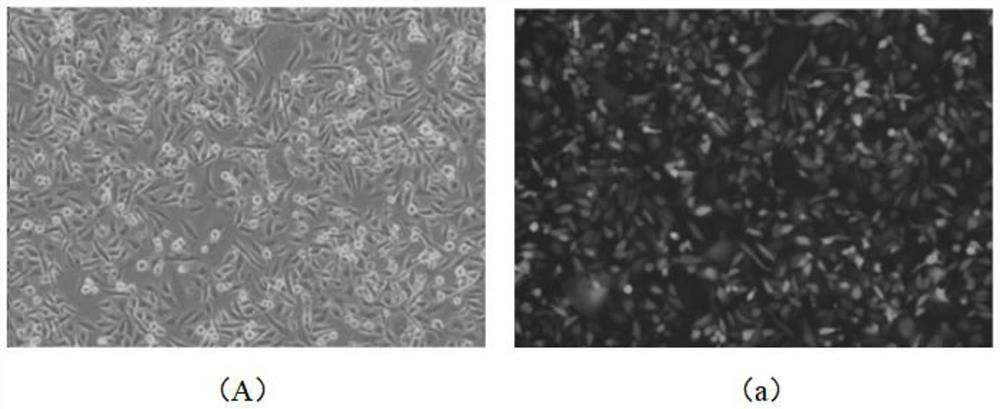
Figure 1 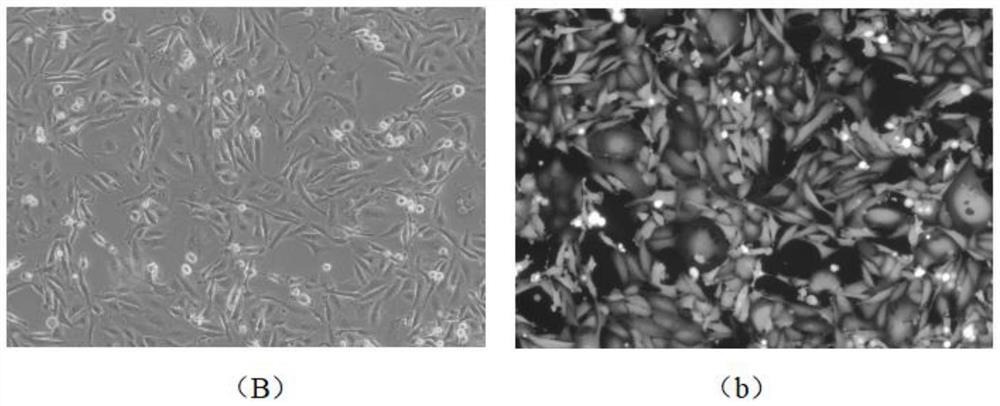
Figure 2 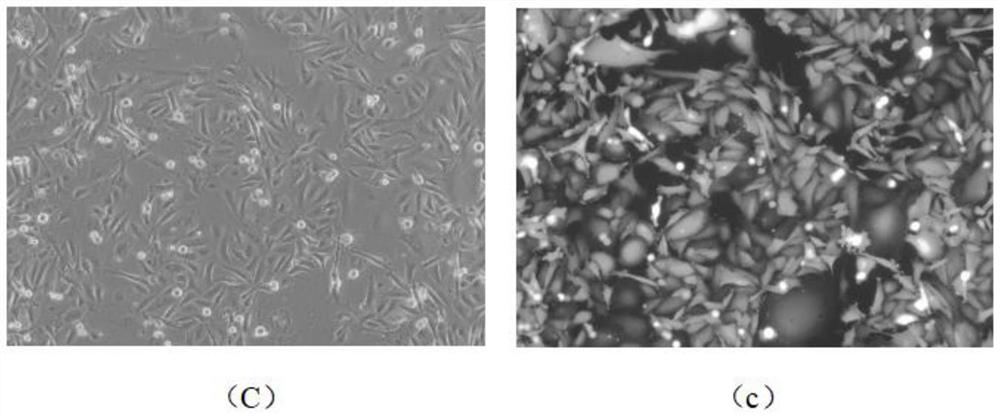
Figure 3
Abstract
Description
technical field
[0001] The invention relates to the field of MDA-MB-231 cell transfection, in particular to an enhanced infection medium and method for increasing the infection rate of cell lentivirus. Background technique
[0002] MDA-MB-231 (human breast cancer cells) are human breast cancer cells isolated from the pleural effusion of a 51-year-old female breast cancer patient, MDA-MB-231 is a highly invasive and poorly differentiated triple-negative breast cancer (TNBC) cell line, triple negative refers to lack of estrogen receptor (ER) and progesterone receptor (PR) expression, and HER2 (human epidermal growth factor receptor 2) overexpression, similar to other invasive cancer cell lines, The invasiveness of MDA-MB-231 cells is mediated by proteolytic degradation of the extracellular matrix.
[0003] MDA-MB-231 is widely used in research on triple-negative breast cancer. Gene editing through ZFN, TALEN, and CRISPR / Cas9 technologies to establish gene knockout, knockin, a...
Examples
Embodiment 1-5
[0072] A method for improving the infection rate of MDA-MB-231 cells, comprising the following steps;
[0073] (1) Digest the MDA-MB-231 cells in the logarithmic growth phase into a suspension single-cell liquid, and prepare 1×10 5 Amount of cell inoculation per well Inoculate the single cell suspension into a 12-well cell culture plate, add 1ml of conventional medium, and culture at 37°C and ambient air, wherein the conventional medium contains glutamine and Leibovitz's L-15 medium with fetal bovine serum.
[0074] (2) When the MDA-MB-231 cells in step (1) are cultured for 36 hours, replace the conventional culture medium with enhanced infection medium, and cultivate them at 37°C and in an environment with a volume fraction of 5% carbon dioxide for 24 hours , wherein the components of the enhanced infection medium are shown in Table 1 below;
[0075] (3) Maintain the culture conditions of step (2), use the lentivirus with EGFP expression box to infect MDA-MB-231 cells, the ...