
Pharmaceutical composition for preventing and treating nonalcoholic steatohepatitis, hepatic fibrosis, and liver cirrhosis, comprising adenosine derivatives
a technology of adenosine derivatives and pharmaceutical compositions, which is applied in the direction of drug compositions, heterocyclic compound active ingredients, capsule delivery, etc., to achieve excellent absorption and anti-alcoholic steatohepatitis
Patent Information
- Authority / Receiving Office
- US · United States
- Patent Type
- Patents(United States)
- Current Assignee / Owner
- Publication Date
- 2022-03-08
Smart Images
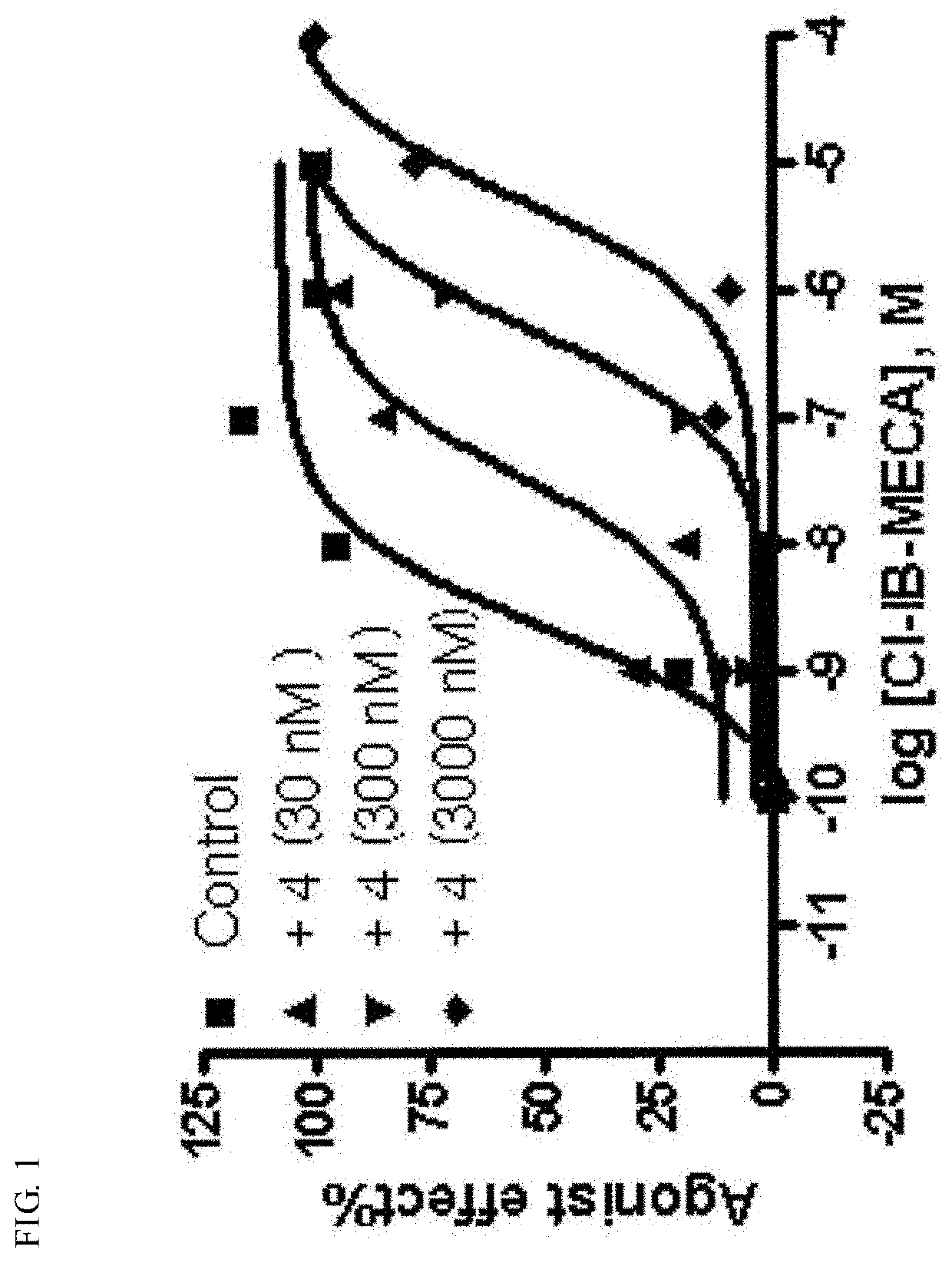
Figure 1 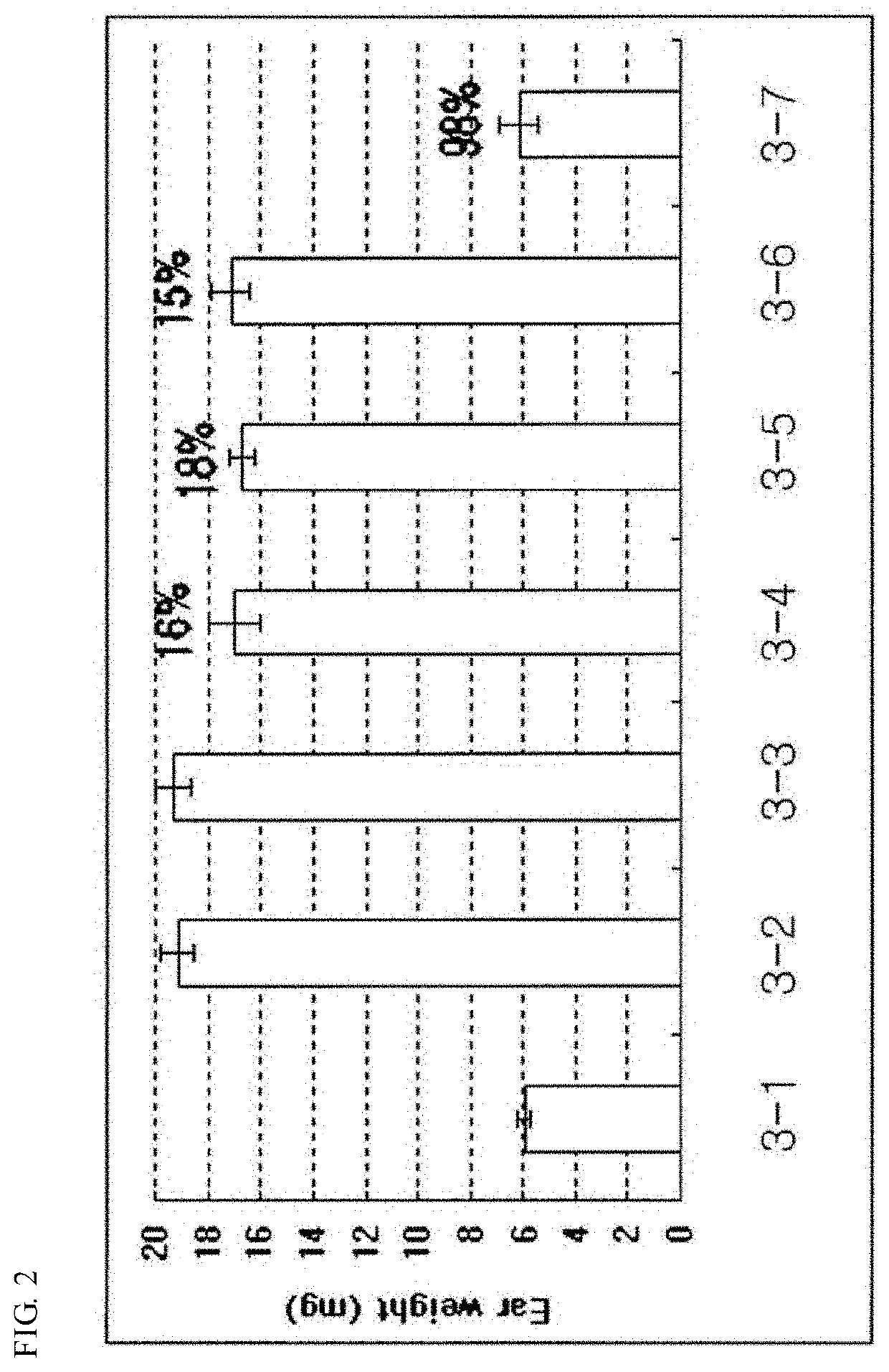
Figure 2 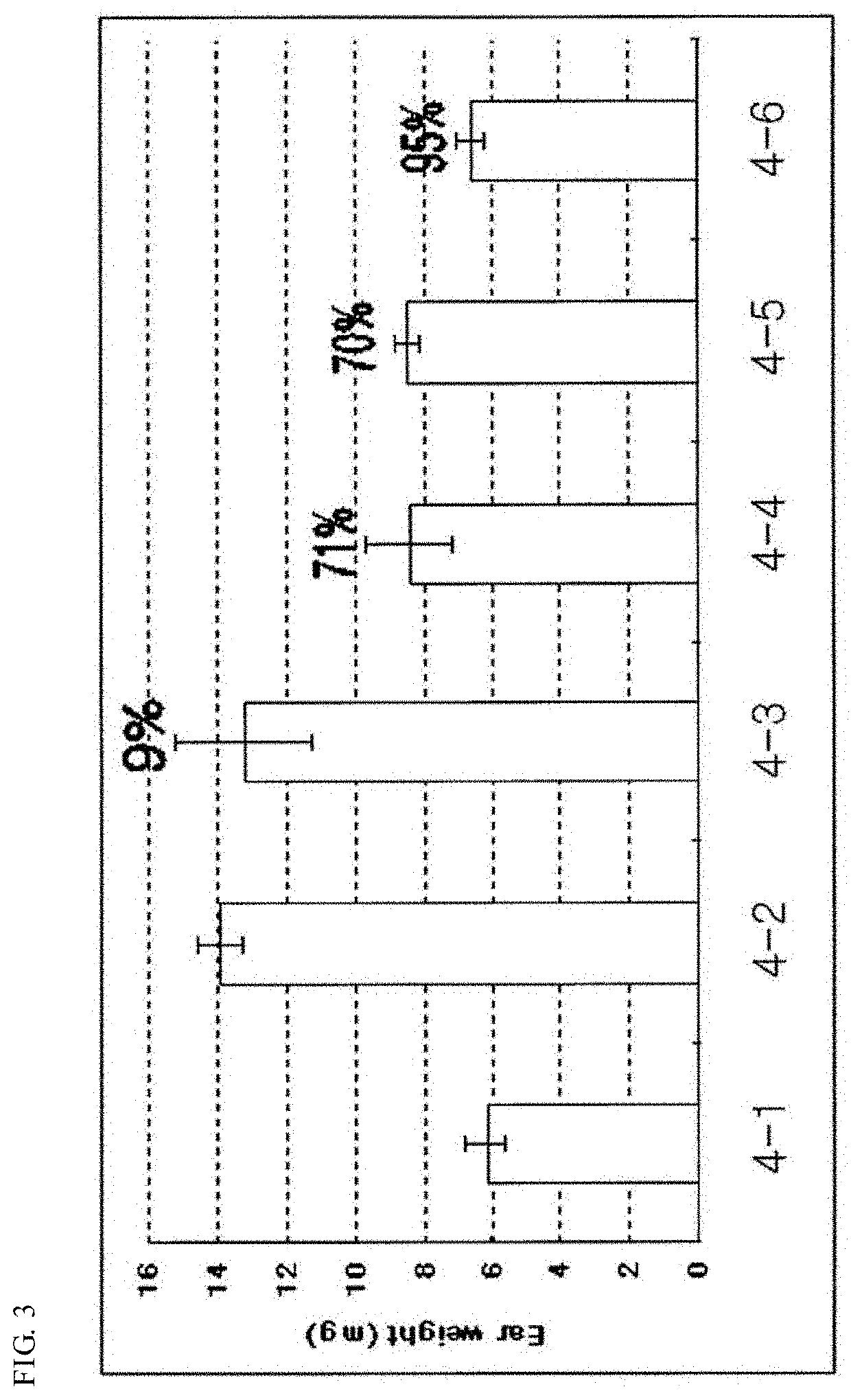
Figure 3
Abstract
Description
CROSS REFERENCE TO PRIOR APPLICATIONS
[0001] This application is the 35 U.S.C. 371 national stage of International application PCT / KR2017 / 011744 filed on Oct. 23, 2017; which claims priority to Korean application 10-2016-0142723 filed on Oct. 31, 2016. The entire contents of each of the above-identified applications are hereby incorporated by reference.TECHNICAL FIELD
[0002] The present invention relates to a pharmaceutical composition having adenosine derivative for preventing or treating liver disease and, by extension, for preventing or treating nonalcoholic steatohepatitis (NASH) or nonalcoholic fatty liver disease (NAFLD), liver fibrosis and liver cirrhosis.BACKGROUND ART
[0003] Adenosine is a ligand which regulates cell signaling, which accounts for various physiological functions through specific adenosine receptors located in the cell membrane. Adenosine, an extracellular substance, acts as a neurotransmitter in a variety of physical systems, typically functioning to compensate fo...
Examples
preparation example 1
Preparation of (3 aR,4R,6aS)-2,2-dimethyltetrahydrothieno[3,4-d][1,3]dioxol-4-yl acetate
Step a1. Preparation of (3aR,4R,6R,6aR)-6-(2,2-dimethyl-1,3-dioxolan-4-yl)-2,2-dimethyl-tetrahydrofuro[3,4-d][1,3]dioxol-4-ol
[0138]To acetone (50 ml) were added D-mannose (1.74 g, 6.52 mmol) and 2,2-dimethoxypropane (2.45 ml, 19.55 mmol) with stirring, followed by cooling the solution to 0° C. To the solution was dropwise added conc. sulfuric acid (0.45 g, 1.96 mmol). The resulting reaction mixture was stirred at room temperature for 24 hrs, followed by neutralization with triethylamine and concentration in a vacuum. The concentrate was purified by silica gel column chromatography using a mixture of hexane:ethyl acetate (1:1, v / v) as an elution solvent to afford the object compound as a white solid (1.61 g, 95%).
[0139]m.p. 120.3-120.5° C.
[0140]1H-NMR (CDCl3) δ 5.34 (s, 1H), 4.76-4.79 (m, 1H), 4.58 (d, 1H, J=6.0 Hz), 4.34-4.39 (m, 1H), 4.15 (dd, 1H, J=3.6, 7.2 Hz), 4.00-4.08 (m, 2H);
[0141][α]25D 1...
preparation example 2
Preparation of (3aS,4S,6aS)-2,2-Dimethyl-tetrahydrofuro[3,4-d][1,3]dioxol-4-yl acetate
Step b1. Preparation (3aR,4R,6aR)-2,2-dimethyl-tetrahydrofuro[3,4-d][1,3]dioxol-4-ol
[0163]2,3-O-isopropylidene-D-erythronolactone (1.04 g, 6.42 mmol) was dissolved in toluene (20 ml), followed by the addition of 1 M diisobutylaluminium hydride (DIBAL) / THF to the solution at −78° C. The reaction mixture was stirred at the same temperature for 30 min and methanol was slowly added until the reaction terminated. The suspension was filtered through a Celite filter and the filtrate was extracted with ethyl acetate and water, followed by silica gel column chromatography using a mixture of hexane:ethyl acetate (3:1, v / v) to give the object compound in syrup form (1.94 g, 96%).
[0164]1H-NMR (CDCl3) δ 5.39 (s, 1H), 4.82 (dd, 1H, J=3.6, 6.0 Hz), 4.55 (d, 1H, J=6.0 Hz), 4.05 (dd, 1H, J=3.6, 10.2 Hz), 4.00 (d, 1H, J=10.0 Hz), 1.45 (s, 3H), 1.30 (s, 3H).
Step b2. Preparation of (3aS,4S,6aS)-2,2-dimethyl-tetrahydro...
example 1
Synthesis of (2R,3R,4S)-2-(2-Chloro-6-(3-fluorobenzylamino)-9H-purin-9-yl)tetrahydrothiophen-3,4-diol
Step 1. Preparation of 2,6-dichloro-9-((3aR,4R,6aS)-2,2-dimethyltetrahydrothieno[3,4-d][1,3]dioxol-4-yl)-9H-purine
[0167]A solution of 2,6-dichloropurine (2.29 g, 22.12 mmol) and ammonium sulfate (438 mg, 3.32 mmol) in hexamethyldisilazane (HMDS, 50 ml) was fluxed overnight under inert, dry conditions. The resulting reaction mixture was concentrated in a vacuum and the solid mixture thus formed was re-dissolved in cold 1,2-dichloroethene (20 ml). To this solution were dropwise added a solution of (3aR,4R,6aS)-2,2-dimethyltetrahydrothieno[3,4-d][1,3]dioxol-4-yl acetate (1.41 g, 11.06 mmol), obtained in Preparation Example 1, in 1,2-dichloroethane (20 ml), and then trimethylsilyl trifluoromethanesulfonate (TMSOTf, 4.0 ml, 22.12 mmol). The resulting solution was stirred at 0° C. for 30 min and then at room temperature for 1 hr, and heated at 80° C. for 2 hrs with stirring. The reaction m...