
Agent for inhibiting production of hepatitis c virus and its use
a technology for hepatitis c virus and agents, which is applied in the direction of synthetic polymeric active ingredients, drug compositions, plant/algae/fungi/lichens ingredients, etc., can solve the problem of unclear effective chemical substances in blueberry leaf, and achieve significant anti-hcv activity, fewer side effects, and long dosing period.
Patent Information
- Authority / Receiving Office
- US · United States
- Patent Type
- Applications(United States)
- Current Assignee / Owner
- Publication Date
- 2010-03-04
- Estimated Expiration
- Not applicable · inactive patent
Smart Images
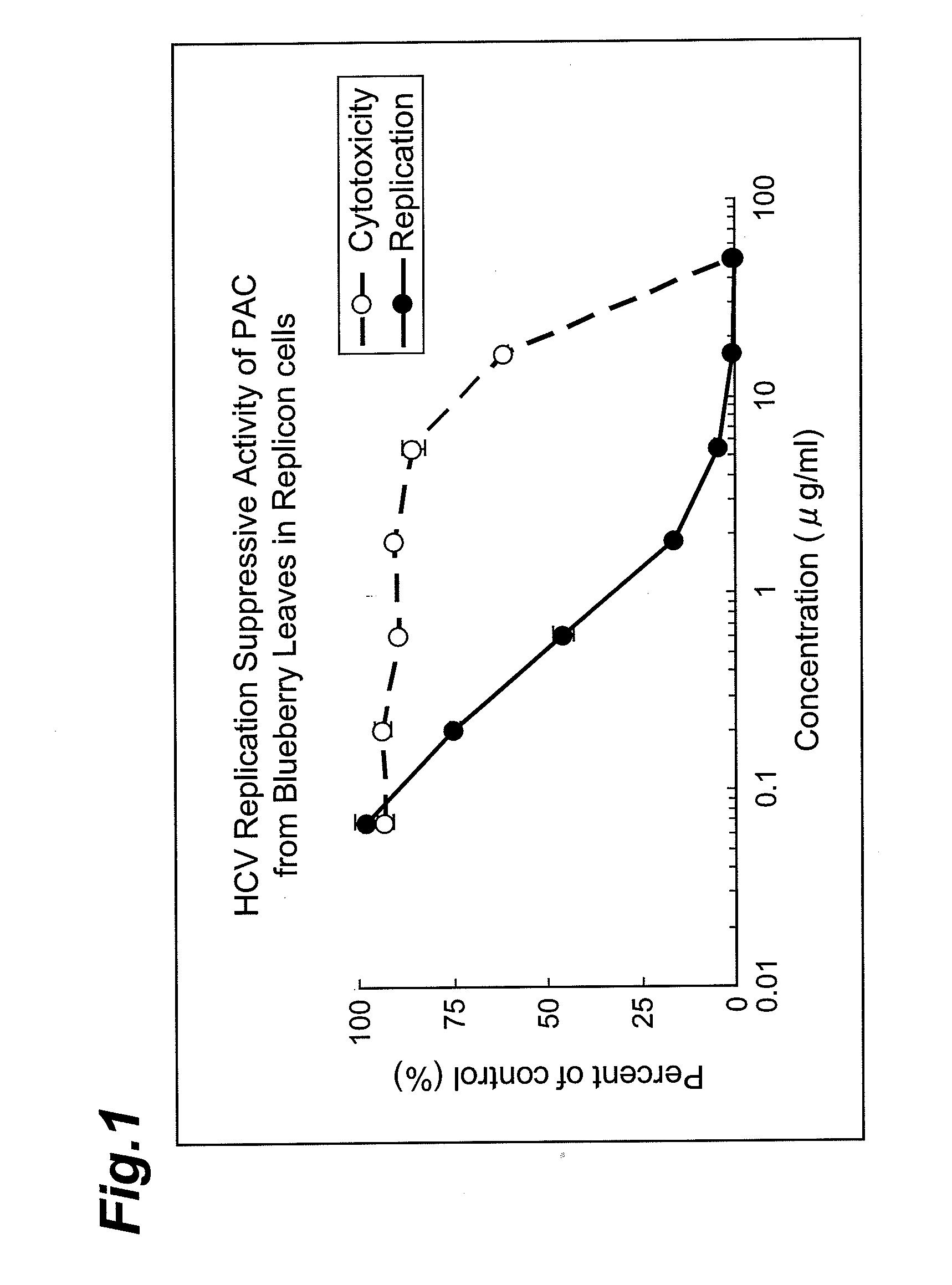
Figure 1 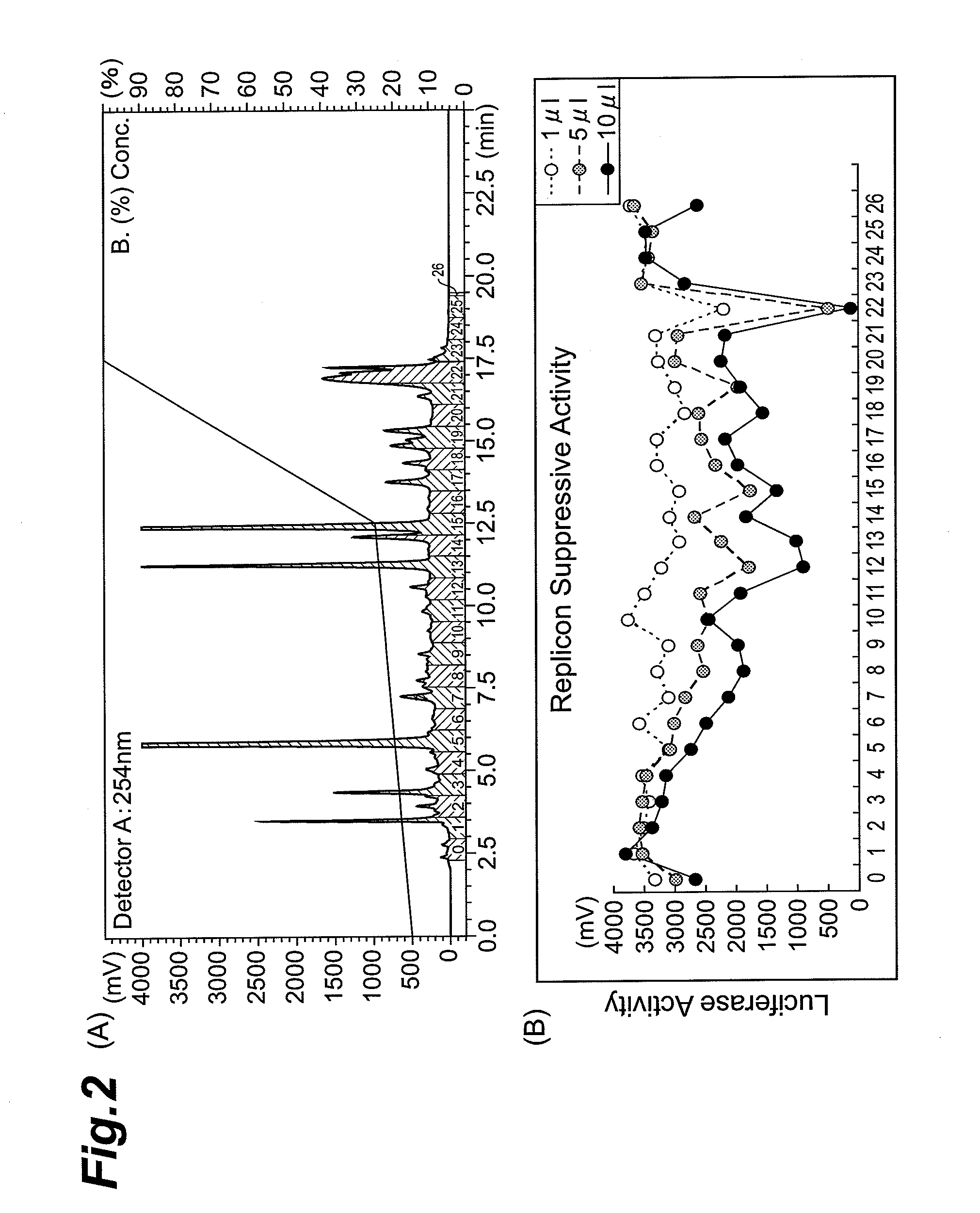
Figure 2 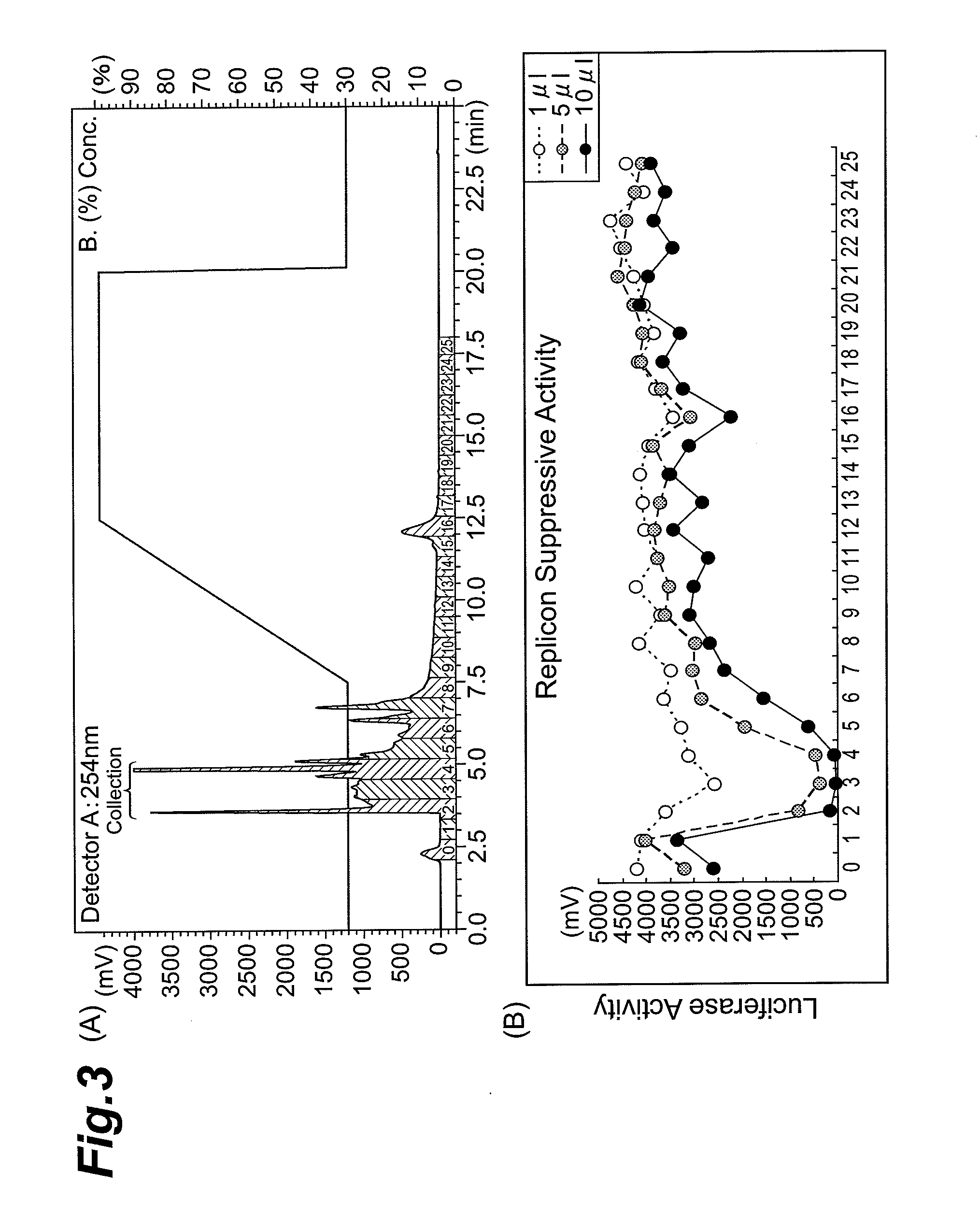
Figure 3
Abstract
Description
BACKGROUND OF THE INVENTION
[0001] 1. Field of the Invention
[0002] This invention relates to an agent for inhibiting production of hepatitis C virus. In particular, this invention also relates to use of proanthocyanidin.
[0003] 2. Related Background Art
[0004] Hepatitis C virus (hereinafter referred to as HCV) has been found as a major causal virus of non-A non-B hepatic inflammation after blood transfusion. HCV is a single-strand RNA virus having an envelope and belongs to Hepacivirus of Flaviviridae.
[0005] In some cases, HCV carriers progress directly to chronic hepatitis without acute hepatitis and then to cirrhosis after many years. About 50 percents of HCV carriers go onto the development of hepatocellular carcinoma. It is said that main cause of such development is persistent infection with HCV. The persistent infection tends to occur even in adults who were infected with HCV after establishing immune system. Even in case of a patient whose site or sites of hepatocellular carcinoma ha...
Examples
example 1
Identification of Effective Compounds for Suppressing HCV Replication Contained in the Blueberry Leaves
[0125]1. Extraction and Liquid-Liquid Distribution
[0126]One gram of the lyophilized powder, which made from the leaves of rabbit-eye blueberry (Vaccinium virgatum Aiton), was extracted with 100 ml of methanol at room temperature under shaking for 15 min, and the supernatant of the resultant extract was passed through filter paper (Toyo filter paper No. 2). The methanol extract was further extracted with 100 ml of chloroform, followed by the resultant precipitate and supernatant were collected. The precipitate was dissolved in methanol, concentrated in vacuo and lyophilized (CMW-ppt: 63.7 mg). The supernatant was mixed with 150 ml of distilled water and methanol to perform a liquid-liquid extraction, and the water layer was collected and mixed with 150 ml of chloroform so as to repeat the chloroform extraction. The water layer was concentrated and lyophilized (CMW-W: 284.2 mg). The ...
example 2
Extraction of PAC Contained in Some of Material and Replication Suppressive Activities
[0226]1. PAC Preparation from Various Materials
[0227]From results of example 1, the proanthocyanidin (PAC) was identified as compound possessing the suppression activity of HCV replication. PAC is previously known as condensed tannin and contained in various plants and foods. It has been already reported that the following materials contain PAC, so, PAC fraction can be separated from these materials.
[0228]Sample 1; blueberry leaves
[0229]Sample 2; blueberry fruit
[0230]Sample 3; taro peel
[0231]Sample 4; pine bark extract (Pycnogenol™)
[0232]Sample 5; grape seed extract (Gravinol™)
[0233]Sample 6; apple polyphenol (Applephenol™)
[0234]Sample 7; cranberry (cranberry powder)
[0235]Sample 8; strawberry fruit
[0236]Sample 9; peanut peel
[0237]Sample 10; croton sap (Sangre de Drago, Raintree Nutrition Inc.)
[0238](Separation of PAC Fraction from Blueberry Leaves: Sample 1)
[0239]10 g of the lyophilized powder of r...
example 3
The Bulk Preparation of PAC from Blueberry Leaves
[0251]To prepare PAC from blueberry leaves, freeze-dried powder (105 g) was extracted with 1.2 liters of acetone for 10 min and the supernatant obtained was then decanted. This procedure was repeated five times to remove the green pigment from the leaves, followed by washing in 1.2 liters of hexane for 10 min. The remaining residues were washed with ethyl acetate. The washed powder of leaves was further extracted with 1.2 liters of methanol for 30 min, and the supernatant obtained was then filtered. This procedure was repeated four times and the resulting crude methanol extracts were concentrated by rotary evaporator at 50° C. and lyophilized, finally resulting in approximately 30 g of solid powder.
[0252]The crude methanol extract (15 g) was then dissolved in 1.0 liters of 60% methanol and placed on a Sephadex LH-20 column (50 mm×920 mm; GE Healthcare). Fractionation was performed using the following series of solvents: fraction I, 9....