
Biomass Processing
a biomass and processing technology, applied in the field of biomass bio oil, can solve the problems of increasing tar formation, and achieve the effects of reducing tar formation, increasing tar formation, and quickly quenching
Patent Information
- Authority / Receiving Office
- US · United States
- Patent Type
- Applications(United States)
- Current Assignee / Owner
- Publication Date
- 2015-07-02
- Estimated Expiration
- Not applicable · inactive patent
Smart Images
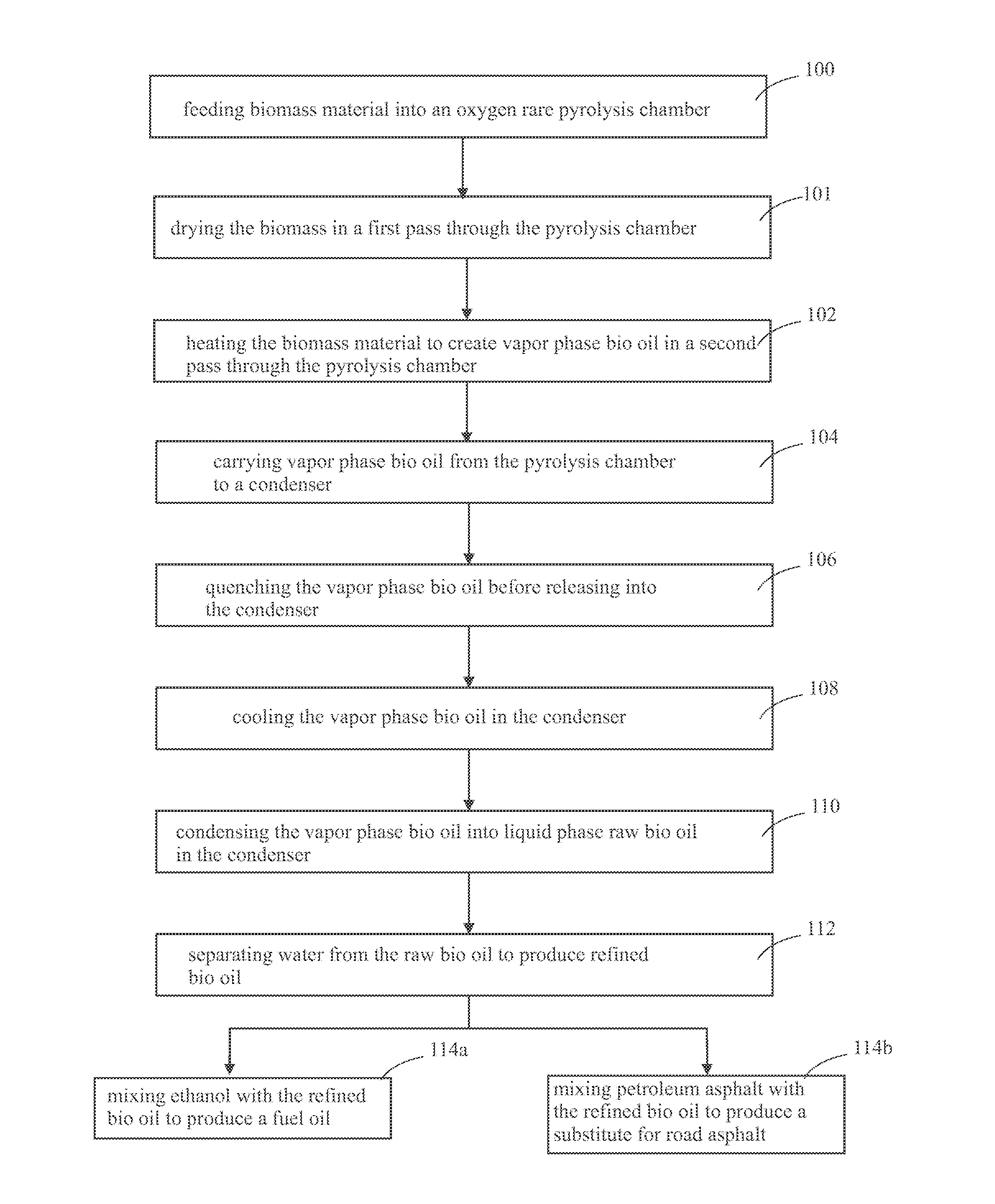
Figure 1 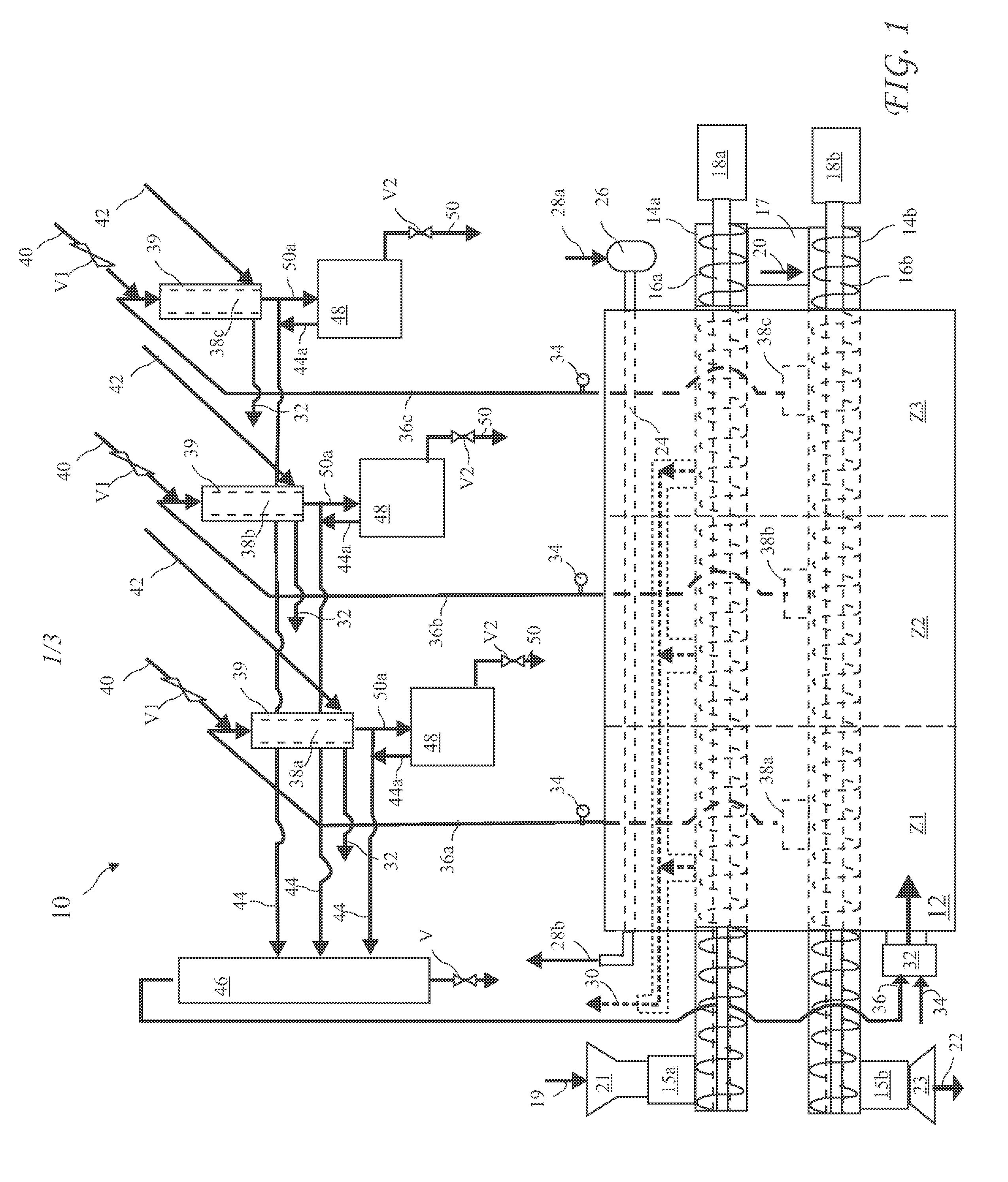
Figure 2 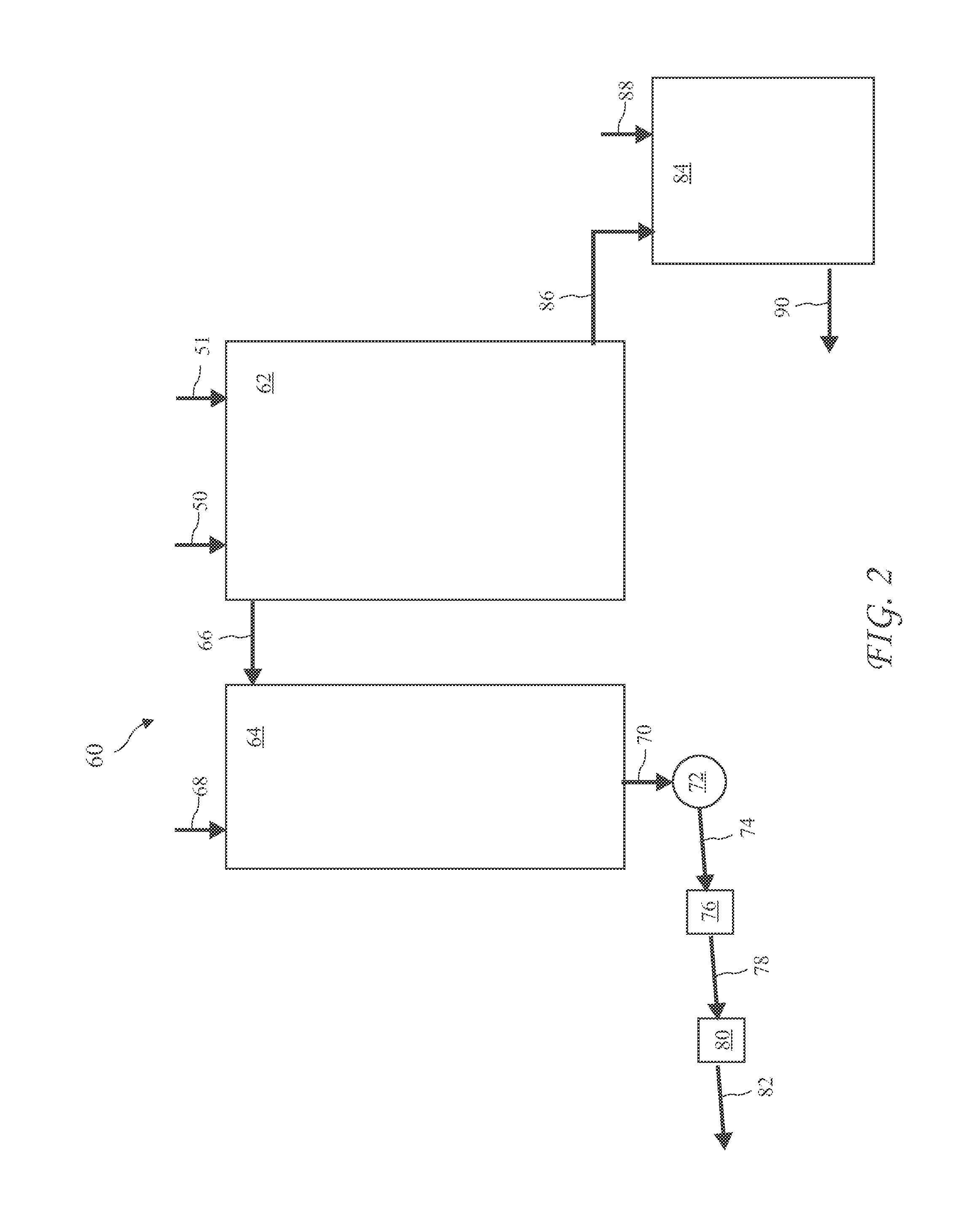
Figure 3
Abstract
Description
[0001] The present application is a Continuation In Part of U.S. patent application Ser. No. 14 / 140,766 filed Dec. 26, 2013 and U.S. patent application Ser. No. 14 / 140,956 filed Dec. 26, 2013, which applications are incorporated in their entirety herein by reference.BACKGROUND OF THE INVENTIONBackground of the Invention
[0002] The present invention relates to biomass bio oil and in particular to a method for converting biomass feed material into a useful fuel oil or a useful road asphalt.
[0003] Biomass is comprised mainly of cellulose, hemi cellulose and lignin. A typical woody biomass may contain 40-50% cellulose, 25-35% hemi cellulose, and 15-18% lignin. Typical yields from a slow pyrolysis machine are 30% charcoal containing 70% plus carbon, 35% non-condensable gases containing hydrogen, methane, carbon mono oxide, carbon dioxide primarily, and 35% pyrolysis oil, also known as bio oil or bio crude, consisting tar, aldehydes, formic acid, acetic acid, water, esters, phenols, sugar der...
Examples
Embodiment Construction
[0034]The following description is of the best mode presently contemplated for carrying out the invention. This description is not to be taken in a limiting sense, but is made merely for the purpose of describing one or more preferred embodiments of the invention. The scope of the invention should be determined with reference to the claims.
[0035]A pyrolysis system 10 for producing bio oil according to the present invention is shown in FIG. 1. The pyrolysis system 10 primarily includes a torrefaction / drying chamber 12 containing augers 16a and 16b residing in first and second auger housings, a drying / torrefaction tube 14a and a carbonizing tube 14b respectively, extending through the length of the torrefaction / drying chamber 12. The augers 16a and 16b are rotated by a motors 18a and 18b respectively. Biomass feed material 19, for example dry sawdust, is fed through an entry 21 into the drying / torrefaction tube 14a at one end of the torrefaction / drying chamber 12. The Biomass feed mat...