
Cancer therapy with an oncolytic virus combined with a checkpoint inhibitor
a technology of oncolytic virus and checkpoint inhibitor, which is applied in the field of pharmaceutical compositions, can solve the problems of cancer cells that are often defective in their ability, cancer is the most costly disease, and already huge economic burden is expected to continue to grow
Patent Information
- Authority / Receiving Office
- US · United States
- Patent Type
- Applications(United States)
- Current Assignee / Owner
- Publication Date
- 2019-04-25
Smart Images
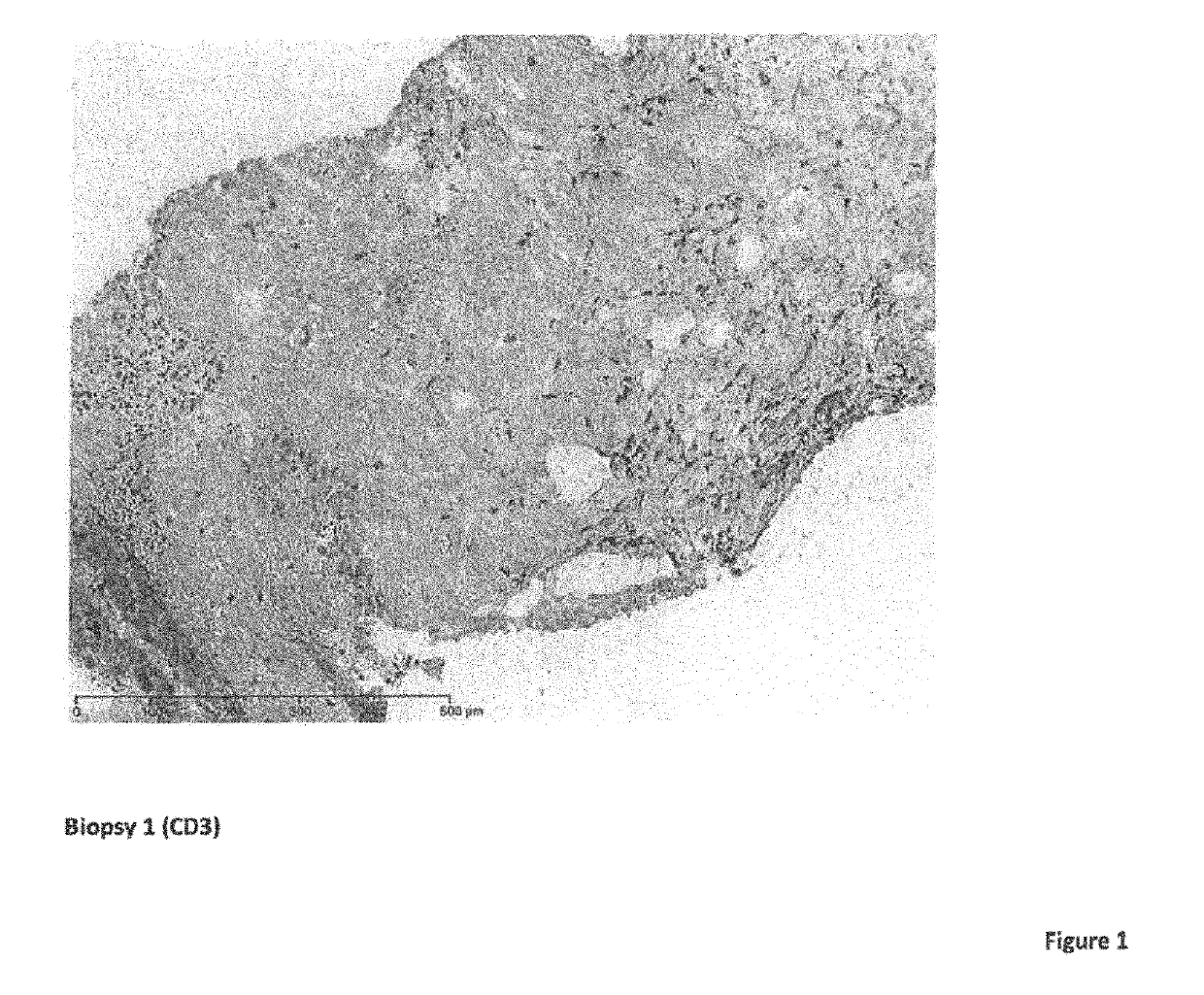
Figure 1 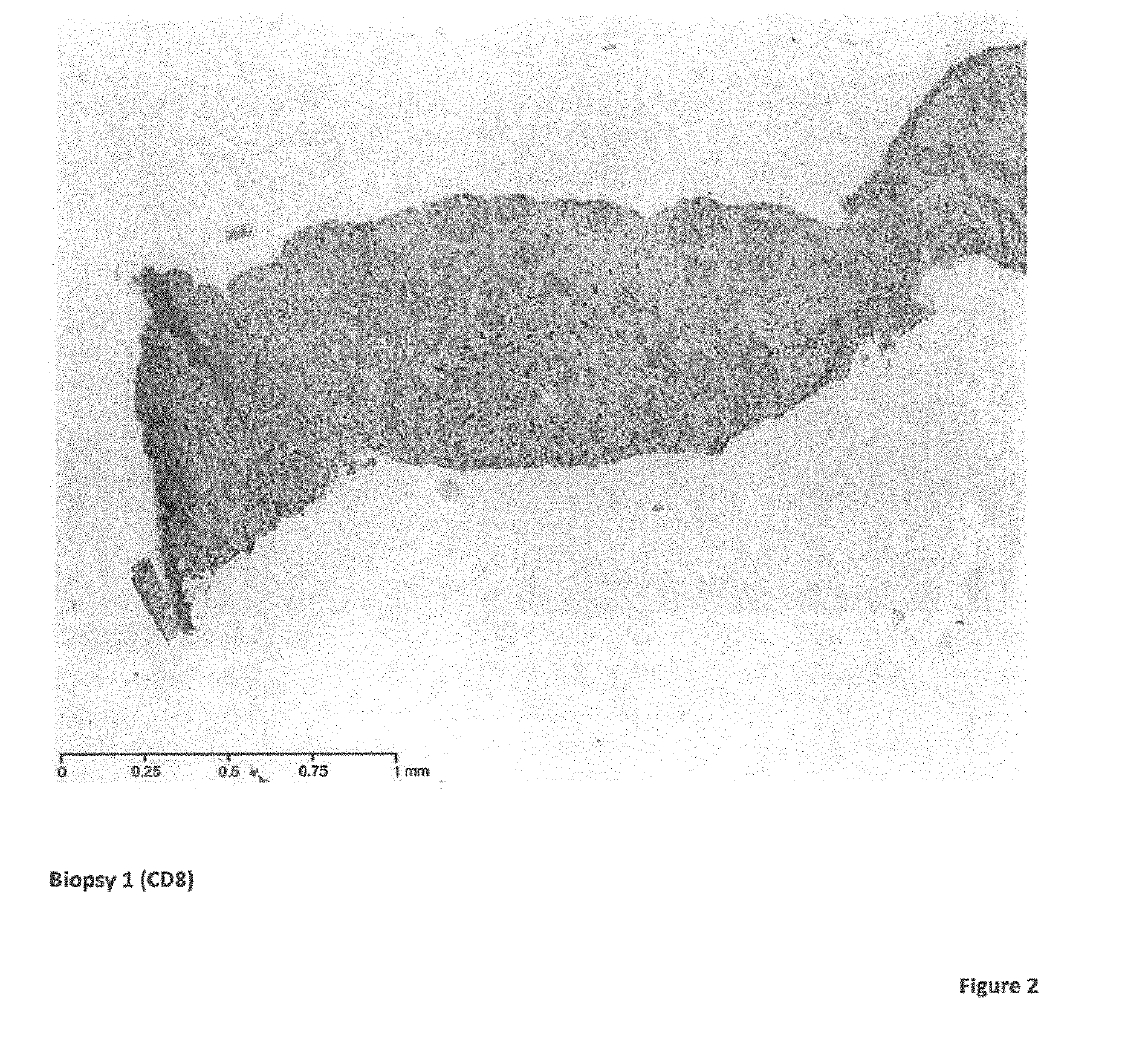
Figure 2 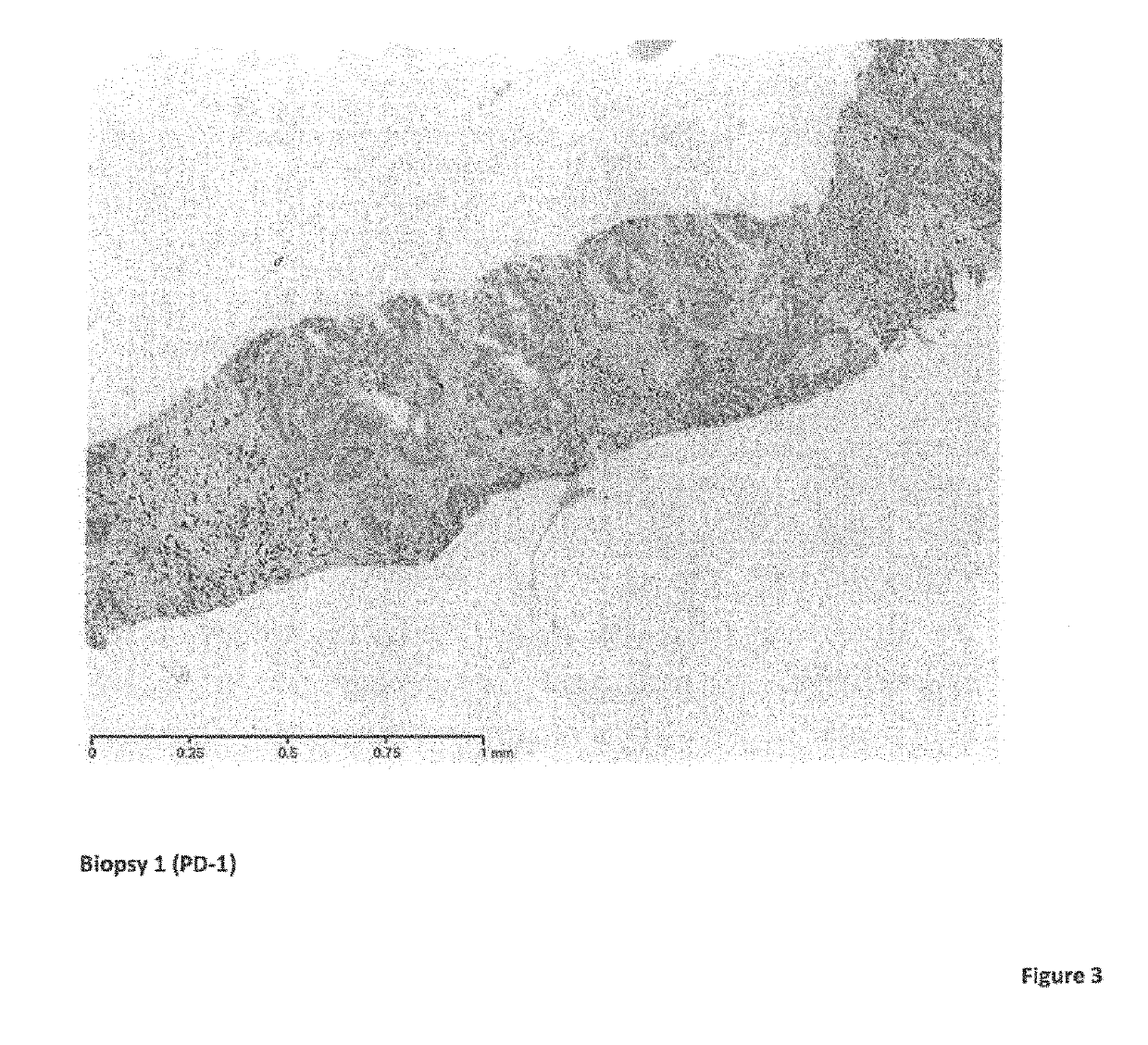
Figure 3
Abstract
Description
RELATED APPLICATIONS AND INCORPORATION BY REFERENCE
[0001] This application is a continuation-in-part to international application Serial No. PCT / EP2017 / 056886 filed Mar. 22, 2017 and published as Publication No. WO2017 / 167626 on Oct. 5, 2017, claiming the benefit of priority from EP Patent Application Nos. EP16163555.2 filed Apr. 1, 2016 and EP 16020193.5 filed May 27, 2016. The content of each of the aforementioned Patent Applications is incorporated herein by reference in its entirety.
[0002] The foregoing applications, and all documents cited therein or during their prosecution (“appin cited documents”) and all documents cited or referenced in the appin cited documents, and all documents cited or referenced herein (“herein cited documents”), and all documents cited or referenced in herein cited documents, together with any manufacturer's instructions, descriptions, product specifications, and product sheets for any products mentioned herein or in any document incorporated by referen...
Examples
example 1
ethods
[0086](a) Fluorescence In Situ Hybridization (FISH)
[0087]Fish Assay:
[0088]The method procedure was performed essentially as described by Silahtaroglu et al (Molecular and Cellular Probes. 2003; 17:165-169) and Nehmé et al (J Neurosci Methods. 2011; 196:281-288). The FISH assay was first established in human NBK cells cultured in vitro and extended to paraffin-embedded tumor tissue deriving from human glioma xenografts in immunodefficient rats. The assay protocol was then applied for the detection of H-1PV DNA and RNA sequences in patient-derived paraffin-embedded or cryopreserved tumor material.
[0089]Positive and Negative Controls:
[0090]In each FISH assay, paraffin-embedded tumor tissue deriving from H-1PV- or mock-treated human glioma xenografts in rats were used as positive or negative controls, respectively. No probe (reagent substitution negative control; target-specific hybridization probe omitted) and mismatch (target-specific hybridization probe with 3-5 nucleotides swa...
example 2
Modality Treatment with Parvovirus H-1 and Checkpoint Inhibitor in a Patient Having a Metastasizing CRC (Colorectal Cancer)
[0115]A patient suffering from colorectal cancer (poorly differentiated adenocarcinoma of colon transversum; mutation status: KRAS WT, NRAS WT, MSS; first surgery 2013) with progressing liver metastases (progression in size and number) was treated with a cumulative dose of 1.2×10⁹ PFU parvovirus H-1 applied in three consecutive daily infusions (4×10⁸ pfu; day 1-3), followed by treatment with the immune checkpoint inhibitor pembrolizumab (Keytruda®) according to the manufacturer's posology (2 mg / Kg / BW, day 1). This treatment with the same dosage regimen was repeated after 5 weeks.
[0116]Biopsies performed on the liver metastasis were taken prior to treatment and at various time points during the treatment with the following surprising findings: in comparison to the first biopsy which was prior to the H-1PV+pembrolizumab treatment, lymphocytic infiltration was obse...
example 3
Modality Treatment with Parvovirus H-1 and Checkpoint Inhibitor in a Primary Inoperable GBM (Glioblastoma Multiforme) Patient
[0120]A patient suffering from inoperable glioblastoma multiforme was treated with a cumulative dose of 1.2×10⁹ PFU parvovirus H-1 applied in three consecutive daily infusions, followed by treatment with pembrolizumab (Keytruda®) according to the manufacturer's posology (2 mg / Kg / BW, 3 days after H1-PV administration).
[0121]MRI was taken prior to the therapy and during the treatment with the H-1 PV+checkpoint inhibitor pembrolizumab. It revealed a size reduction of the tumor exceeding 30% after 55 days of treatment and a nearly complete remission at day 101. The patient is doing well and does not require any additional medication. The MRIs are shown in FIG. 16.