
Cosmetic preparation
a technology of cosmetic preparation and skin, applied in the field of cosmetic preparation, can solve the problems of user's skin not feeling natural cosmetics not being favorable,
Patent Information
- Authority / Receiving Office
- US · United States
- Patent Type
- Patents(United States)
- Current Assignee / Owner
- Publication Date
- 2012-03-27
Smart Images
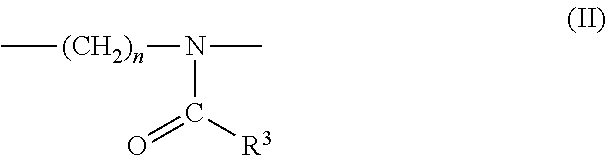
Figure 1 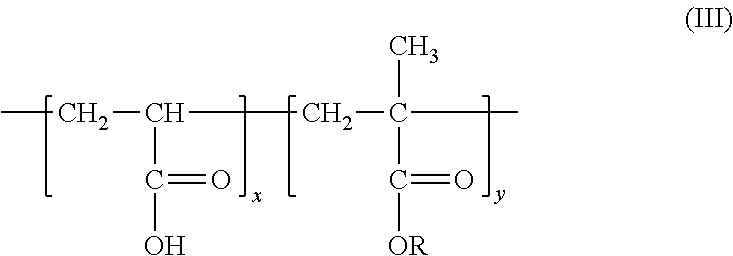
Figure 2
Abstract
Description
FIELD OF THE INVENTION
[0001] The invention relates to a cosmetic preparation, which can be in the form of cosmetic sheet, powder spray cosmetic, gel cosmetic, two phase separable cosmetic, emulsion cosmetic or the like.BACKGROUND OF THE INVENTION
[0002] Commercially available cosmetics containing a powder include makeup cosmetics such as foundation, face powder, rouge, and eye shadow; body cosmetic formulations such as body powder, baby powder, and body lotion; lotions such as face lotion and preshave lotion; as well as emulsions, creams, and the like. Powders are added to these cosmetics for the purpose of providing them with several functions, e.g., improving spreadability on the skin and the feeling thereof, concealing wrinkles, and the like.
[0003] Examples of the powders include inorganic powders such as silica and talc; and resin powders of polymethyl methacrylate, crosslinked polystyrene, nylon, polyethylene, and the like.
[0004] When applied on the skin, cosmetics containing an ino...
Examples
preparation example 1
[0128]82 g of lauryl methacrylate, 3 g of methacrylic acid, 15 g of ethylene glycol dimethacrylate, and 2 g of lauroyl peroxide were mixed and stirred in a beaker until dissolved. A solution of 0.75 g of sodium N-stearoyl-N-methyltaurine (SMT) in 400 g of ion-exchange water was added thereto, and the mixture was dispersed by using a homomixer until the particle size of oil droplet became 2.2 μm.
[0129]The dispersion was transferred into a four-necked flask, and the flask was purged and substituted with nitrogen for 30 minutes while the dispersion was stirred. The mixture in the flask was heated in an oil bath to a temperature of 80° C., allowed to polymerize at 80° C. for 5 hours, and then allowed to cool to room temperature. The polymerized particles were collected by freeze drying the dispersion, to give a resin powder A.
preparation example 2
[0130]A neutralized resin powder A was prepared in a similar manner to Preparation Example 1, except that the dispersion containing polymerized particles in Preparation Example 1 was neutralized by dropwise addition of 3.9 g of 1N NaOH. The neutralized resin powder A had a carboxyl group neutralization degree of 11.2%.
preparation example 3
[0131]82 g of butyl acrylate, 3 g of methacrylic acid, 15 g of ethylene glycol dimethacrylate, and 2 g of lauroyl peroxide were mixed and stirred in a beaker until dissolved. A solution of 0.75 g of sodium N-stearoyl-N-methyltaurine (SMT) in 400 g of ion-exchange water was added thereto, and the mixture was dispersed by using a homomixer until the particle size of oil droplet became 3.5 μm.
[0132]The dispersion was transferred into a four-necked flask, and the flask was purged and substituted with nitrogen for 30 minutes while the dispersion was stirred. The mixture in the flask was heated in an oil bath to a temperature of 80° C., allowed to polymerize at 80° C. for 5 hours, and then allowed to cool to room temperature. The polymerized particles were collected by freeze-drying the dispersion, to give a resin powder B.