
Preforging mould structure for processing shaft fork part stamp forgings
A technology for die forgings and parts, which is applied in the field of pre-forging die structures for the processing of die forgings such as shafts and forks. It can solve problems such as insufficient filling of the fork head, and achieve the effects of small flash width, small horizontal projection area, and cost savings.
Active Publication Date: 2012-03-14
江苏南洋中京科技有限公司
View PDF5 Cites 6 Cited by
- Summary
- Abstract
- Description
- Claims
- Application Information
AI Technical Summary
Problems solved by technology
[0010] The purpose of the present invention is to provide a pre-forging die structure for die forging processing of shaft and fork parts, mainly to solve the problem that the existing forging process is easy to make the fork head of the forging not full enough, realize material saving, reduce the scrapping rate of forgings, Increase the life of the mold, reduce and save equipment investment, investment and energy consumption; improve product quality, reduce production costs, and benefit environmental protection
Method used
the structure of the environmentally friendly knitted fabric provided by the present invention; figure 2 Flow chart of the yarn wrapping machine for environmentally friendly knitted fabrics and storage devices; image 3 Is the parameter map of the yarn covering machine
View moreImage
Smart Image Click on the blue labels to locate them in the text.
Smart ImageViewing Examples

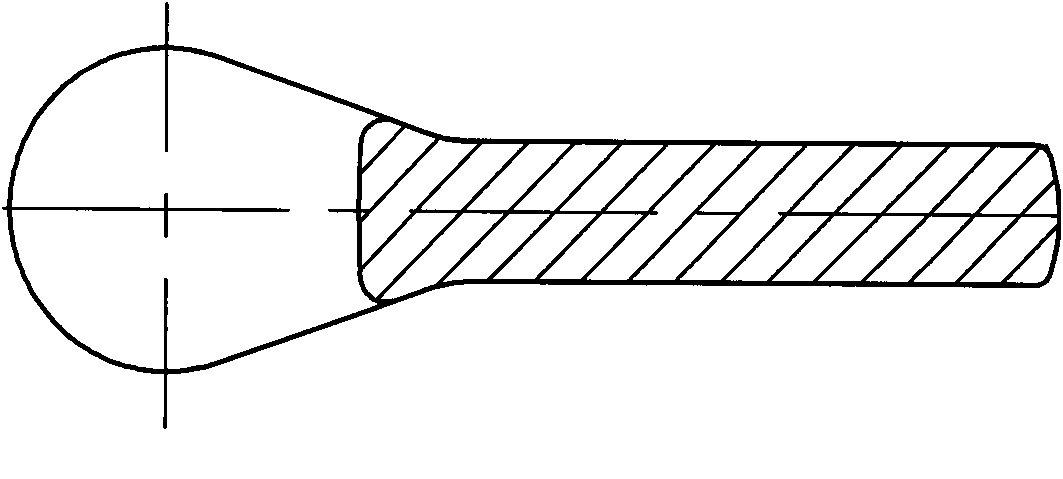
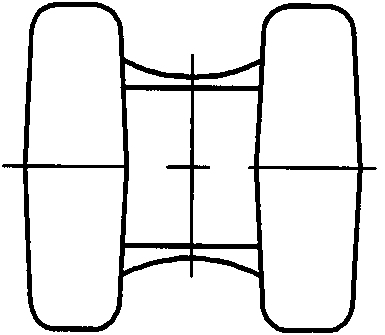
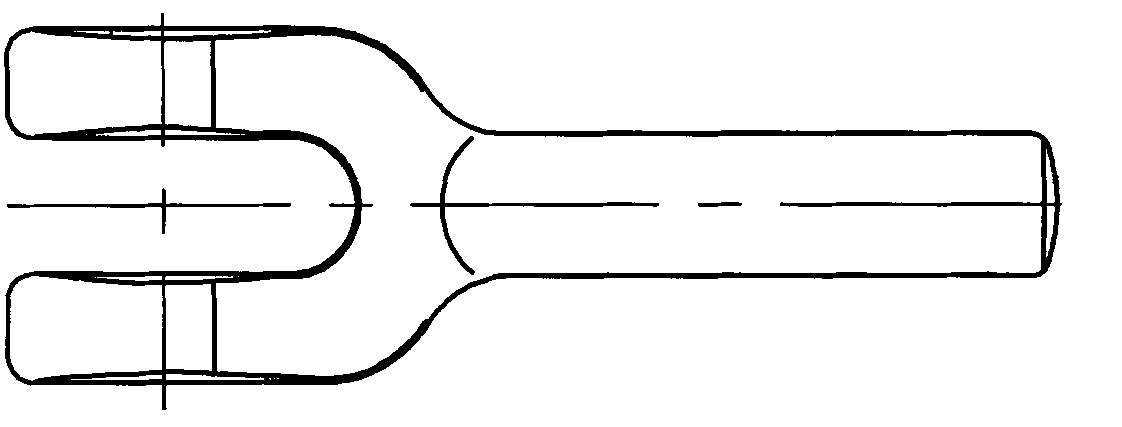
Examples
Experimental program
Comparison scheme
Effect test
Embodiment
[0037] Embodiment: For the FB bushing fork type of automobile and the AK1202 type shaft fork, the downward extension H of the parting surface of the pre-forging die is 2.2 mm and 5.5 mm, and the container ship lashing 1604, 1608 type shaft fork is adopted by the pre-forging die The downward extension H of the parting surface is 3.1 mm, and it is still processed on the hot die forging press equipment of the original tonnage, which completely eliminates the defects of insufficient upper surface. It is 88% to 92%, and the problem of the offset of the blank in the operation arrangement no longer exists. It can be seen that a seemingly inconspicuous improvement has achieved extremely large and excellent results.
the structure of the environmentally friendly knitted fabric provided by the present invention; figure 2 Flow chart of the yarn wrapping machine for environmentally friendly knitted fabrics and storage devices; image 3 Is the parameter map of the yarn covering machine
Login to View More PUM
 Login to View More
 Abstract
The invention relates to a mould structure for processing mechanical parts, in particular to a preforging mould structure for processing shaft fork stamp forgings. The preforging mould structure for processing the shaft fork part stamp forgings comprises a preforging upper mould and a preforging lower mould which are used for horizontally arranging a shaft fork part forging and pressing mould and is characterized in that: on the outer edge of the shaft fork part, mould joints of the preforging upper and lower moulds are positioned on the upper and lower symmetrical central surfaces of the part; and on the mould joint of an inner circle of a fork lug part, namely a U-shaped inner circle, the preforging upper mould is extended downward one circle, and the preforging lower mould is recessed downward one circle of the corresponding height. Due to the mould structure, under the condition of the same amount of the used materials, a cavity can be filled by metal conveniently, rejection rate of a forging is reduced, a flash width is smaller, a horizontal projection area is smaller, equipment tonnage can be reduced, the bearing load of the mould is smaller, the service life of the mould can be prolonged, and due to slight flash, materials and cost can be saved, and problems that blank is deflected and is not placed stably before can be solved.
Description
technical field [0001] The invention relates to a die structure for processing mechanical parts, in particular to a pre-forging die structure for processing die forgings such as shaft forks. Background technique [0002] Shaft and yoke forgings are important connecting parts widely used in the transmission and lashing systems of automobiles and container ships, transmitting the torque of the engine and bearing the combined bending load. At present, the transmission systems of automobiles, trucks, heavy trucks, buses and various other vehicles all over the world, as well as container ships, use the shaft and fork die forgings as key transmission and lashing and fixing components, and the market demand is very large. Therefore, a slight change in the processing technology in the production and processing process, a slight improvement in quality, and a slight reduction in cost will have a great market impact and economic effect. [0003] One end of shaft fork products is a col...
Claims
the structure of the environmentally friendly knitted fabric provided by the present invention; figure 2 Flow chart of the yarn wrapping machine for environmentally friendly knitted fabrics and storage devices; image 3 Is the parameter map of the yarn covering machine
Login to View More Application Information
Patent Timeline
 Login to View More
 IPC IPC(8): B21J13/02B21K7/12
Inventor孙礼宾汪磊沈江王以利王为先
Owner江苏南洋中京科技有限公司