
Plant aversion tool and method
A technology for plants and utensils, applied in botany equipment and methods, animal repellants, plant growth regulators, etc., can solve problems such as troublesome farming costs, affecting crop photosynthesis and growth, and short-term effects
- Summary
- Abstract
- Description
- Claims
- Application Information
AI Technical Summary
Problems solved by technology
Method used
Image

Examples
Embodiment Construction
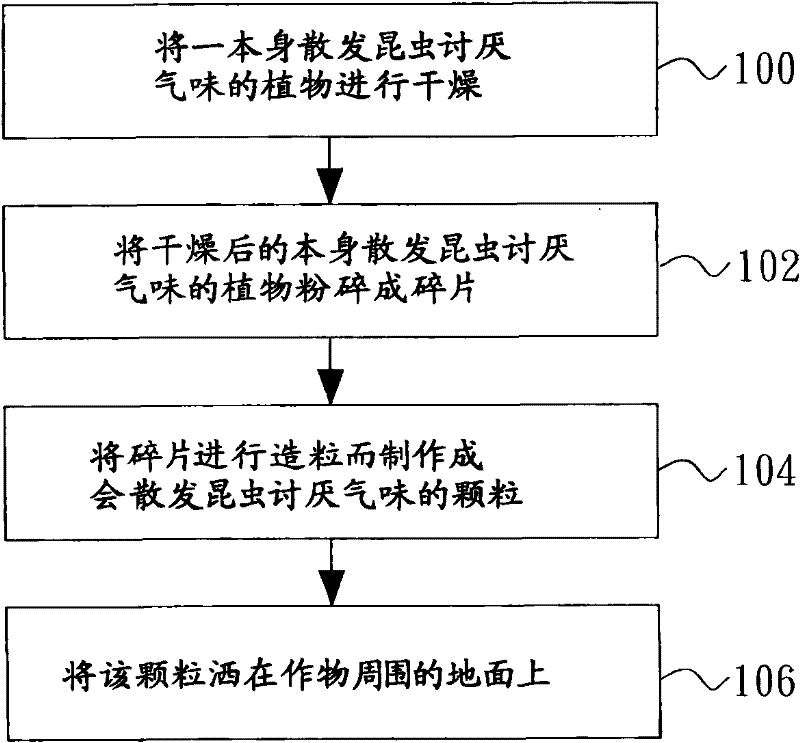
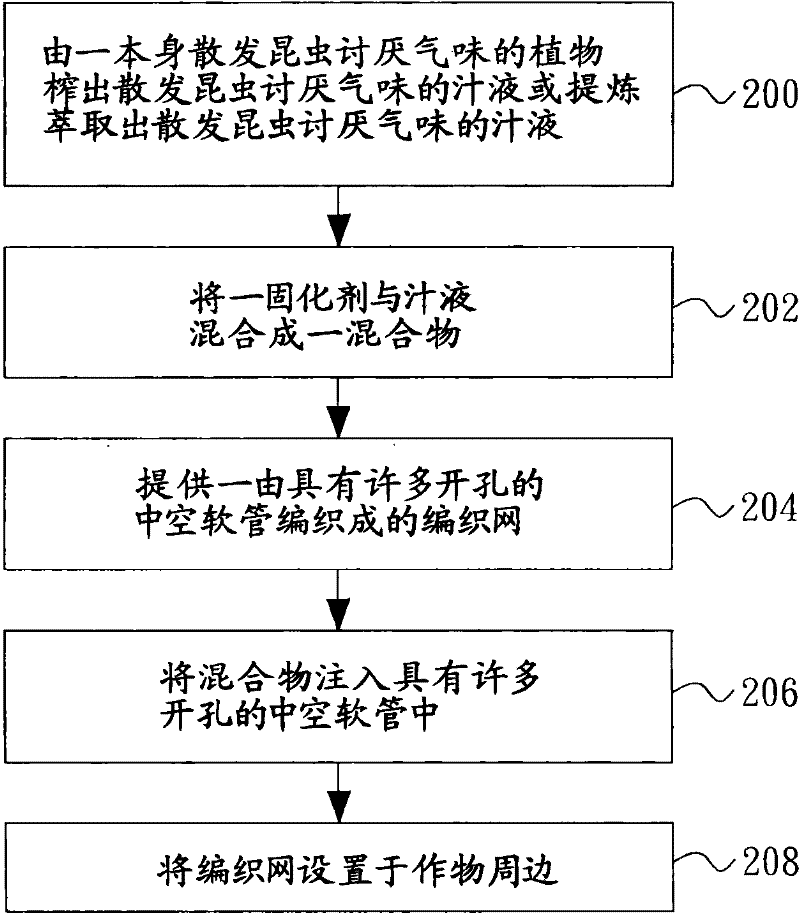
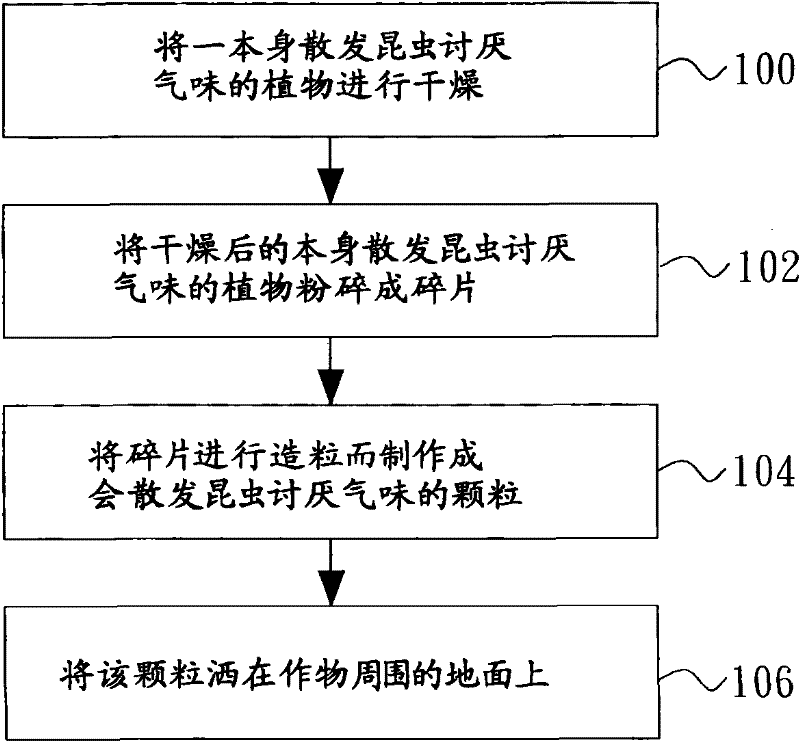
[0060] In order to further explain the technical means and effects of the present invention to achieve the intended purpose of the invention, in conjunction with the accompanying drawings and preferred embodiments, the specific implementation, structure, method and steps of the plant avoidance device and method proposed in accordance with the present invention will be described below. , Characteristics and effects, detailed description is as follows.
[0061] Reference figure 1 , Which is a flowchart of a method for avoiding plants according to an embodiment of the present invention. This plant repellent method uses plants that emit an unpleasant smell of insects, such as spicy plants, as raw materials to make granular plant repellents, and use the plant repellents to repel insects and protect crops in farmland from pests. This plant repellent is a particle that can continue to emit the unpleasant smell of insects. It contains plant fragments that emit the unpleasant smell of ins...
PUM
 Login to View More
 Abstract
Description
Claims
Application Information
 Login to View More