
Method for preparing cefprozil mother nucleus 7-amino-3-acryl cephalosporanic acid
A technology of propenyl cephalosporanic acid and cefprozil parent nucleus, applied in the direction of organic chemistry, etc., can solve the problems of low purity of cefprozil parent nucleus, low yield, incomplete decolorization and the like
- Summary
- Abstract
- Description
- Claims
- Application Information
AI Technical Summary
Problems solved by technology
Method used
Image

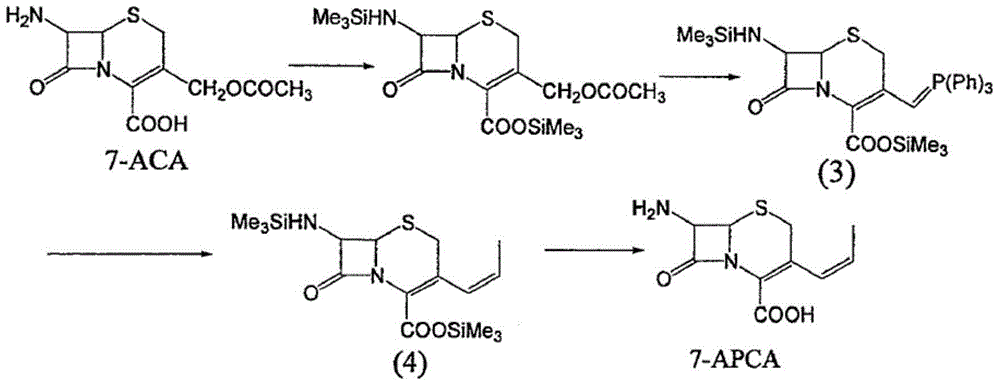
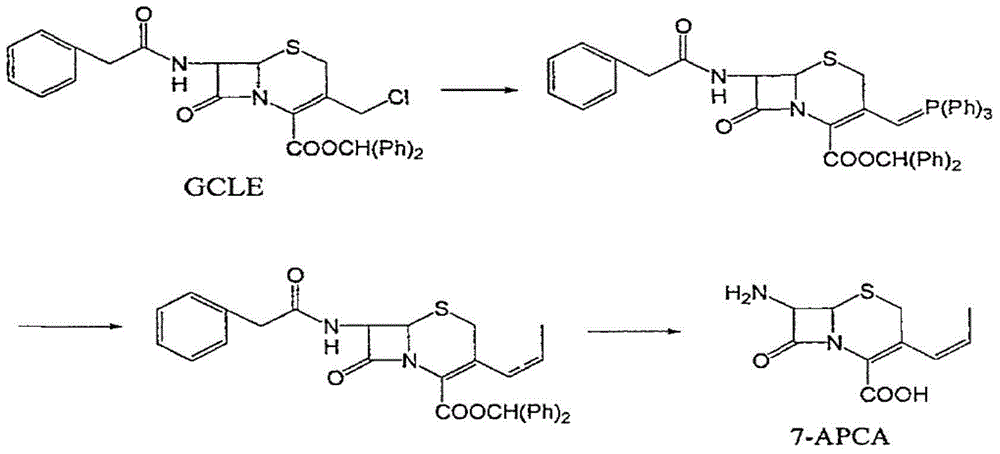
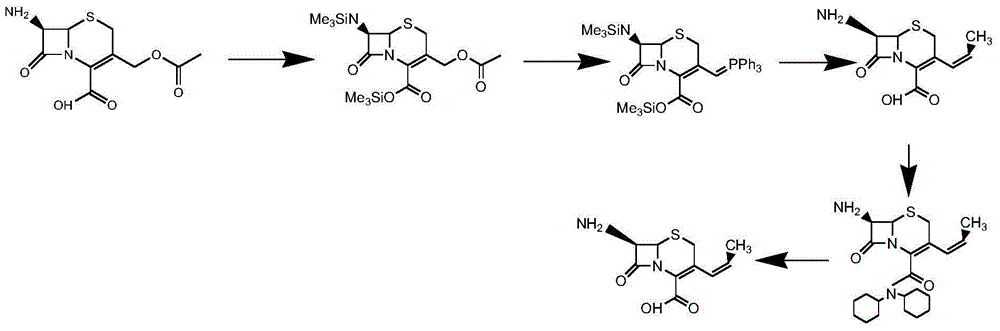
Examples
Embodiment 1
[0037] Test equipment: dry 500ml four-neck flask, 50ml constant pressure dropping funnel, 500cm spherical condenser, constant temperature water bath, low temperature circulation pump, etc.
[0038] Detection instrument: Agilent liquid phase
[0039] Detection conditions and methods: C18 250mm×4.6um, detection wavelength 254nm (central control) 280 (product), flow rate 1.0ml / min
[0040] Mobile phase: 0.0115% ammonium dihydrogen phosphate solution: acetonitrile = 9:1
[0041] Add 45g of 7-ACA, 45.9g of triphenylphosphine, 225g of dichloromethane, and 0.045g of iodine into a 500ml four-neck flask in sequence, raise the temperature to 35°C, start to add 40g of hexamethyldisilazane dropwise, and finish dropping in 30 minutes , keep the reaction temperature below 40°C, after the dropwise addition, raise the temperature to 45°C and continue the reaction for 3 hours. ℃, take samples for 3 hours to detect that the residue of raw materials is ≤0.5%, cool down to -5℃, add DMF180g, N,O...
PUM
 Login to View More
 Abstract
Description
Claims
Application Information
 Login to View More