A Tooth Profile Design Method for Large Coincidence Internal Gears Based on Circular Meshing Lines

A technology of internal meshing gears and meshing lines, applied in belts/chains/gears, mechanical equipment, components with teeth, etc., can solve problems such as small coincidence degree, achieve large coincidence degree, strong bearing capacity, and low sliding rate Effect

CN105134907BActive Publication Date: 2017-10-13BEIHANG UNIV
5 Cites 0 Cited by

Patent Information

Authority / Receiving Office
CN · China
Patent Type
Patents(China)
Current Assignee / Owner
Publication Date
2017-10-13

Smart Images

  • Figure 1
    Figure 1
  • Figure 2
    Figure 2
  • Figure 3
    Figure 3
Patent Text Reader

Abstract

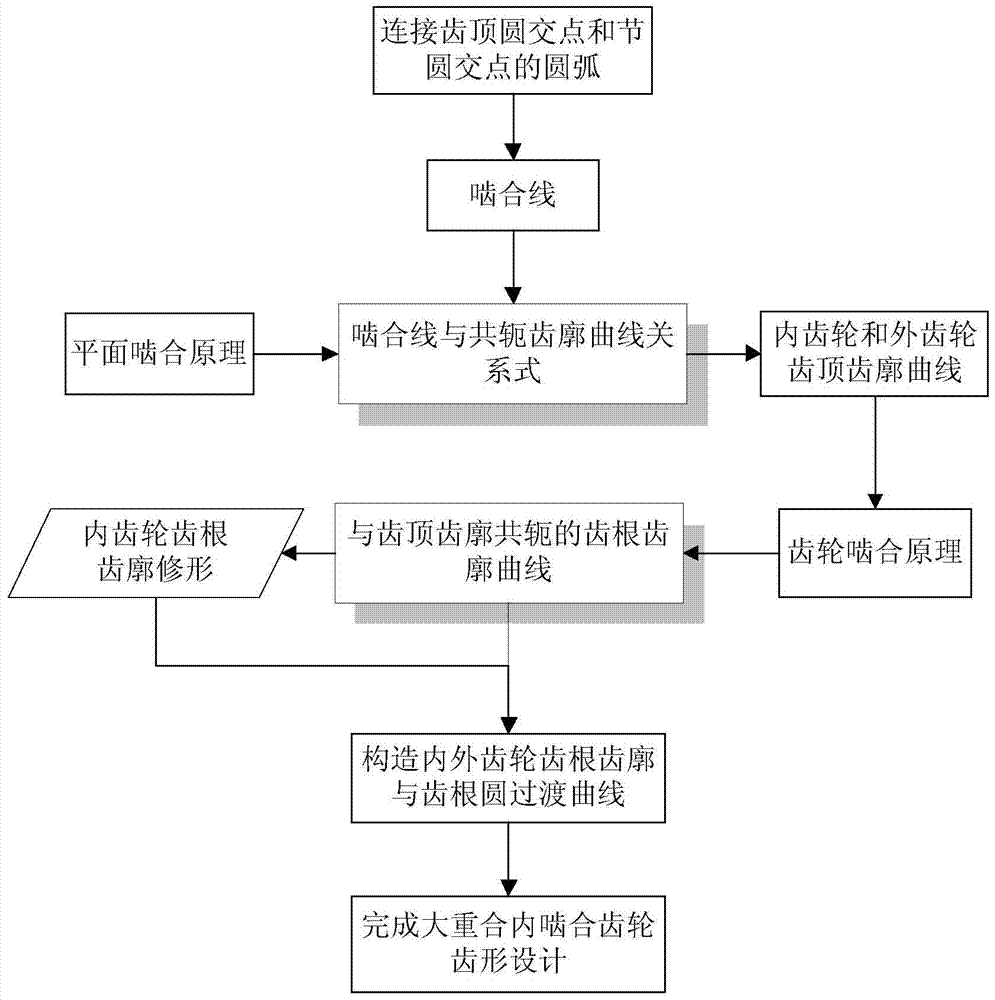
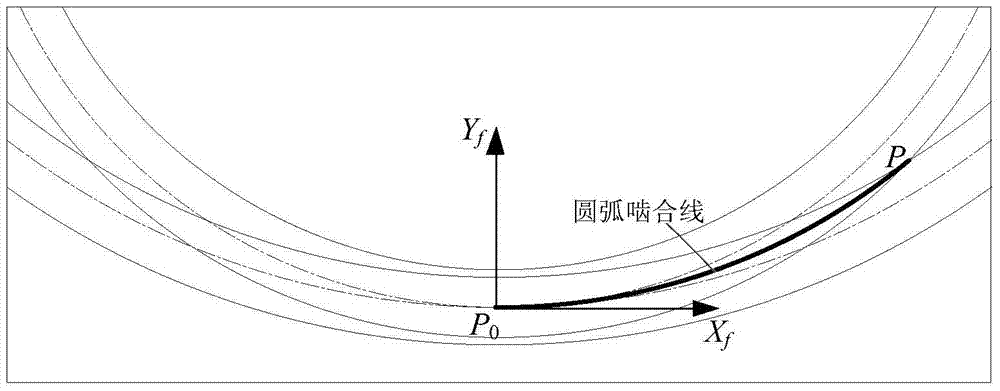
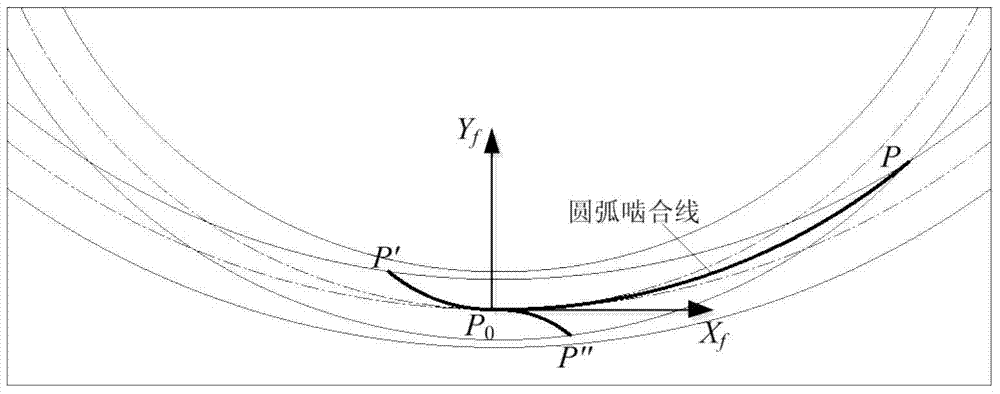
The invention discloses a large-overlap-ratio inner engaged gear tooth form design method based on an arc line of action. The line of action designed through the method is an arc connecting an intersection of addendum circles of an inner gear and an outer gear and an intersection of nodal circles, and on the basis of a plane engagement theory, a conjugation equation expressing the corresponding relation between the line of action and an inner engaged gear conjugate profile curve is established; conjugate profile curves according with the arc line of action are established, wherein the conjugate profile curves are the inner gear addendum profile curve and the outer gear addendum profile curve; the conjugation principle is used for establishing dedendum profiles conjugated with the addendum profile curves and the inner gear dedendum profile is shaped; and transition curves between the gear dedendum profiles and dedendum circles are designed. The method has the beneficial effects that the overlap ratio is high, compared with an involute tooth form, the overlap ratio is increased more than twice, multiple gear teeth are involved in engagement, bearing capacity is high, dynamic impact is small, the relative sliding ratio is low, and the lubricating condition is good; and the profile interference problem is avoided and gear parameters are designed more freely.
Need to check novelty before this filing date? Find Prior Art

Description

technical field

[0001] The invention belongs to the technical field of transmission gear design, and relates to a method for designing the tooth shape of an internal meshing gear with a large coincidence degree based on an arc meshing line. Background technique

[0002] Internal meshing gear transmission is an important transmission form of gear transmission. It transmits power and movement in the same direction. Compared with external meshing gears, it can reduce the power loss caused by the relative sliding of conjugate tooth profile curves. It has high transmission efficiency and large overlap. , carrying capacity and strength, etc., are widely used in transmission systems such as vehicles. The tooth shapes of internal gears are mainly involute teeth and cycloid teeth. Among them, the involute teeth have been widely used because of their ease of manufacture and interchangeability, and have formed an industrial standard. Restricted by the shape of the teeth, interference ...

Examples

Embodiment Construction

[0025] The implementation of the method of the present invention will be described in detail below in conjunction with the accompanying drawings.

[0026] The flow chart of a method for designing the tooth shape of a large coincidence degree internal meshing gear based on the circular meshing line of the present invention is as follows figure 1 As shown, including (1) selecting the arc connecting the intersection point of the addendum circle of the internal gear and the external gear and the intersection point of the pitch circle as the design meshing line of the internal gear, and using the principle of plane meshing to establish the relationship between the meshing line and the conjugate tooth of the internal gear (2) construct the tooth top profile curve of the internal gear and the tooth top profile curve of the external gear satisfying the arc meshing line; (3) construct the dedendum conjugated with the tooth top profile curve (4) Design the transition curve between the t...