Control method for wearable unmanned plane control equipment based on motion sensing

A technology of control equipment and control method, applied in the field of aviation flight, can solve the problems of complex operation, high operator requirements, and difficulty in getting started.

CN106292679AInactive Publication Date: 2017-01-04UNIV OF ELECTRONICS SCI & TECH OF CHINA
9 Cites 8 Cited by

Patent Information

Authority / Receiving Office
CN · China
Patent Type
Applications(China)
Current Assignee / Owner
Publication Date
2017-01-04
Estimated Expiration
Not applicable · inactive patent

Smart Images

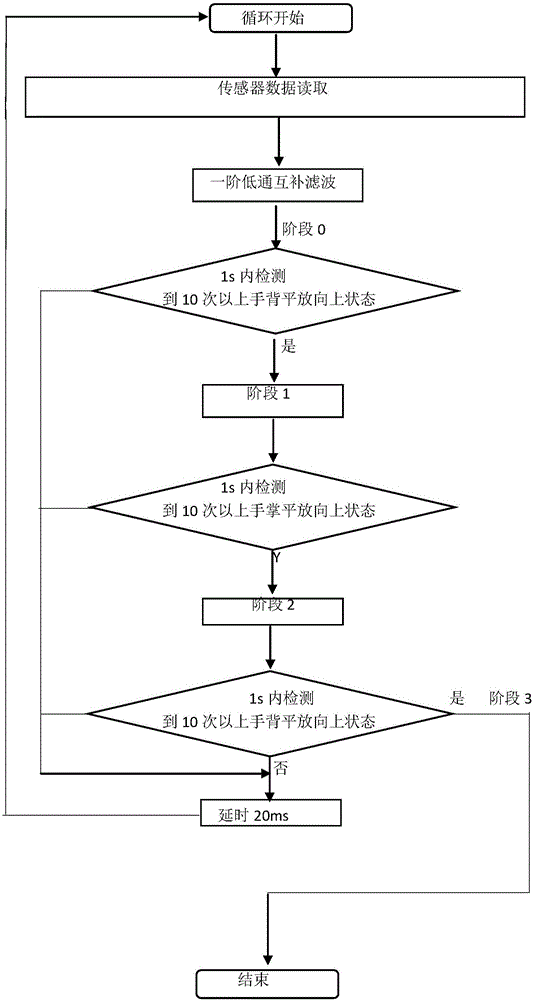
  • Figure 1
    Figure 1
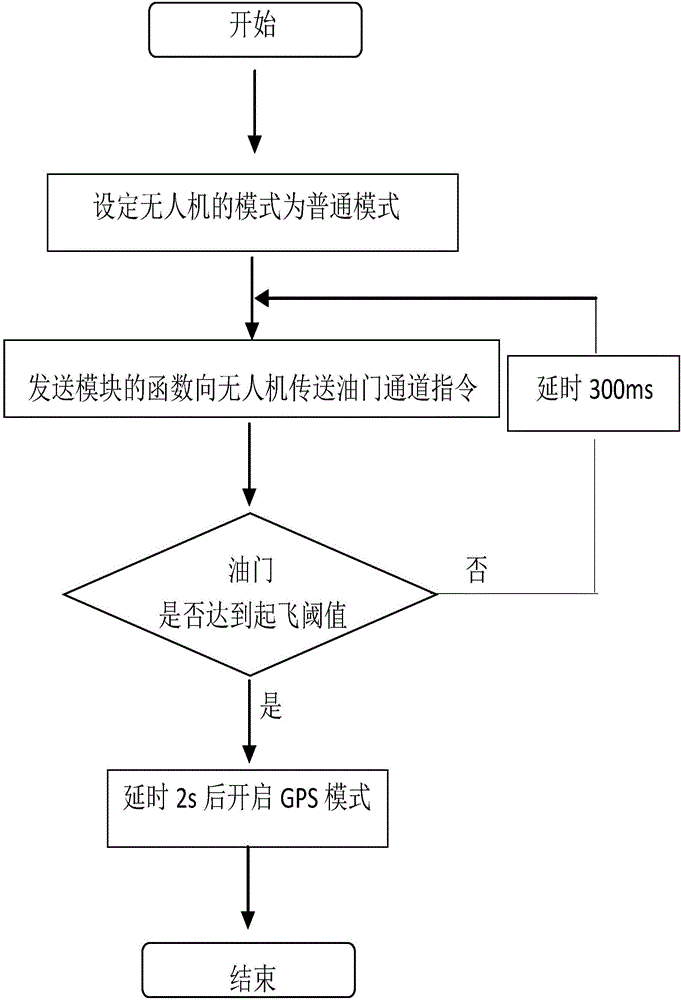
  • Figure 2
    Figure 2
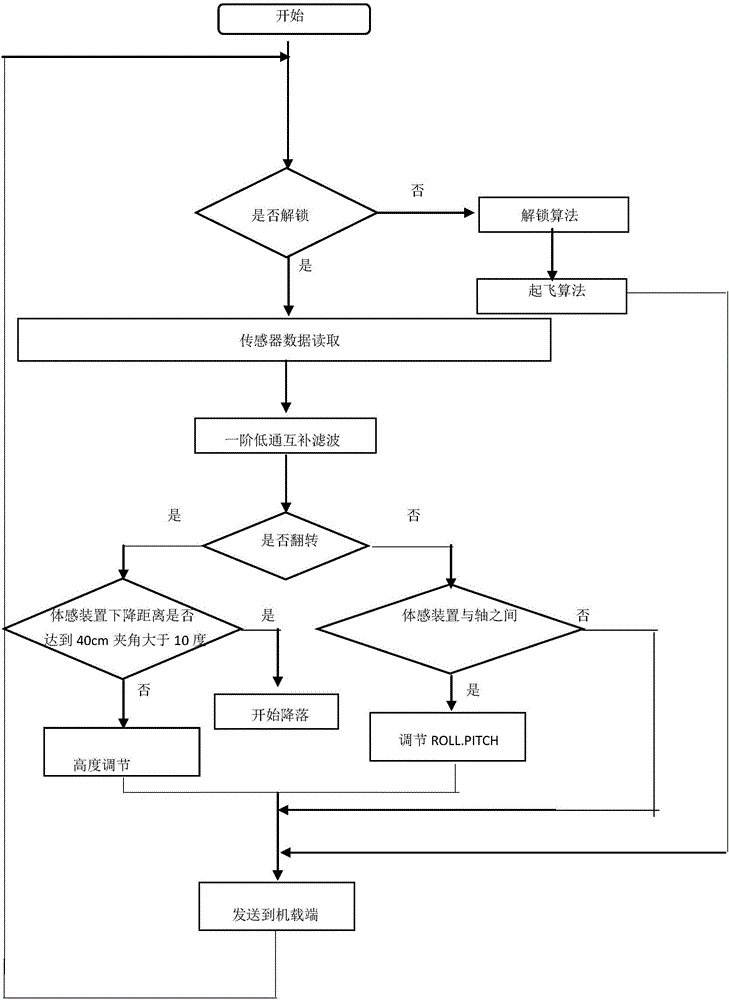
  • Figure 3
    Figure 3
Patent Text Reader

Abstract

The invention relates to a control method for wearable unmanned plane control equipment based on motion sensing, and the method comprises the steps: S1, enabling a ground end processor to collect the data of a posture sensor; S2, carrying out the further processing of the collected data, and obtaining the motion information of hands; S3, carrying out the judgment and recognition of the postures of hands through the motion information of hands and an algorithm; S4, converting the recognized posture information of hands into a control instruction; S5, transmitting the control instruction to an airborne end microprocessor through a wireless communication module; S6, enabling the airborne end microprocessor to encode the control instruction into a PPM or PWM signal, and transmitting the PPM or PWM signal to an input interface of a flight controller, so as to input the PPM or PWM signal into a flight controller; S7, enabling the flight controller to control a motor of an unmanned plane to make a response according to the PPM or PWM signal. Therefore, the posture of the hands is read through a ground end integrated on the wearable equipment, and then is converted into the control instruction so as to control the unmanned plane, thereby enabling the control of the unmanned plane to be more humanized and visual.
Need to check novelty before this filing date? Find Prior Art

Description

technical field

[0001] The invention relates to the field of aviation flight, in particular to a control method of a wearable drone control device based on somatosensory. Background technique

[0002] With the progress of society, unmanned aerial vehicles (UAVs) gradually emerge in people's attention. UAVs can be used in monitoring applications such as aerial photography, forest protection, disaster investigation and pesticide spraying. At present, UAVs are widely used in civil, commercial and In the military field, in the civilian field, more and more extreme sports enthusiasts use drones to record. In the commercial field, in addition to carrying camera equipment to track and take aerial photos of various sports events, drones have also entered the logistics industry. , can send goods to remote areas where human distribution is difficult and slow. Therefore, drones have a wide range of applications and broad market prospects.

[0003] Since UAVs are easily affected by the...

Examples

Embodiment Construction

[0060] In order to better explain the present invention and facilitate understanding, the present invention will be described in detail below through specific embodiments in conjunction with the accompanying drawings.

[0061] The control method of the somatosensory-based wearable UAV control device provided by the present invention comprises the following steps:

[0062] S1: The microprocessor on the ground side collects the data of the attitude sensor;

[0063] S2: further processing the collected data to obtain hand movement information;

[0064] S3: Use the hand movement information to judge and recognize the hand posture through the algorithm;

[0065] S4: converting the recognized gesture information of the hand into a control instruction;

[0066] S5: Send the control command to the on-board microprocessor through the wireless communication module;

[0067] S6: The on-board microprocessor encodes the control command into a PPM or PWM signal, and sends it to the input...