
A kind of melt processable polyvinyl alcohol composition and preparation method
A polyvinyl alcohol and melt processing technology, applied in the field of polyvinyl alcohol composition and its preparation, can solve the problems of lowering the processing temperature of PVA resin, complicated preparation process of modified materials, poor thermal stability of water as plasticizer, etc. Effects of lower melting point, wider thermoplastic processing window, and excellent mechanical properties
- Summary
- Abstract
- Description
- Claims
- Application Information
AI Technical Summary
Problems solved by technology
Method used
Image


Examples
Embodiment 1
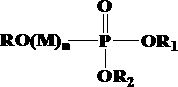
[0024] Weigh 99g of polyvinyl alcohol and 900g of distilled water to dissolve by heating at 95°C, then add 5g of alkylphenol polyoxyethylene ether (4) phosphate (NP-4P) into the solution, stir and mix well, then pour the mixed solution Put it into the container and dry it in vacuum at 60℃ to obtain the sample, then perform hot press molding to prepare the standard sample, and conduct the tensile performance test according to the GB-13022 standard, and use the thermal weight loss analyzer and the differential scanning calorimeter to test the thermal decomposition. Temperature and melting point.
[0025] The tensile strength of the obtained sample is 53MPa, the tensile elongation at break is 386%, the thermal decomposition temperature is 286°C, and the melting point is 195°C.
Embodiment 2
[0027] Weigh 99g of polyvinyl alcohol and 900g of distilled water to dissolve under heating at 95℃, then add 5g of alkylphenol polyoxyethylene ether (10) phosphate (NP-10P) into the solution, stir and mix well, then pour the mixed solution into the container In the sample, the sample was dried in vacuum at 60℃, and the standard sample was prepared by hot pressing. The tensile performance test was carried out according to the GB-13022 standard. The thermal decomposition temperature and the thermal decomposition temperature were measured by the thermal weight loss analyzer and the differential scanning calorimeter respectively. Melting point.
[0028] The tensile strength of the obtained sample was 50MPa, the tensile elongation at break was 362%, the thermal decomposition temperature was 302°C, and the melting point was 204°C.
Embodiment 3
[0030] Weigh 99g of polyvinyl alcohol and 900g of distilled water to dissolve by heating at 95℃, then add 5g of alkylphenol polyoxyethylene ether (15) phosphate (NP-15P) into the solution and stir and mix evenly, then pour the mixed solution into the container In the sample, the sample was dried in vacuum at 60℃, and the standard sample was prepared by hot pressing. The tensile performance test was carried out according to the GB-13022 standard. The thermal decomposition temperature and the thermal decomposition temperature were measured by the thermal weight loss analyzer and the differential scanning calorimeter respectively. Melting point.
[0031] The tensile strength of the obtained sample was 48MPa, the tensile elongation at break was 348%, the thermal decomposition temperature was 314°C, and the melting point was 215°C.
PUM
| Property | Measurement | Unit |
|---|---|---|
| tensile strength | aaaaa | aaaaa |
| thermal decomposition temperature | aaaaa | aaaaa |
| melting point | aaaaa | aaaaa |
Abstract
Description
Claims
Application Information
 Login to View More