

Beta-ray particulate matter concentration detection sensor and detection method thereof
A particle concentration and detection sensor technology, applied in the direction of particle suspension analysis, measuring devices, scientific instruments, etc., can solve the problems of not being able to reflect short-term changes in atmospheric particle concentration, not being able to reflect real-time changes in bad weather, and not being suitable for long-distance monitoring, etc. , to achieve the effect of convenient air quality, simple structure and convenient supervision
Patent Information
- Authority / Receiving Office
- CN · China
- Current Assignee / Owner
- Publication Date
- 2018-06-12
- Estimated Expiration
- Not applicable · inactive patent
Smart Images
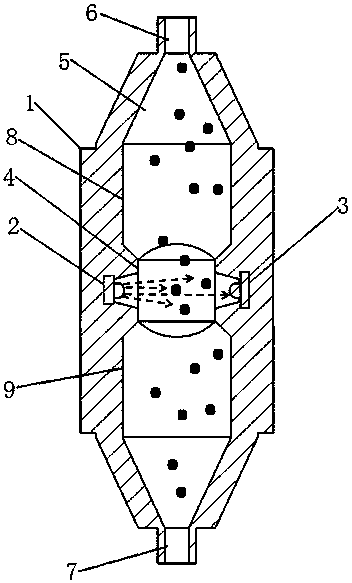
Figure 1 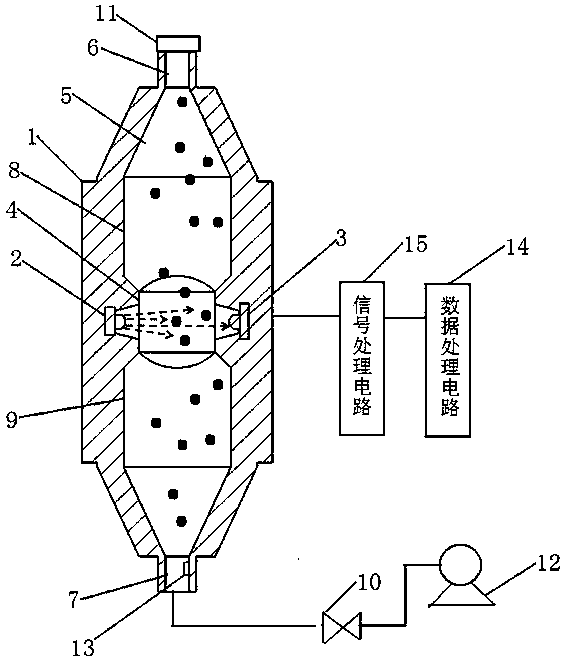
Figure 2 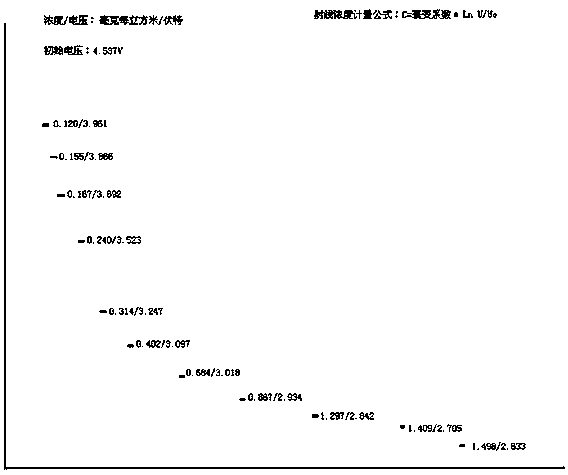
Figure 3
Abstract
Description
technical field
[0001] The invention belongs to the technical field of air pollutant monitoring, and in particular relates to a sensor for detecting the concentration of beta-ray particulate matter and a detection method thereof. Background technique
[0002] Atmospheric particulate matter refers to all substances contained in the atmosphere except gases, including all kinds of solid or liquid aerosols. These include soot, dust, and smoke as solids, and clouds and droplets as liquids. The particle size distribution is as large as 200 microns and as small as 0.1 microns. Statistics show that my country's smoke and dust emissions are declining year by year, but the main pollutants that affect urban air quality are still particulate matter. For my country's cities, the main sources of pollution are air pollution produced in various industrial production processes and residents' coal-burning pollution. In addition, the rapid increase in the number of private cars and municipa...
Examples
Embodiment Construction
[0031] A specific embodiment of the invention will be described below in conjunction with the accompanying drawings.
[0032] Such as figure 1As shown, the present invention provides a β-ray particle concentration detection sensor, which is characterized in that it includes a housing, a β-ray generating source, a β-ray receiver, and a dust measuring chamber. The inside of the housing is a hollow cavity, and the cavity The two ends of the body are provided with an air source inlet and an air source outlet. The inlet section and the outlet section of the cavity are respectively particle transfer spaces, and the dust measuring chamber is arranged between the inlet section and the outlet section. The β-ray generating source and the β-ray receiver are respectively installed at the dust measuring chamber and on both sides of the housing;
[0033] The outlet section of the cavity is provided with a flow velocity sensor to detect the velocity of the particles flowing through the dust...