
Seven-segment deep denitrification biochemical treatment method
A biochemical treatment and deep denitrification technology, applied in the field of seven-stage deep denitrification biochemical treatment, can solve problems such as insufficient effect, and achieve the effect of saving energy consumption, reducing volume, and strengthening removal.
- Summary
- Abstract
- Description
- Claims
- Application Information
AI Technical Summary
Problems solved by technology
Method used
Image

Examples
example 1
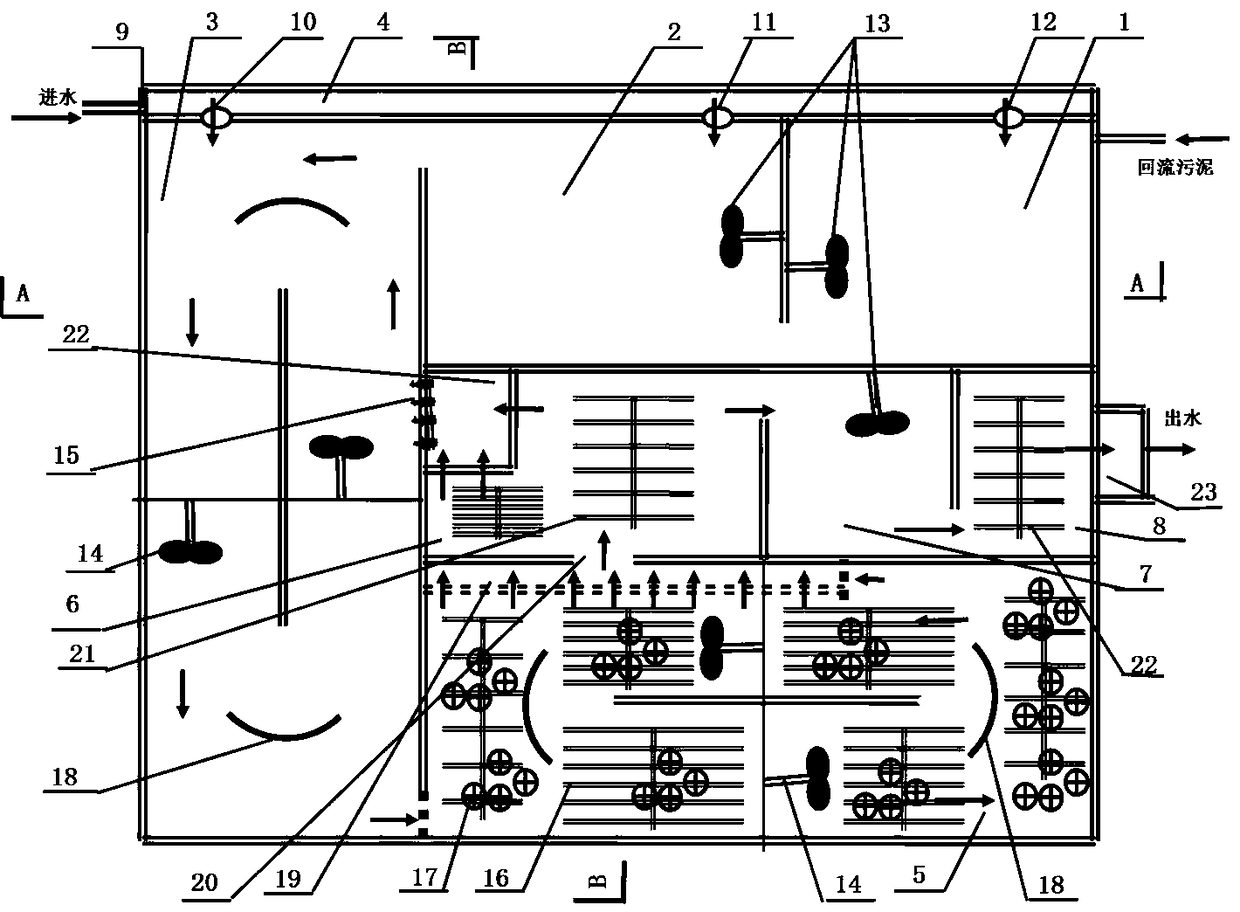
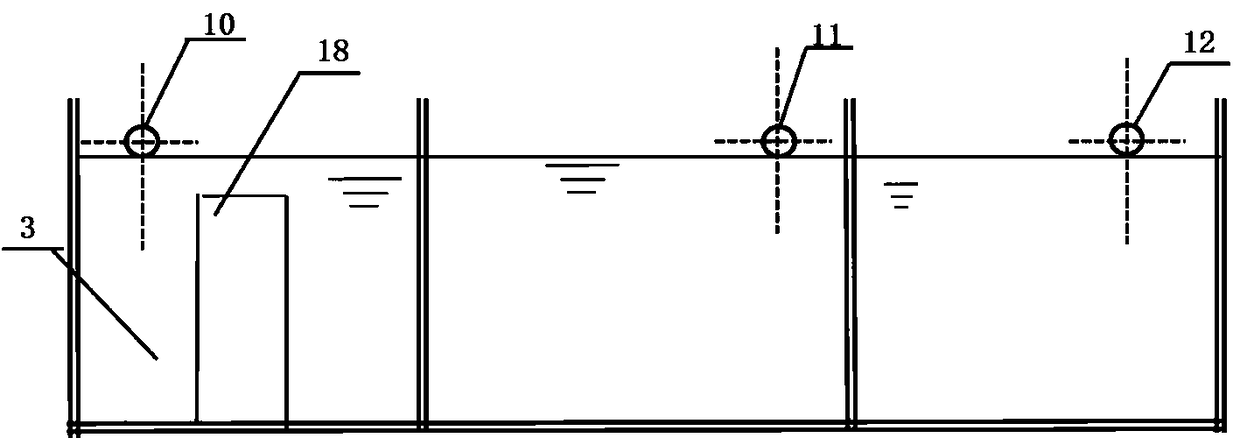
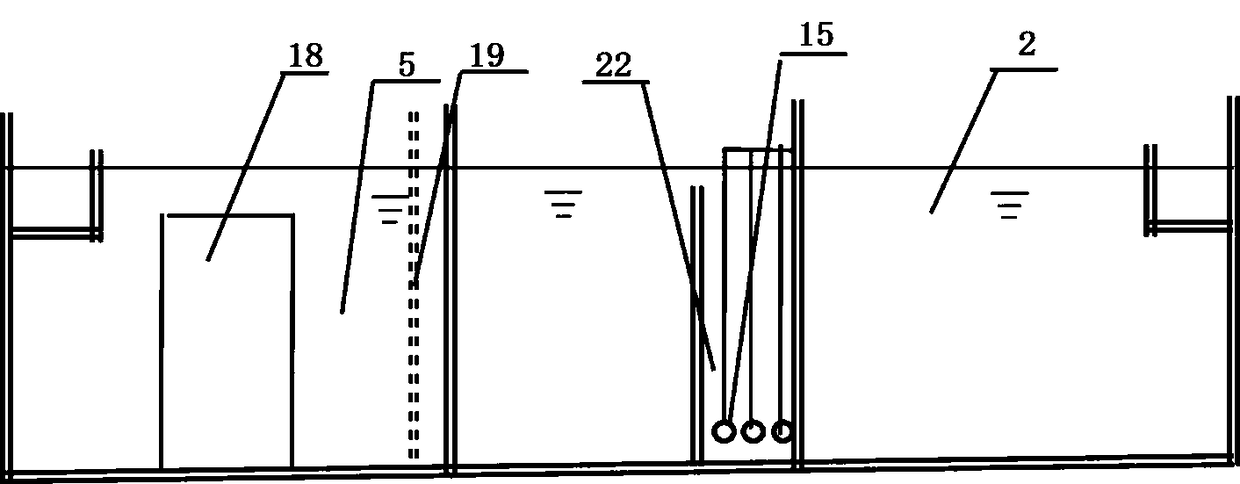
[0039] For a sewage treatment plant in a city in Inner Mongolia, the influent design water volume is 150,000m³ / day, the influent COD concentration is 350mg / L, BOD concentration is 150mg / L, NH4-N concentration is 40mg / L, TN level is 55mg / L, and TP is 6mg / L, using the present invention, the characteristics of the added cylindrical suspension carrier are: the material is HDPE, the specific gravity is 0.95g / cm3, the diameter is 25mm, the height is 10mm, the porosity is ≥ 88%, the bulk density is ≥ 100kg / m³, and the effective specific surface area ≥500㎡ / m³; the flat interception screen used has measures to prevent the carrier from clogging near it, so as to ensure that the suspended carrier does not accumulate on the water passing section; the HRT of the pre-anoxic zone of the project is 0.45h, and the HRT of the anaerobic zone is 1.2h, the HRT of the anoxic zone is 3h, the HRT of the MBBR aerobic zone is 3h, the filling rate of the added suspension carrier is 30%, the HRT of the l...
PUM
 Login to View More
 Abstract
Description
Claims
Application Information
 Login to View More