Anchor rod capable of adapting to surrounding rock deformation

A technology for deformation of surrounding rock and bolts, which is applied in the installation of bolts, mining equipment, and earth-moving drilling, etc., can solve the problems of bolt breaking, anchor head failure, and loss of underground engineering functions, and achieves increased working resistance and improved performance. The effect of the ability to adapt to the deformation of the surrounding rock

CN108343457AInactive Publication Date: 2018-07-31富泰锦(成都)科技有限公司
7 Cites 2 Cited by

Patent Information

Authority / Receiving Office
CN · China
Patent Type
Applications(China)
Current Assignee / Owner
Publication Date
2018-07-31
Estimated Expiration
Not applicable · inactive patent

Smart Images

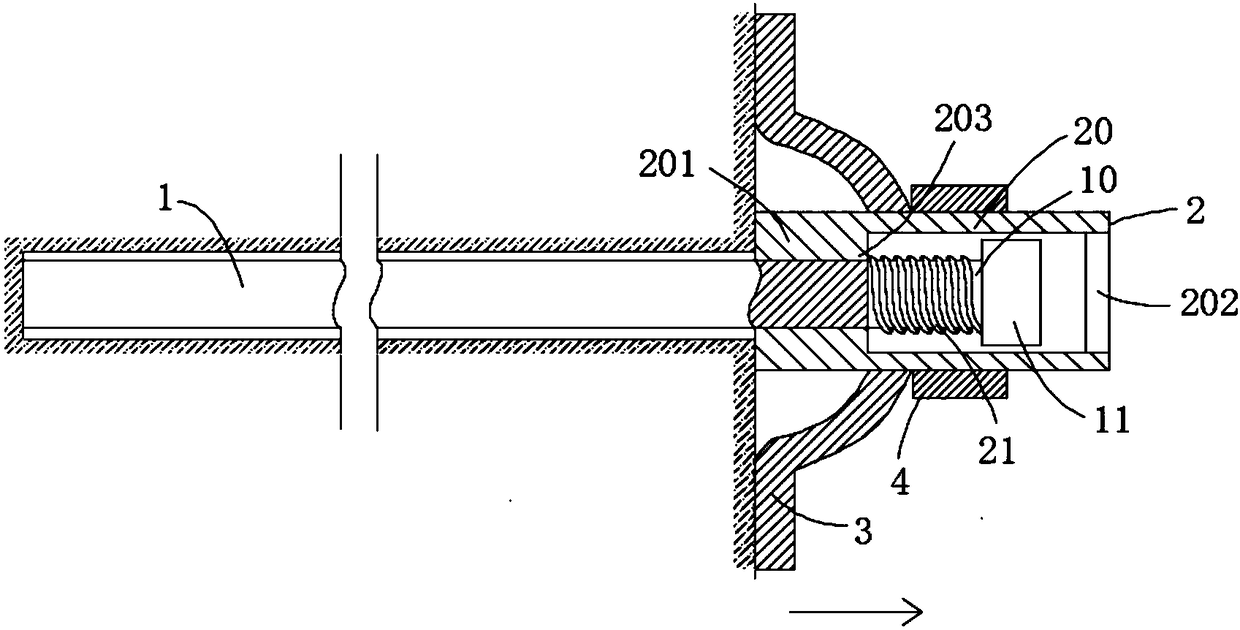
  • Figure 1
    Figure 1
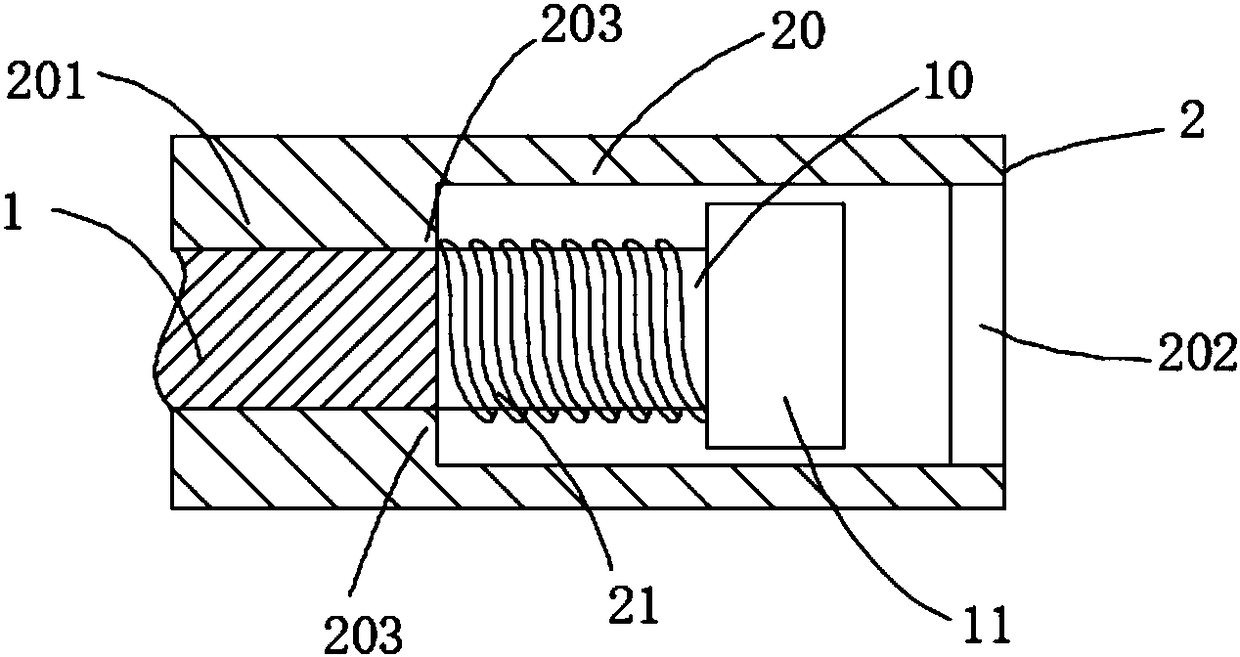
  • Figure 2
    Figure 2
Patent Text Reader

Abstract

The invention provides an anchor rod capable of adapting to surrounding rock deformation. The anchor rod comprises a rod body and a tray. The rod body comprises an extending section connected with theanchor tail. An extending device capable of moving relative to the rod body is mounted on the extending section and the anchor tail in a sleeving mode. The extending device comprises a sleeve and a spring. The sleeve comprises a movable end capable of being used for moving relative to the rod body. The spring is limited between the anchor tail and the movable end of the sleeve. The tray is detachably mounted on the sleeve. The tray is tightly pressed on the rock wall where the anchor rod is inserted when anchoring of the anchor rod is completed. The anchor rod has the beneficial effects thatthrough arrangement of the extending device, the effects that when surrounding rock is subjected to certain deformation, the length of the anchor rod is extended, so that deformation in the surrounding rock can be released, after the anchor rod extends, the working resistance of the anchor rod can be increased, and stability of the surrounding rock is maintained again are achieved; and through matching arrangement of the movable end of the sleeve and the spring of the extending section, the effect that during surrounding rock deformation, the extending device is subjected to relative displacement along with the rod body and thus adapts to surrounding rock deformation is achieved.
Need to check novelty before this filing date? Find Prior Art

Description

technical field

[0001] The invention relates to the protection facility technology of civil engineering, in particular to an anchor rod which can adapt to the deformation of surrounding rock, and can be applied to support projects such as tunnels and side slopes. Background technique

[0002] The anchoring technology in geotechnical engineering is to use anchor rods or anchor cables to reinforce the rock mass. It fully exerts the stability of the rock and soil mass itself. It is a kind of small disturbance to the original rock, fast construction speed, safe and reliable. Cost-effective reinforcement technology. The bolt can actively strengthen the rock and soil mass, effectively control its deformation, and prevent the collapse and damage of the rock and soil mass. The many advantages of the bolt support technology have made the bolt support technology the main support method in the field of geotechnical engineering.

[0003] However, if the surrounding rock of a deep burie...

Examples

specific Embodiment

[0024] see Figure 1-2 Shown, the specific embodiment that the present invention provides is as follows:

[0025] A bolt that can adapt to the deformation of surrounding rock in this embodiment includes a rod body 1 and a tray 3. The rod body 1 includes an extension section 10 connected to the anchor tail 11; The extension device 2, the extension device 2 includes a sleeve 20 and a spring 21, the sleeve 20 includes a movable end 201 that can move relative to the rod body, the spring 21 is limited to the anchor tail 11 and the movable end 201 of the sleeve Between; the tray 3 is detachably mounted on the sleeve 20, and the tray is pressed against the rock wall where the anchor is inserted when the anchor is anchored. In the prior art, usually due to the low elongation rate of the rigid anchor itself, it may be broken if a slight deformation occurs under the ultimate stress, and once the anchor is broken, the entire anchor support system will fail. Therefore, in this embodimen...