
Method of transient expression of exogenous genes by endosperm protoplasts
A protoplast and transient expression technology, applied in the field of cell engineering, can solve problems such as reducing the yield and integrity of protoplasts, affecting the amount of protoplast preparation, activity and transformation efficiency of exogenous genes, and insufficient understanding of accumulation process and regulation. Achieve the effect of large quantity, high conversion efficiency and high activity
- Summary
- Abstract
- Description
- Claims
- Application Information
AI Technical Summary
Problems solved by technology
Method used
Image

Examples
Embodiment 1
[0035] 1. Material collection and processing:
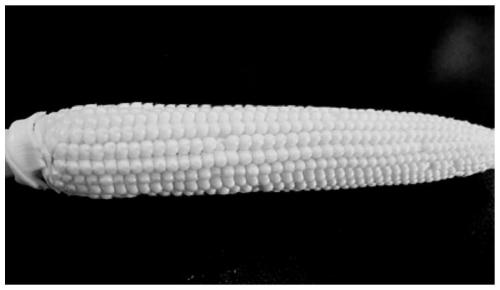
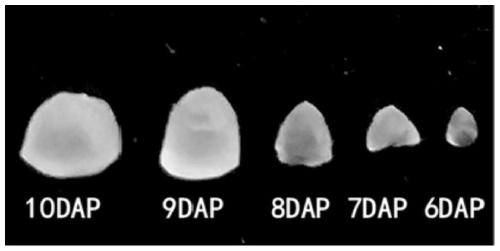
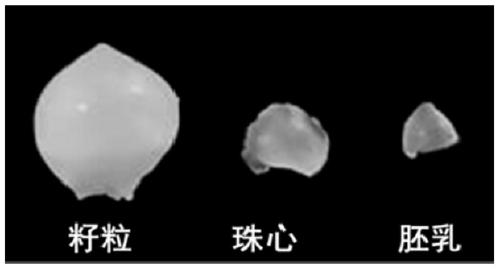
[0036] Field planting management of corn materials, bagging pollination, marking the date of pollination, taking corn ears 6-10 days after pollination ( figure 1 )conduct experiment. In corn 1-4 days after pollination, the endosperm cells are not fully developed and are too small to be picked; in corn endosperm 10 days after pollination, there are too many amyloplasts, and the storage materials begin to accumulate, and the protoplasts are easily broken when preparing protoplasts and the transformation efficiency is low. Low. Corn endosperm ( figure 2 ) experiment, and the experimental results showed that the maize endosperm prepared 8 days after pollination had the highest yield, the best vigor and the highest transformation efficiency. Take corn ears 8 days after pollination, bring them back to the laboratory for processing, select corn kernels with good growth and consistency in the middle, peel off the outer seed coat with...
PUM
| Property | Measurement | Unit |
|---|---|---|
| pore size | aaaaa | aaaaa |
Abstract
Description
Claims
Application Information
 Login to View More