
Method for removing spartina alterniflora from beach forestation land of kandelia candel mangrove forest
A technology of Spartina alterniflora and high-efficiency haloxyfop-pyl, applied in afforestation, herbicides and algicides, botanical equipment and methods, etc., can solve problems such as ecological risks, unsatisfactory effects, and difficult eradication, and achieve Low dosage, achieve the effect of large-scale reconstruction
- Summary
- Abstract
- Description
- Claims
- Application Information
AI Technical Summary
Problems solved by technology
Method used
Image


Examples
Embodiment 1
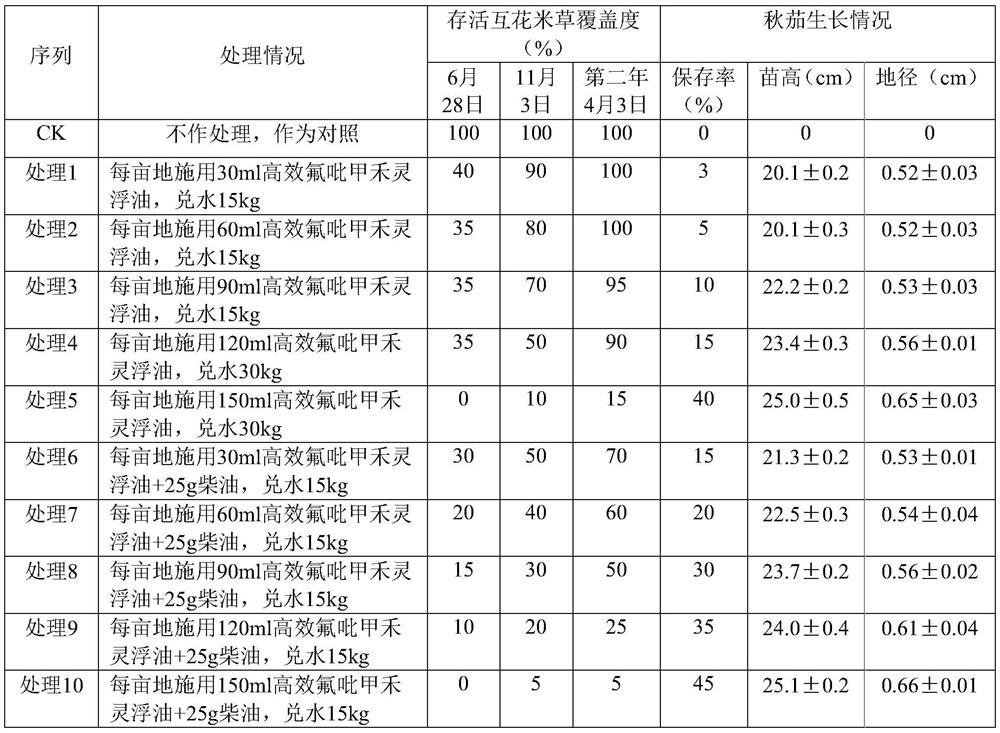
[0019] Embodiment 1 The obvious synergistic effect of diesel oil to high-efficiency flurifop-pylene slick oil
[0020] The test site of present embodiment is Oujiang Estuary tidal flat, establishes 10 processings and a CK respectively to the Spartina alterniflora of candela mangrove plant afforestation land, sprays the stem and leaf of Spartina alterniflora on April 15th of the first year, In June and November, the deadness of Spartina alterniflora was investigated, and the coverage of surviving Spartina alterniflora was calculated on June 28, November 3, and April 3 respectively (the survival coverage area of Spartina alterniflora accounted for the total area of the treatment area. The ratio of the area, unit %), and the 2nd year statistics the growth situation of candelabra in April, calculate the candelabra preservation rate (%), seedling height (cm) and ground diameter (the diameter of the stem near the ground surface, unit cm). 10 processes and a CK are processed acco...
Embodiment 2
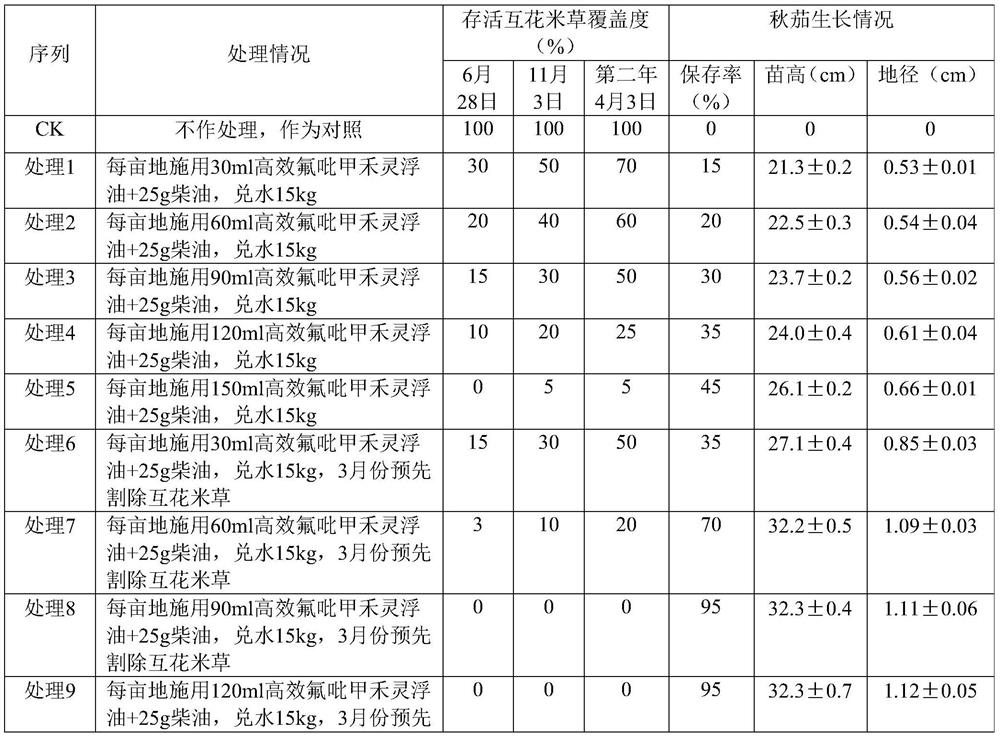
[0024] Example 2 The significant effect of pre-cutting Spartina alterniflora in March, and the selection of the high-efficiency flurifop-methyl slick oil dosage
[0025] The test site of present embodiment is Oujiang Estuary tidal flat, establishes 10 processings and a CK respectively to the Spartina alterniflora of candela mangrove plant afforestation land, sprays the stem and leaf of Spartina alterniflora on April 15th of the first year, In June and November, the deadness of Spartina alterniflora was investigated, and the coverage of surviving Spartina alterniflora was calculated on June 28, November 3, and April 3 respectively (the survival coverage area of Spartina alterniflora accounted for the total area of the treatment area. The ratio of area, unit %), and the 2nd year counts the growth situation of candela in April, calculates candela preservation rate (%), seedling height (cm) and ground diameter (the diameter of seedling stem near the ground surface, unit cm), wh...
Embodiment 3
[0030] The consumption selection of embodiment 3 diesel oil
[0031] The test site of this embodiment is the tidal flat of the Oujiang Estuary. Three treatments and one CK are respectively set up for the Spartina alterniflora in the candela mangrove plantation land. Apply the stems and leaves of Spartina alterniflora, investigate the dead situation of Spartina alterniflora in June and November, and calculate the coverage of surviving Spartina alterniflora on June 28, November 3, and April 3 ( Spartina surviving coverage area accounted for the ratio of the total area of the treatment area, unit %), and the statistics of the growth of candela in April of the second year, calculating the preservation rate of candela (%), seedling height (cm) and ground diameter (the stem of the seedling is close to the ground surface The diameter at the place, in cm). 3 processes and a CK are processed according to the situation described in table 3, and the active ingredient content of high-e...
PUM
 Login to View More
 Abstract
Description
Claims
Application Information
 Login to View More