
User's key assignment method supporting communication system nucleus netowrk
An allocation method and technology of a communication system, which are applied in wireless communication, network traffic/resource management, electrical components, etc., can solve the problems of high cost of modulo operation and uneven service distribution, etc.
- Summary
- Abstract
- Description
- Claims
- Application Information
AI Technical Summary
Problems solved by technology
Method used
Image

Examples
Embodiment Construction
[0018] An example implementation of implementing service distribution and system expansion using the method provided by the present invention in a 3G system will be described below with reference to the accompanying drawings.
[0019] 1) The system currently has 3 modules to handle business, they are module 0, module 1 and module 2.
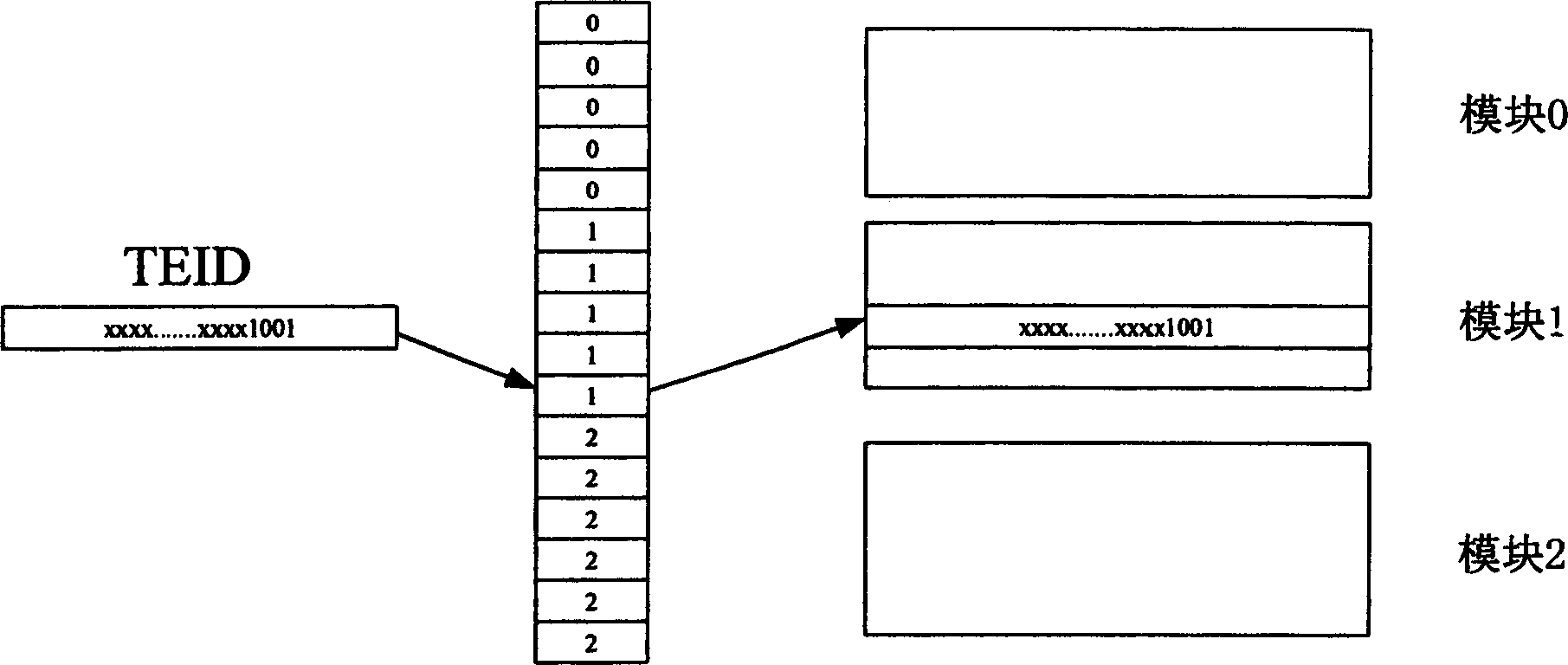
[0020] 2) Create a query table with 16 entries, such as figure 1 As shown in the initialization, there are 5 grids pointing to module 0, 5 grids pointing to module 1, and 6 grids pointing to module 2 in the table, and each module shares business according to 5:5:6.
[0021] 3) When a service arrives and the last 4 bits of the TEID it carries are 9, the lookup table gets 1, which is assigned to module 1 for processing, such as figure 1 .
[0022] 4) If other business arrives, handle it in the same way as 3).
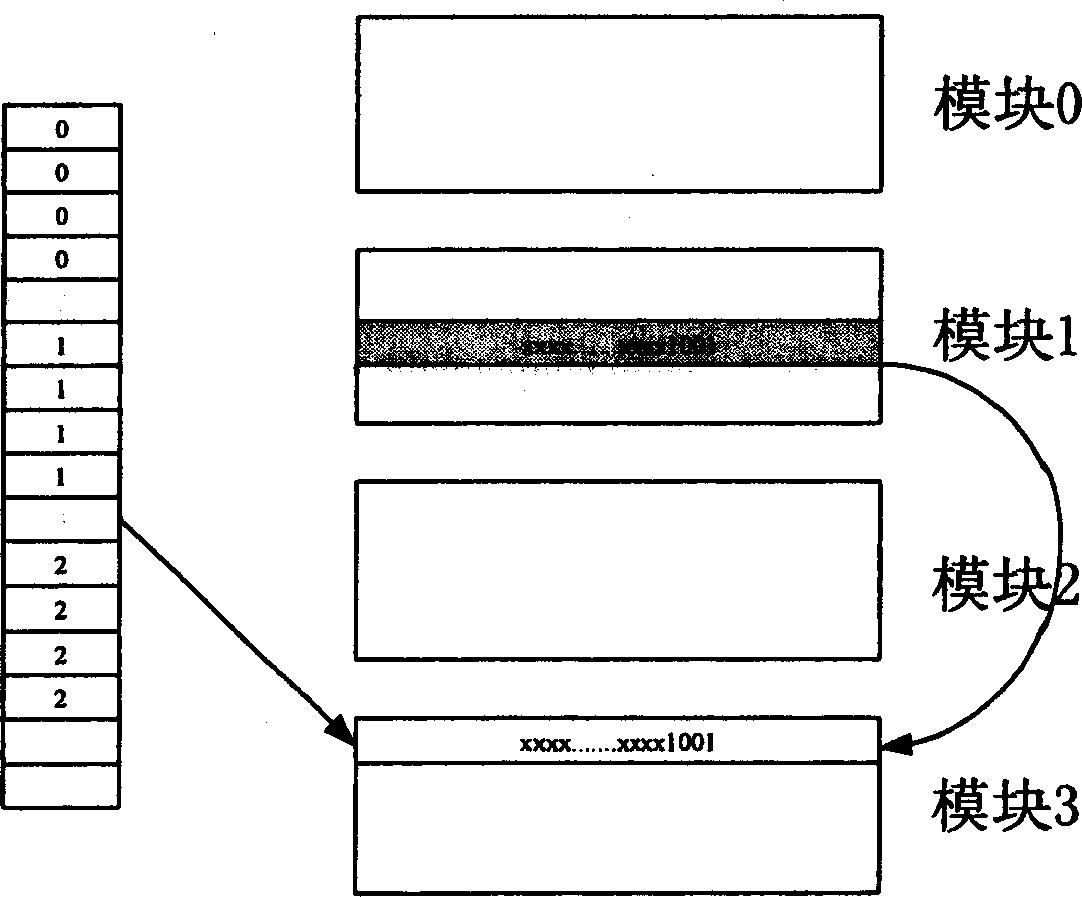
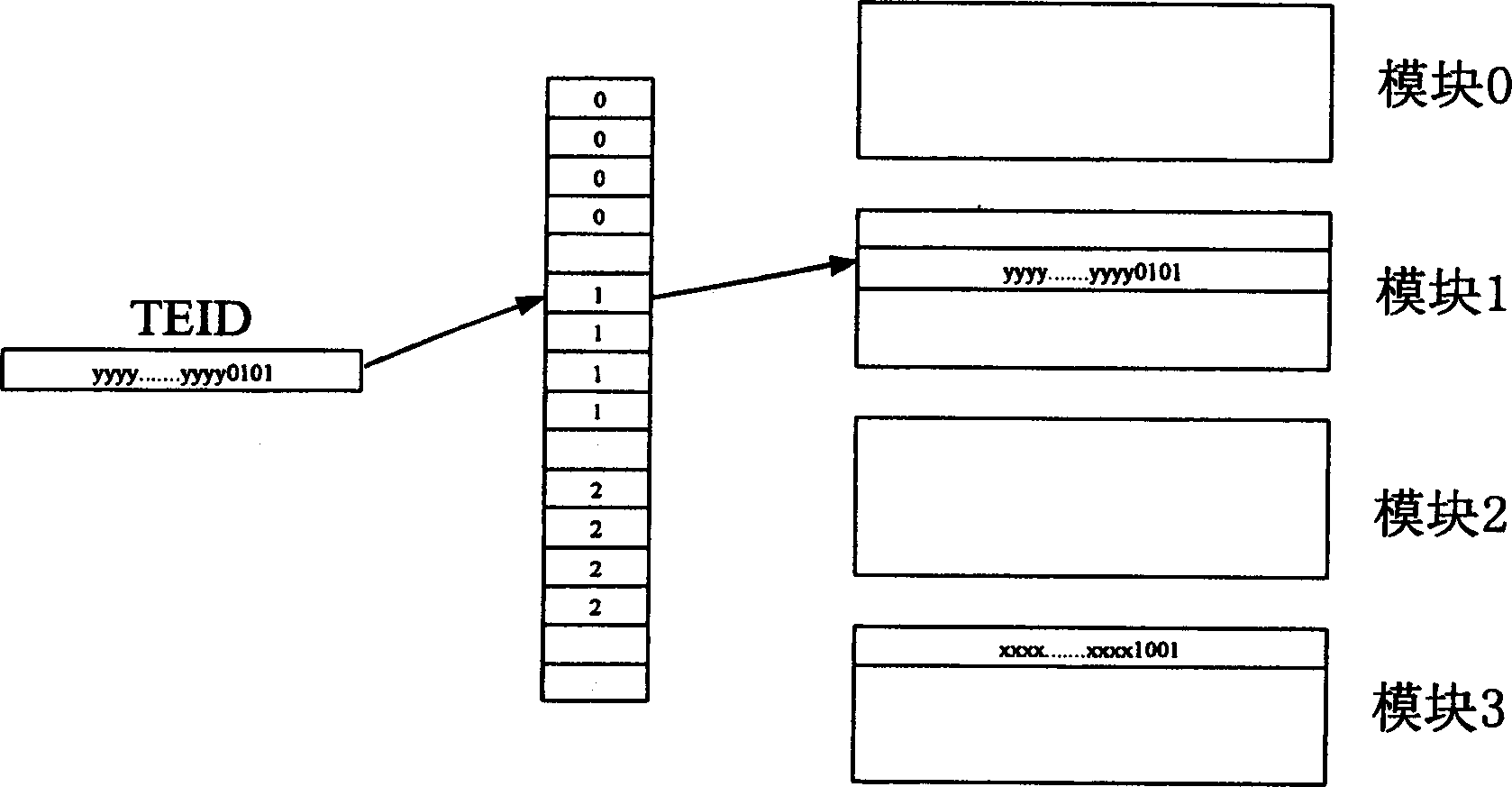
[0023] 5) At this time, expand the capacity and add module 3, according to figure 2 Adjust the query table, change item 4, item 9, ite...
PUM
 Login to View More
 Abstract
Description
Claims
Application Information
 Login to View More