
Ship-towed hydrophone volumetric array system apparatus
a volumetric array and hydrophone technology, applied in wave based measurement systems, instruments, acoustic presence detection, etc., can solve the problems of fixed-location hydrophones, unable to monitor the vast amount of deep-ocean habitat as required, and putting a huge amount of stress on any hydrophone array, so as to avoid high tension, low flow noise, and low self-noise
- Summary
- Abstract
- Description
- Claims
- Application Information
AI Technical Summary
Benefits of technology
Problems solved by technology
Method used
Image

Examples
Embodiment Construction
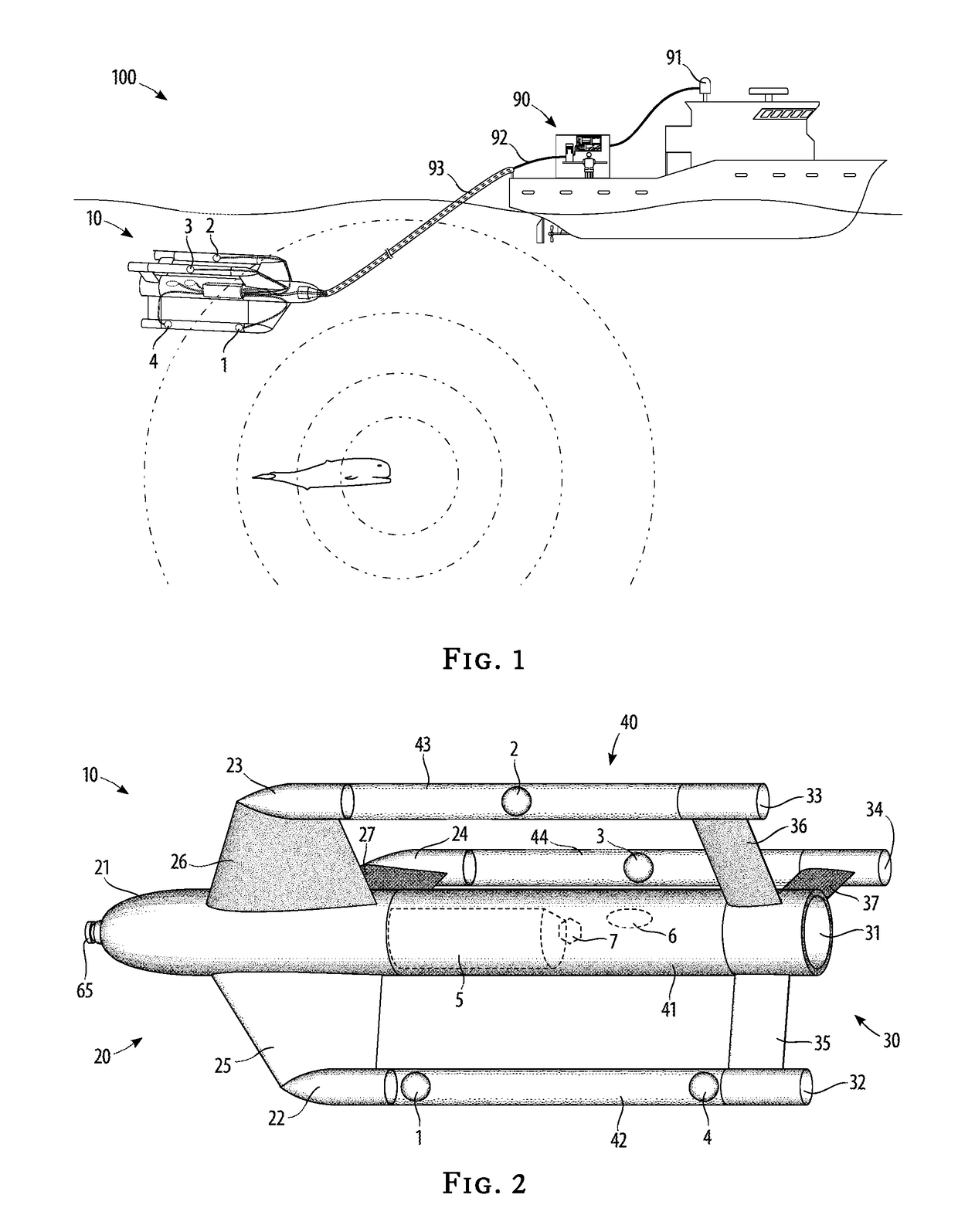
[0031]Referring to FIG. 1, the ship-towed hydrophone volumetric array system invention method 100 and apparatus 10 are illustrated schematically. The activity is line-intersect or line-transect sampling of marine mammal populations through passive acoustic monitoring. The water is deep and the area covered is wide, so the underwater sound of the ship and of any equipment used must be minimized in order to be able to pick up the desired signals. The hydrophone volumetric array system is towed behind a ship on a cable about 300 meters in length, in order to get sufficiently far away from the ship's noise. The tow speed is about 10 knots, because so much area must be covered in a single run in order to collect sufficient data.
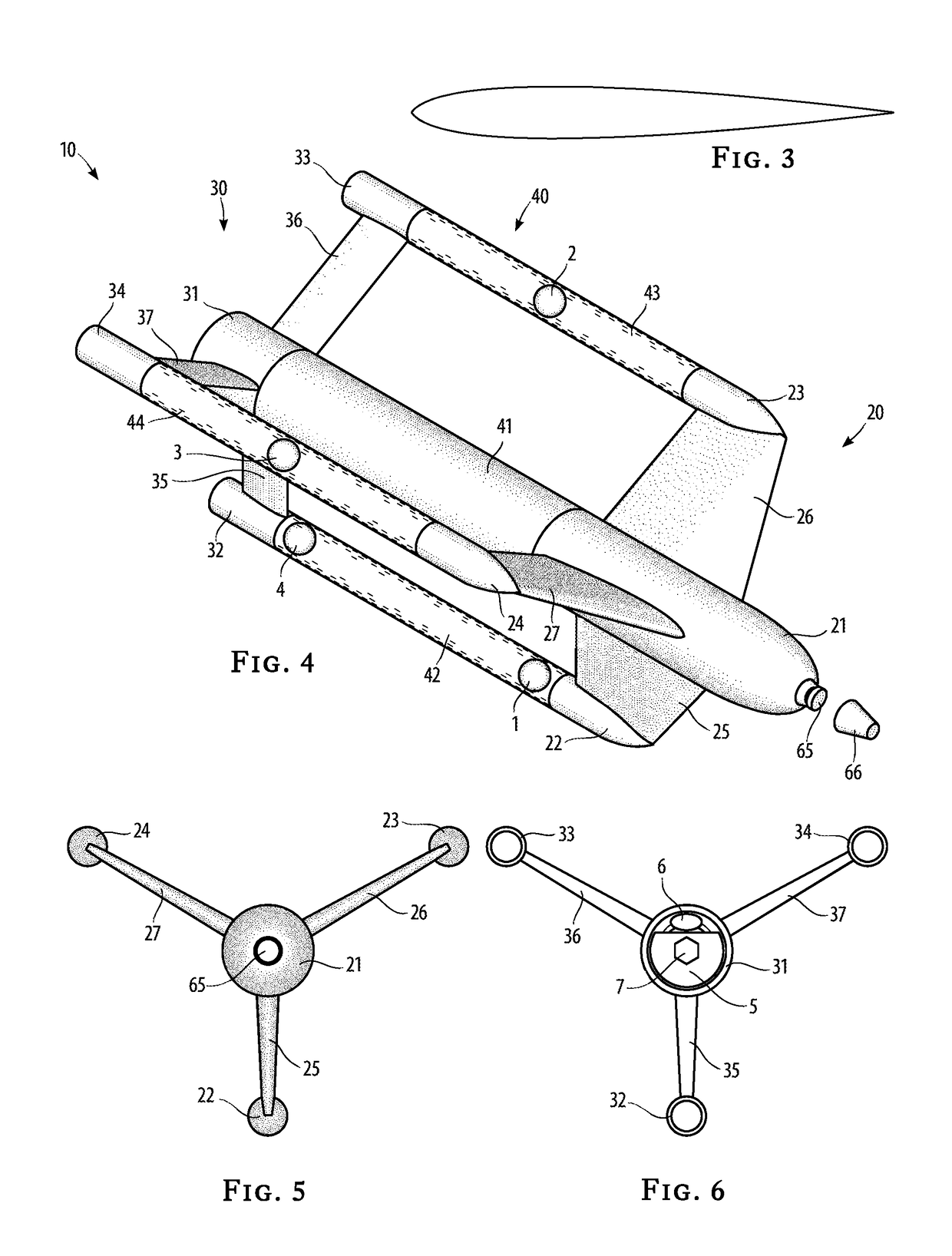
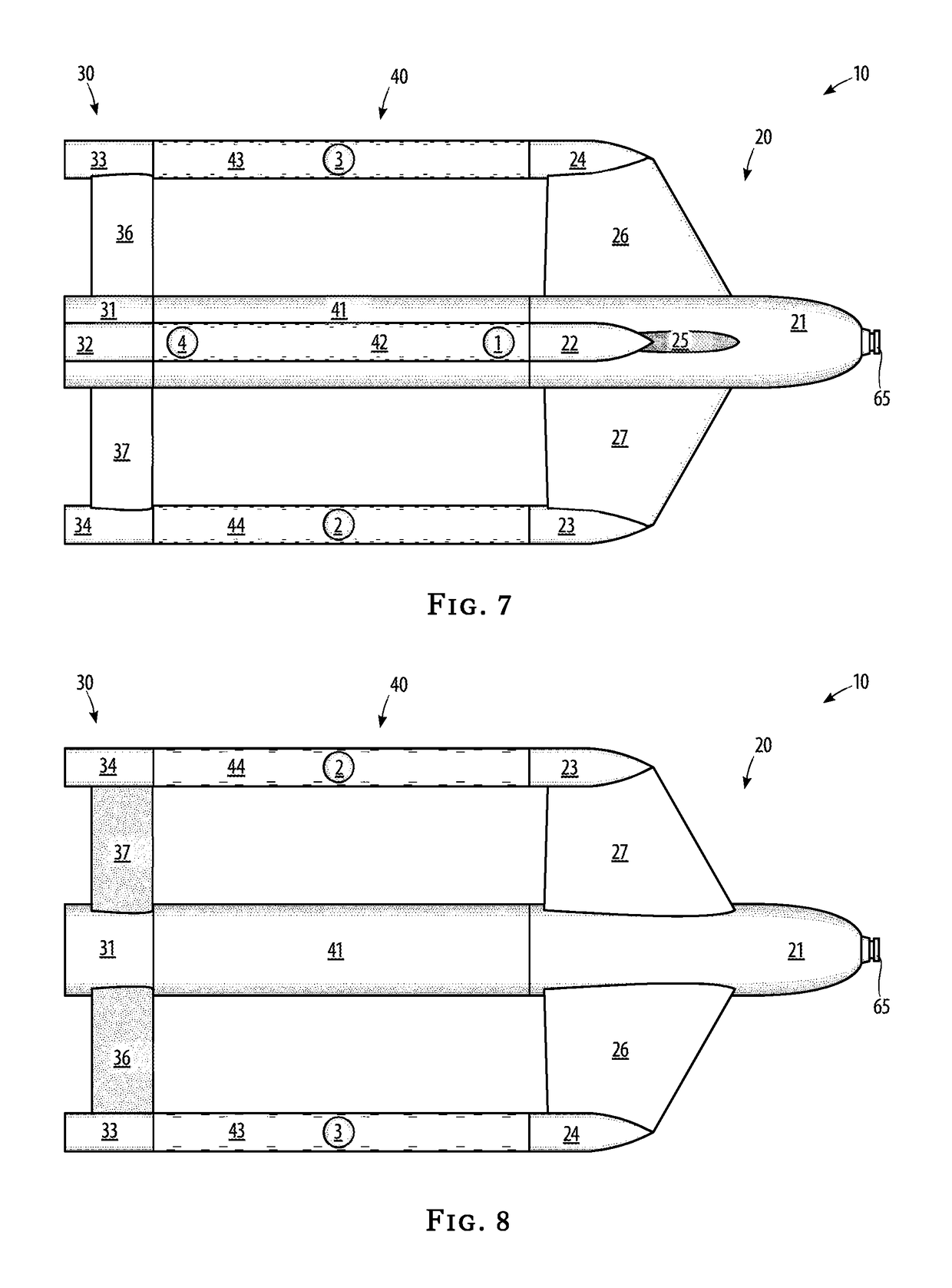
[0032]An underwater sound wave from a single click from a whale propagates through the water and hits each individual hydrophone 1, 2, 3, 4 in the ship-towed hydrophone volumetric array system 10 apparatus at slightly different times correlated with the slight dif...
PUM
 Login to View More
 Abstract
Description
Claims
Application Information
 Login to View More