
Genomic engineering of pluripotent cells
a technology of pluripotent stem cells and genomic engineering, applied in the field of gene editing and genomic engineering of stem cells, can solve the problems of low insertion rate, random insertion, and deceleration of effects, and achieve the effects of improving persistence, increasing immune resistance, and increasing resistance to immune cells
- Summary
- Abstract
- Description
- Claims
- Application Information
AI Technical Summary
Benefits of technology
Problems solved by technology
Method used
Image

Examples
example 1
and Methods
[0265]To effectively select and test suicide systems under the control of various promoters in combination with different safe harbor loci integration strategies, a proprietary hiPSC platform of the applicant was used, which enables single cell passaging and high-throughput, 96-well plate-based flow cytometry sorting, to allow for the derivation of clonal hiPSCs with single or multiple genetic modulations.
[0266]hiPSC Maintenance in Small Molecule Culture:
[0267]hiPSCs were routinely passaged as single cells once confluency of the culture reached 75%-90%. For single-cell dissociation, hiPSCs were washed once with PBS (Mediatech) and treated with Accutase (Millipore) for 3-5 min at 37° C. followed with pipetting to ensure single-cell dissociation. The single-cell suspension was then mixed in equal volume with conventional medium, centrifuged at 225×g for 4 min, resuspended in FMM, and plated on Matrigel-coated surface. Passages were typically 1:6-1:8, transferred tissue cult...
example 2
e Harbor Targeted iCasp9 Suicide Gene Regulated by CMV Promoter Elicits Variable Response when Activated by AP1903
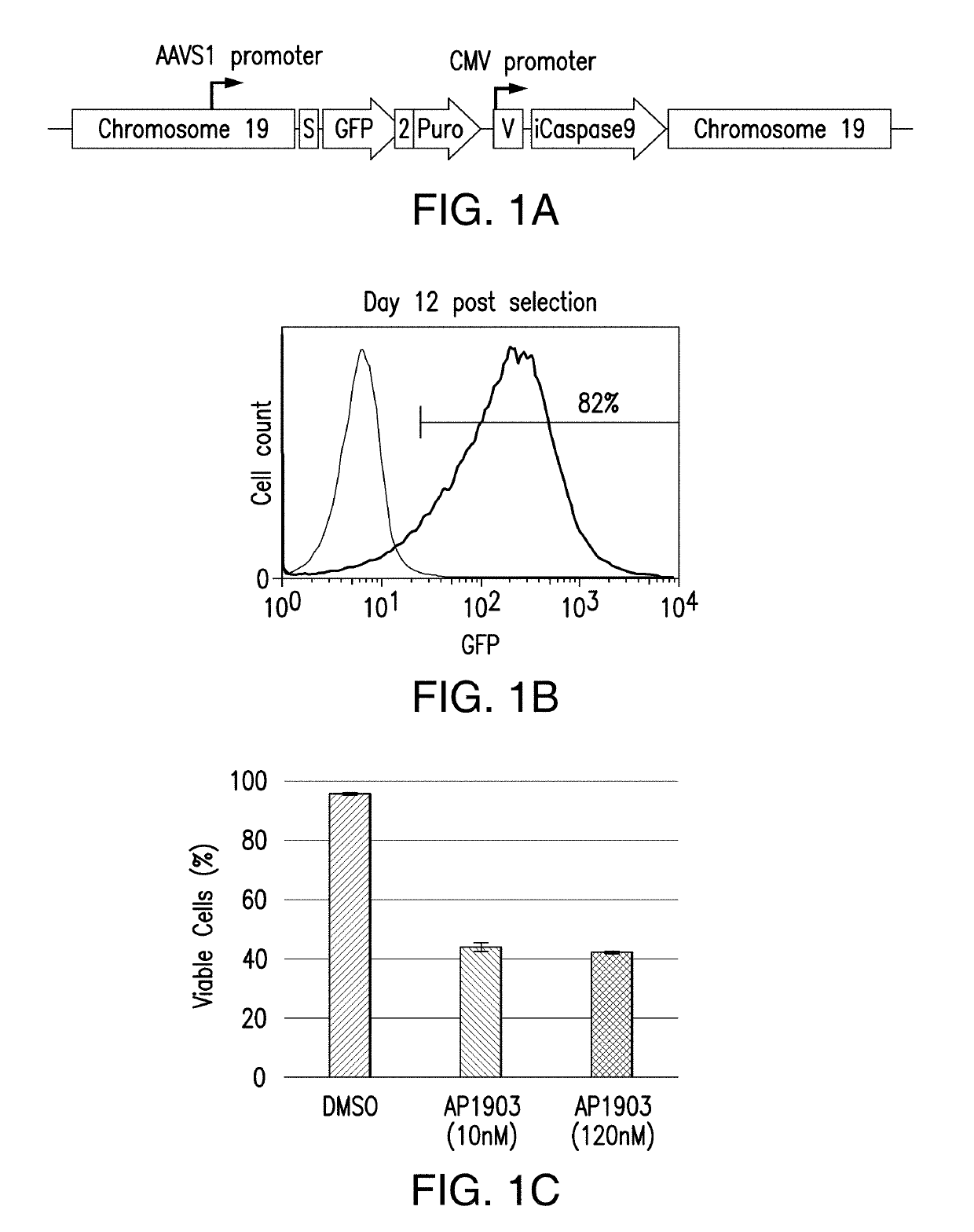
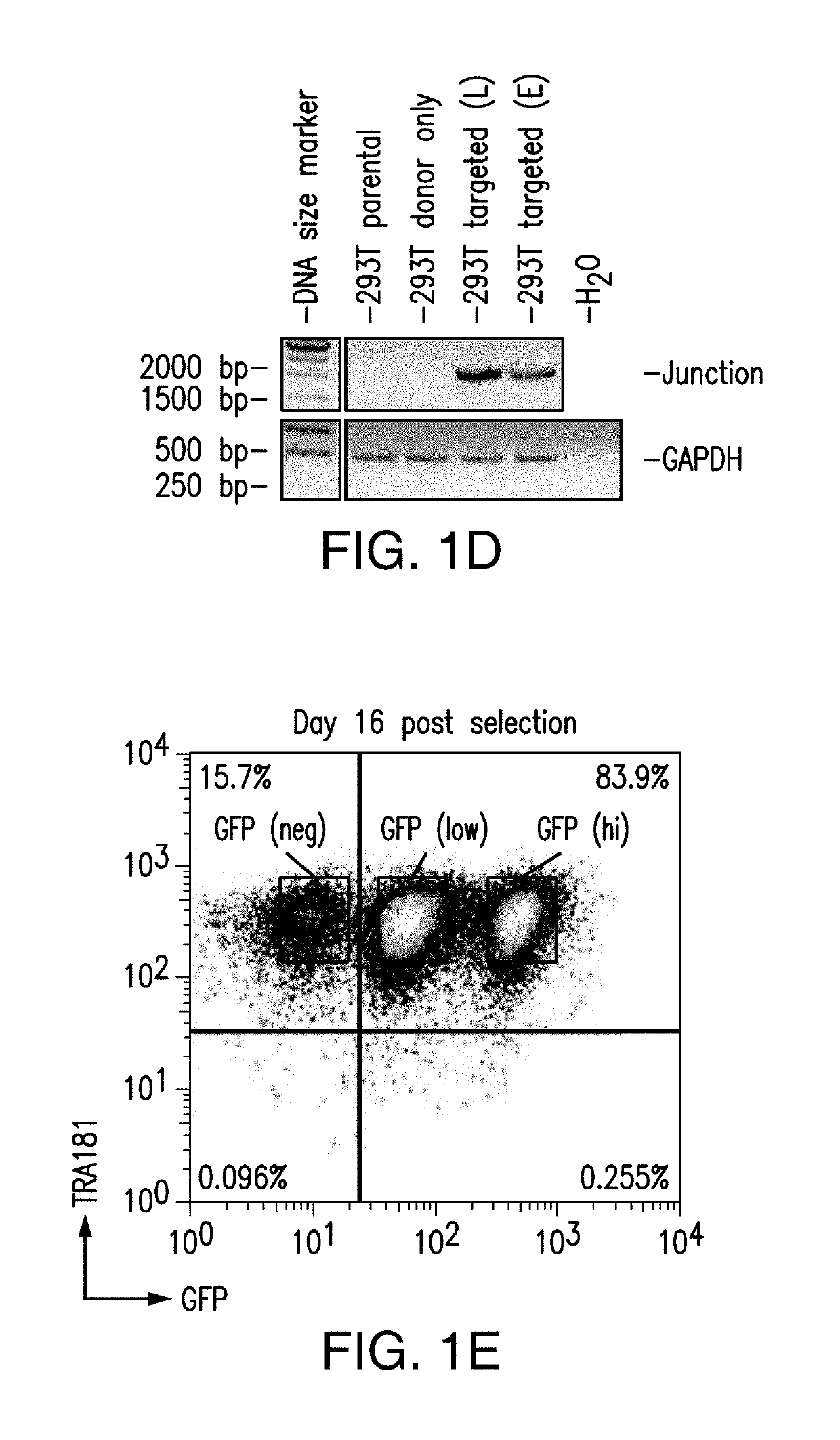
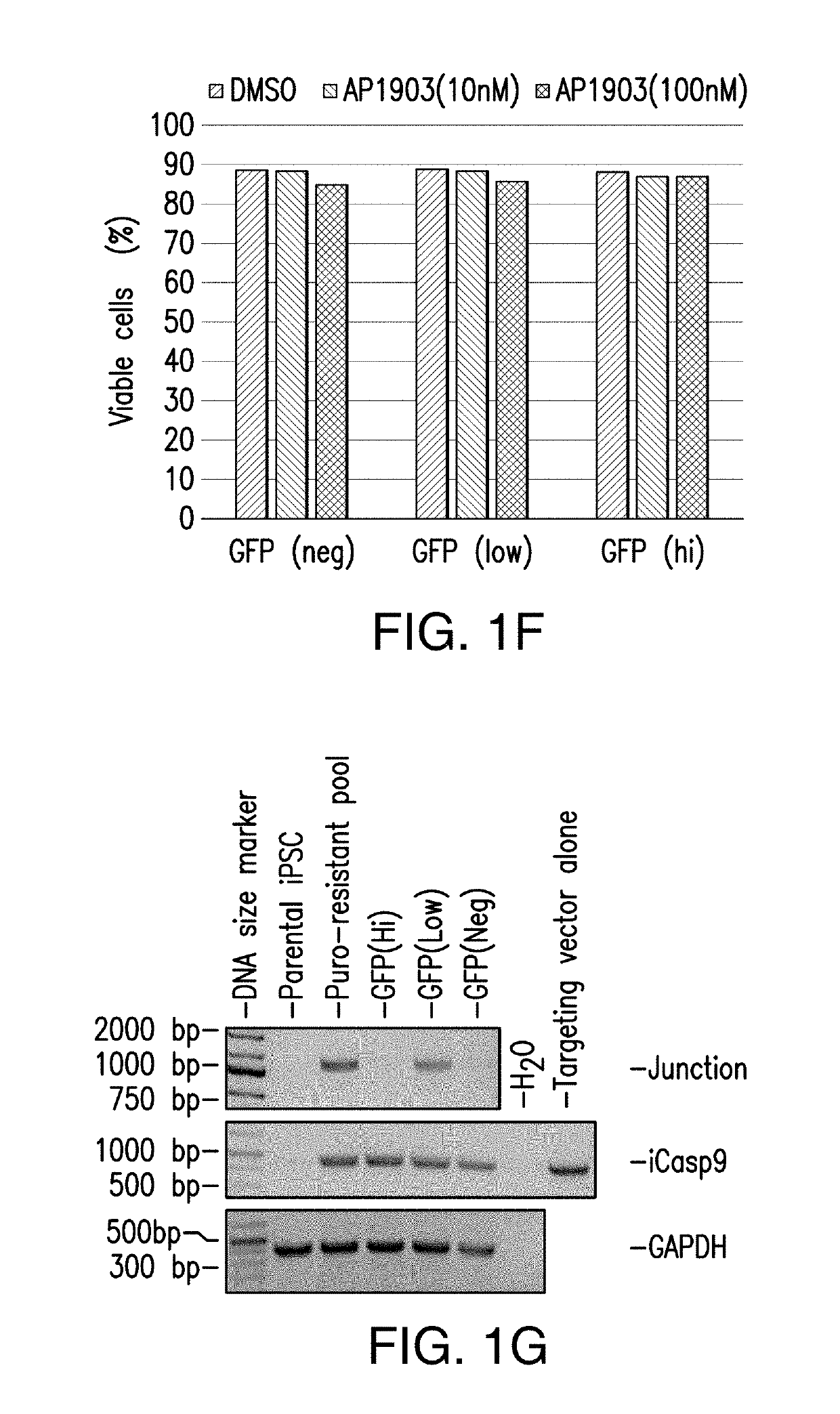
[0283]To conduct high-throughput analyses of proper integration and expression strategies in iPSCs, an iCasp9 suicide gene platform was selected, where rapid caspase-9 mediated cell death can be induced by small molecule chemical inducers of dimerization such as AP1903. Note that for the small molecule induction to demonstrate efficacy at each stage of development towards the final product, the iCasp9 gene will need to be continuously expressed in every stage of pluripotent stem cell maintenance and differentiation. In a single hiPSC per well manner, in order to efficiently and precisely integrate and maintain various suicide gene expression cassettes in safe harbor loci including, but not limited to, AAVS1, ROSA26, and H11 loci. Several integration vectors, each containing a suicide gene expression cassette downstream of various exogenous and endogenous promoters, inclu...
example 3
or Loci Targeted Insertion of iCasp9 Under Various Endogenous and Exogenous Promoters in hiPSCs
[0286]Because in the previous study puromycin selection under the AAVS1 promoter was robustly expressed to maintain viability and growth during selection, next a donor construct encompassing iCasp9 was designed to target the AAVS1 locus with endogenous AAVS1 promoter driving iCasp9 gene expression upon insertion (and GFP, and puromycin marker genes) (FIG. 2A). hiPSCs were transfected with ZFNs specific to AAVS1 locus and the donor construct encompassing iCasp9 under the control of AAVS1 endogenous promoter. Puromycin selection was started 3 days after transfection and continued for 20 days before the puro-resistant cells were analyzed by flow cytometry, and were shown to have GFP expression (FIG. 2B). Expanded puro-resistant iPSCs were then subjected to AP1903 (or DMSO control) treatment for 24 hrs. The treated cells were harvested and stained with 7AAD and analyzed by flow cytometry. The ...
PUM
| Property | Measurement | Unit |
|---|---|---|
| period of time | aaaaa | aaaaa |
| weight | aaaaa | aaaaa |
| concentration | aaaaa | aaaaa |
Abstract
Description
Claims
Application Information
 Login to View More