
Hybrid system and method for secure collaboration using homomorphic encryption and trusted hardware
a technology of trusted hardware and homomorphic encryption, applied in the field of secure multi-party collaboration, can solve the problems of limited memory and computational capacity, the computation of encrypted data cannot be performed conventionally, and the data privacy is not protected, so as to achieve the effect of fast and efficient technique, relatively fast and efficient
- Summary
- Abstract
- Description
- Claims
- Application Information
AI Technical Summary
Benefits of technology
Problems solved by technology
Method used
Image

Examples
Embodiment Construction
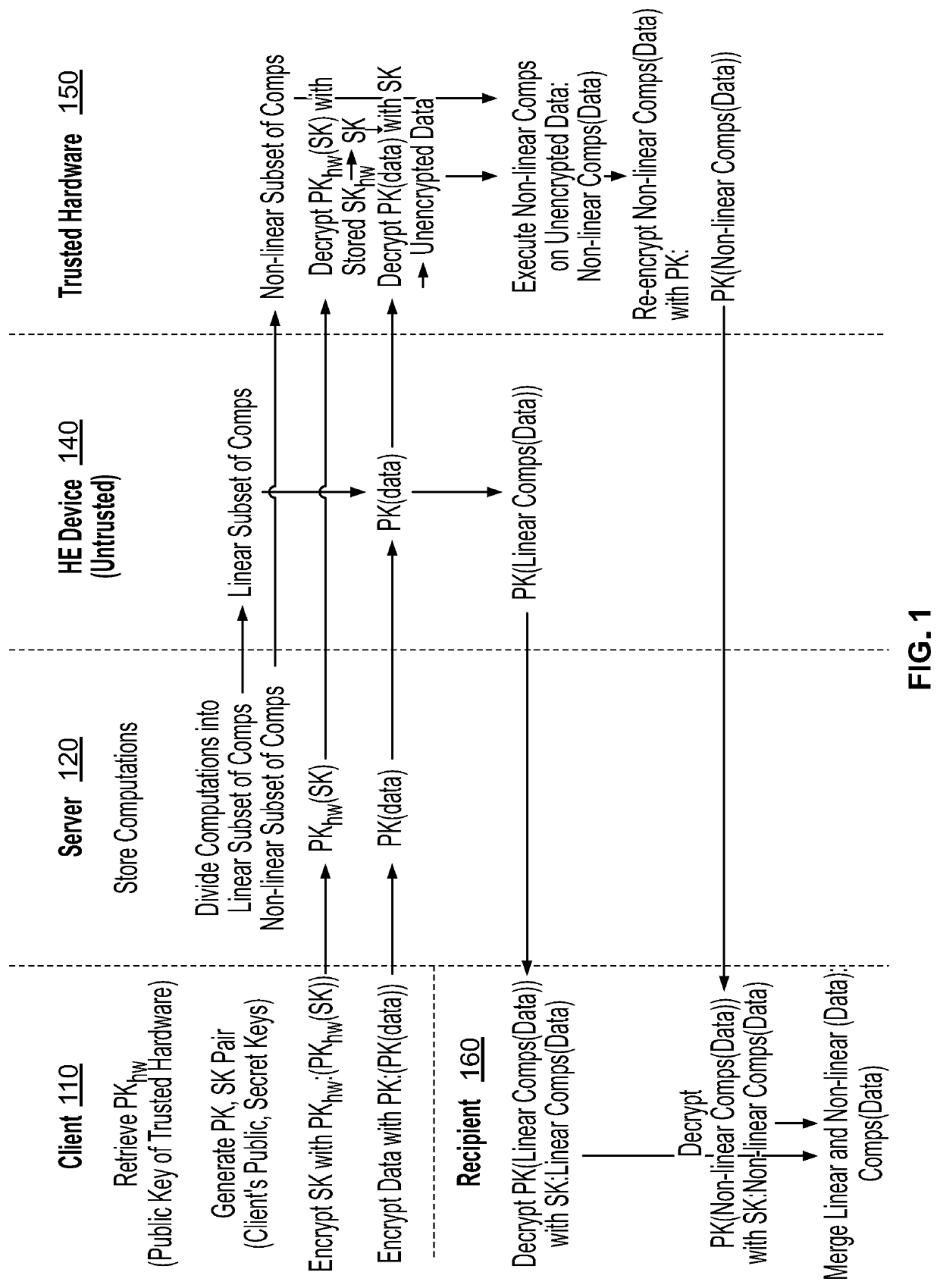
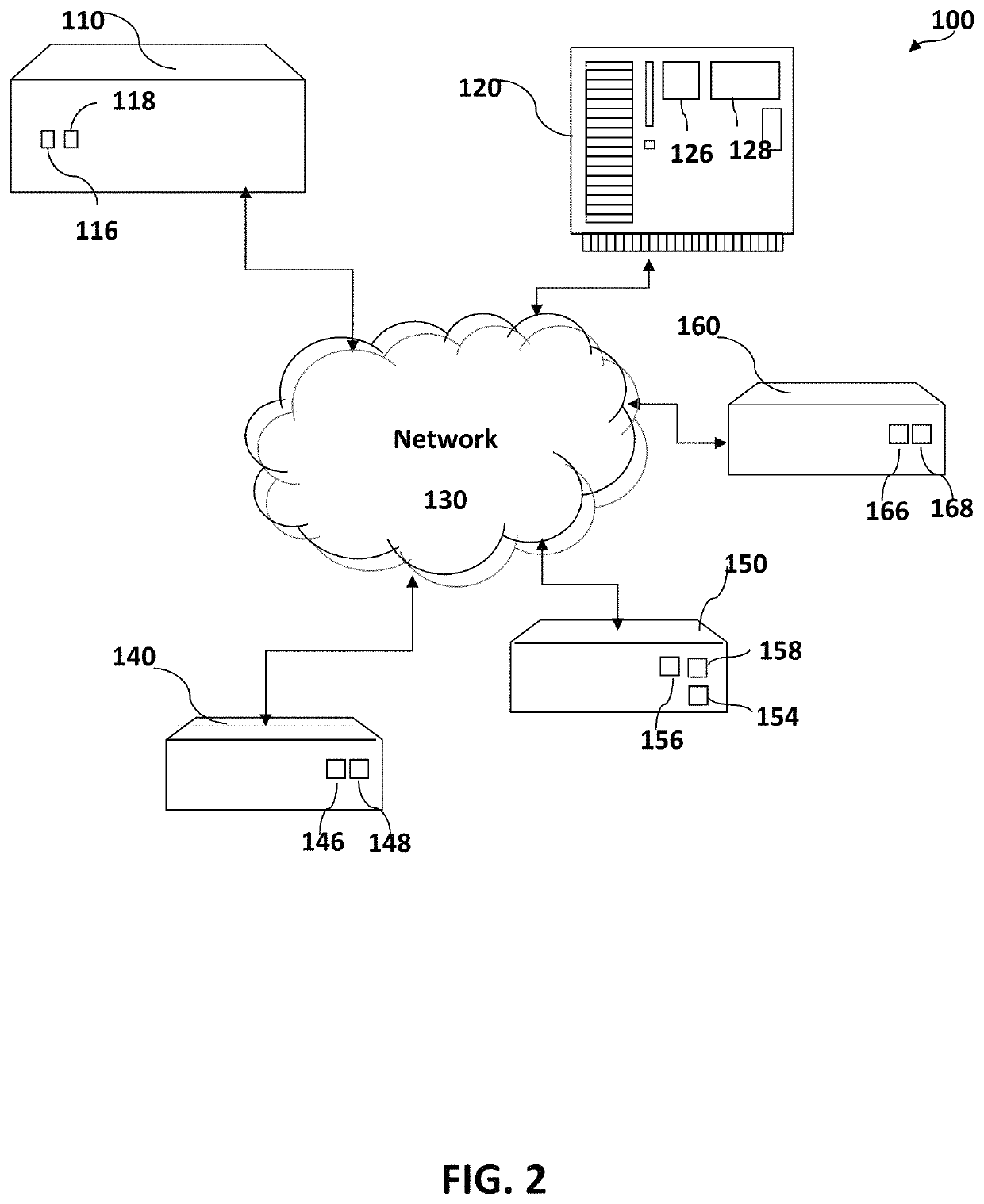
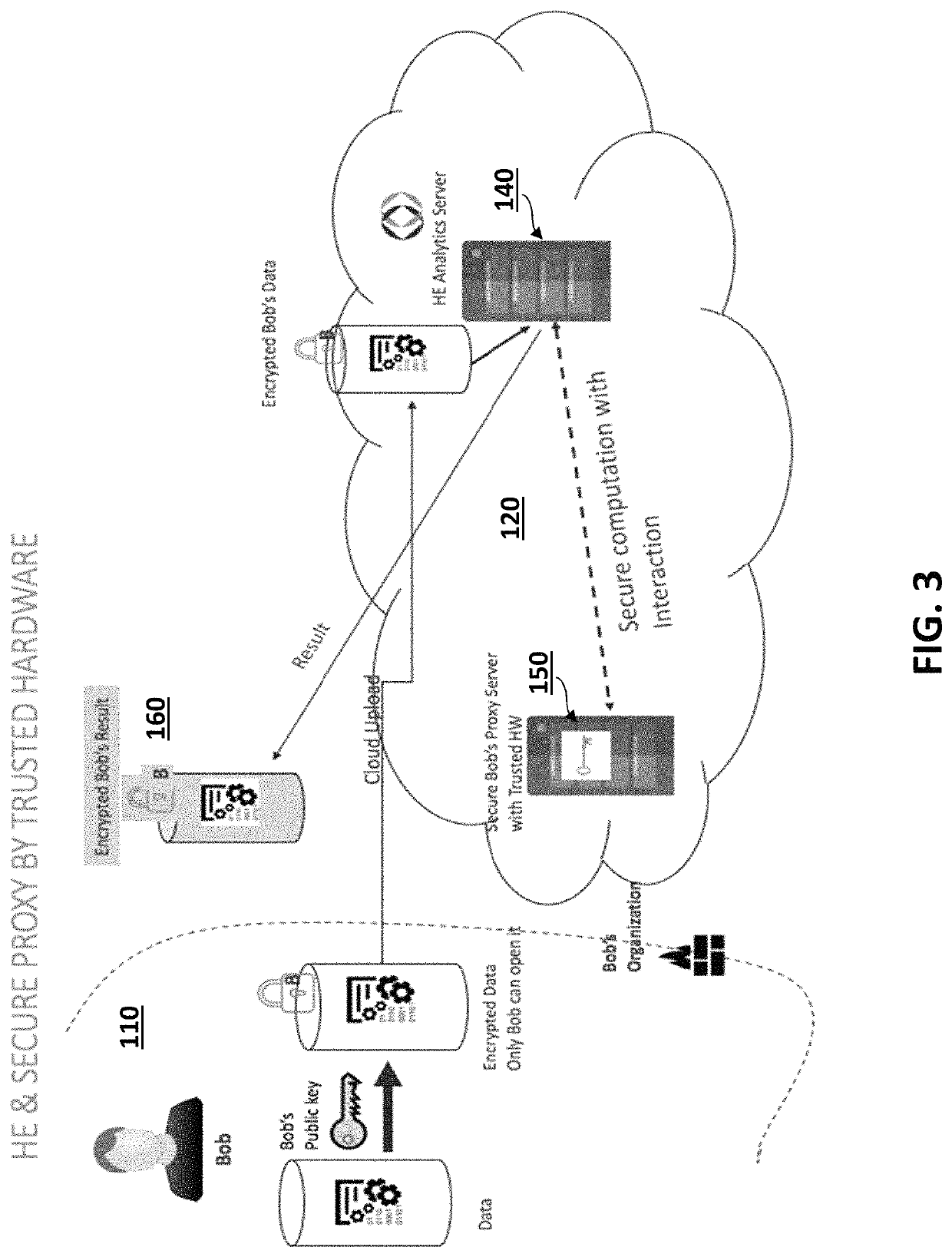
[0008]To overcome the aforementioned limitations inherent in the art, embodiments of the invention may provide a fast and efficient technique for secure collaborations on encrypted data. Embodiments of the invention may provide a hybrid environment combining a homomorphic encryption (HE) enabled device performing HE computations in an encrypted domain (e.g., not in trusted hardware) and a trusted hardware device performing computations in an unencrypted domain (e.g., in trusted hardware). An original set of computations may be split into a subset of linear computations and a subset of non-linear computations. Because linear computations are typically performed relatively fast and efficiently using HE, the HE-enabled device may perform only the subset of linear computations. However, because non-linear computations are performed relatively slowly using HE, the subset of non-linear computations may not be performed using HE, but may instead only be performed in the unencrypted domain ...
PUM
 Login to View More
 Abstract
Description
Claims
Application Information
 Login to View More