
Flower stem bag wrap with outer plastic covering
a bag wrap and stem technology, applied in the field of bag wraps, can solve the problems of flower petals discoloration, flower death, and impede the flow of water up the stem,
- Summary
- Abstract
- Description
- Claims
- Application Information
AI Technical Summary
Benefits of technology
Problems solved by technology
Method used
Image

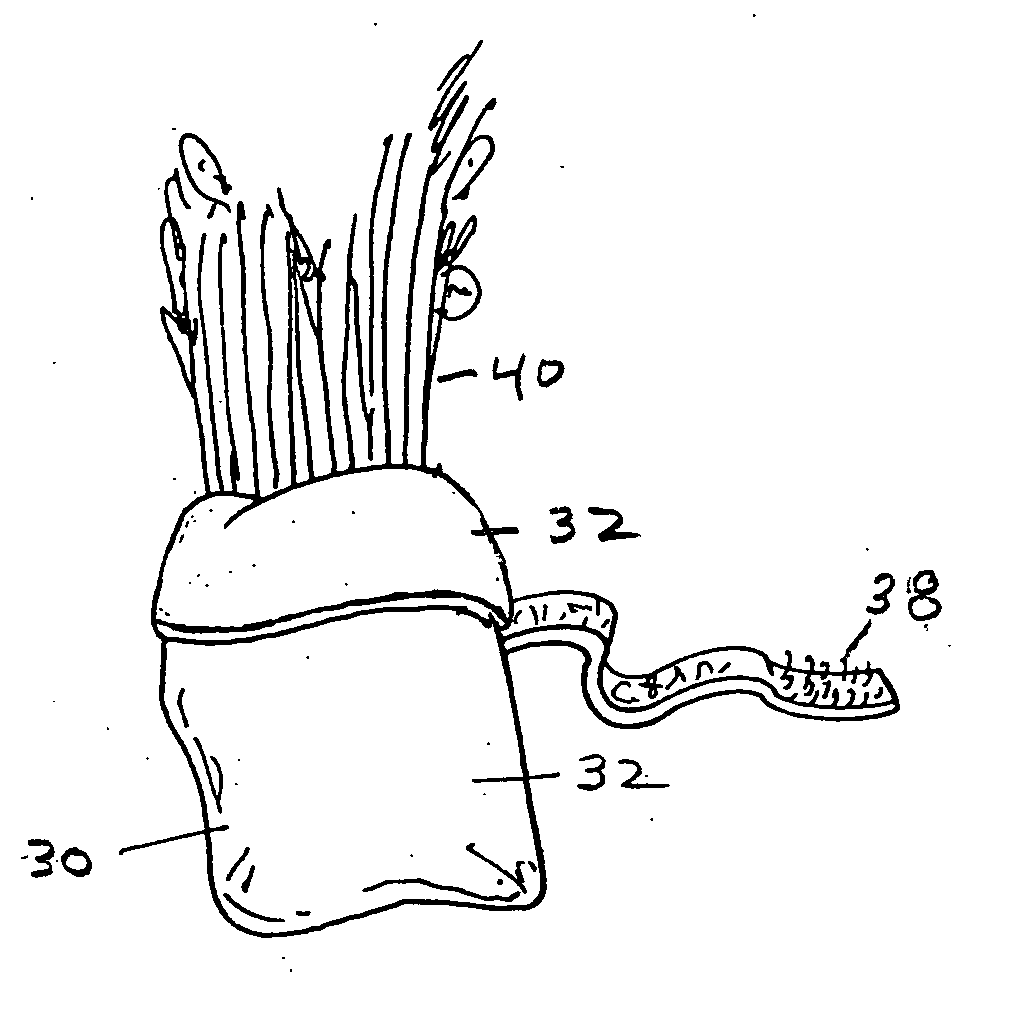
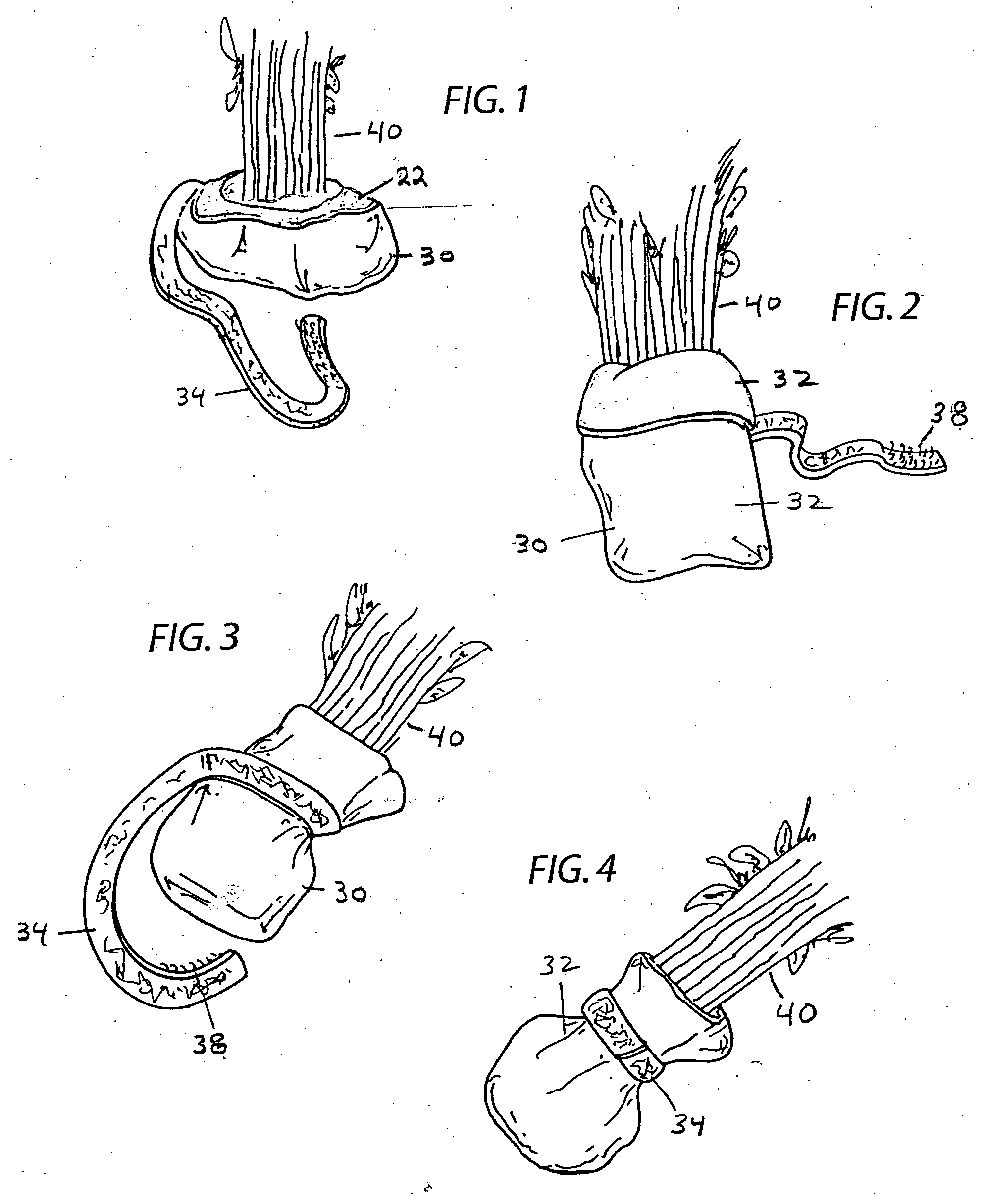
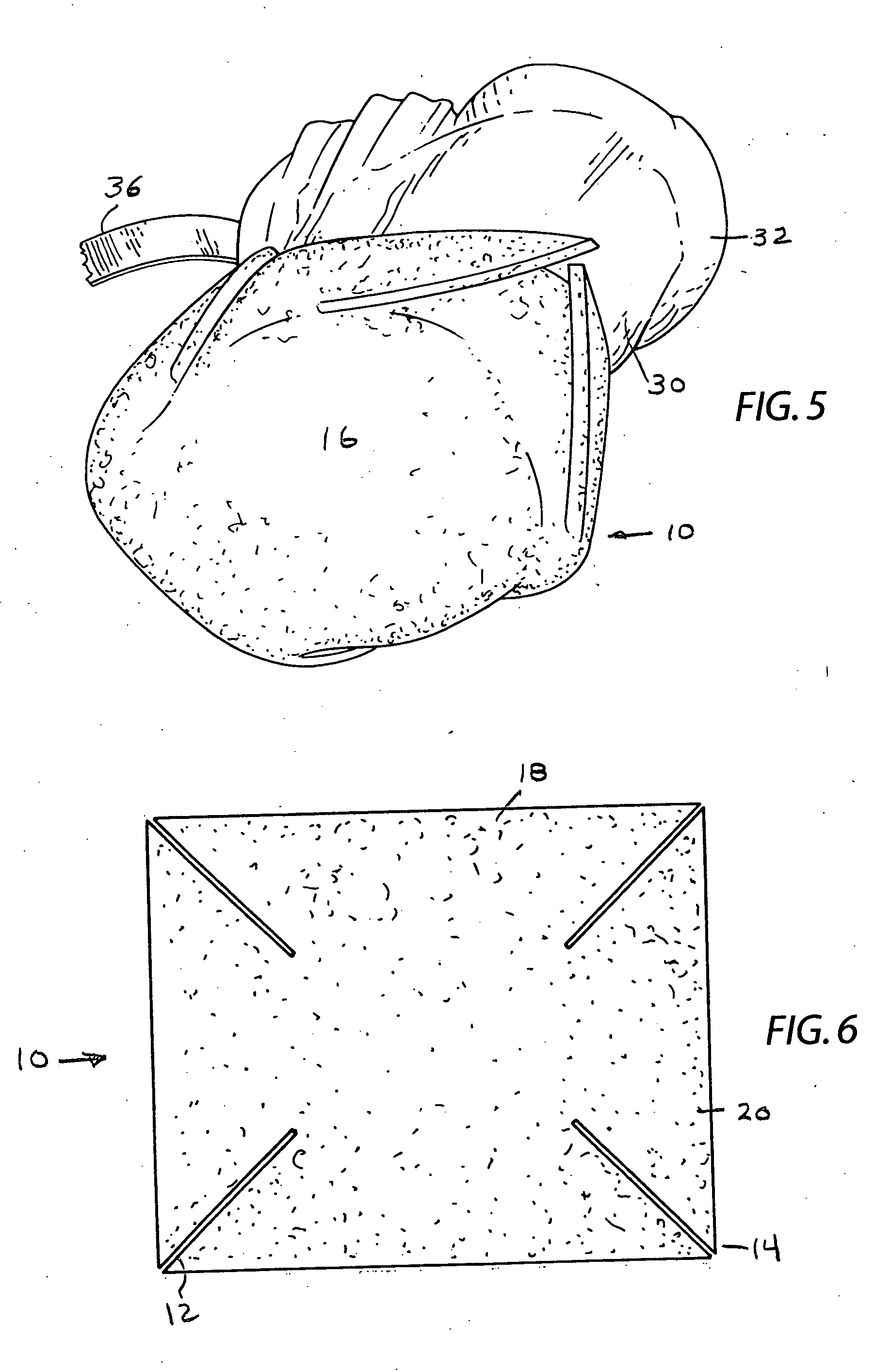
Examples
Embodiment Construction
[0025] The preferred embodiment and best mode of the invention is shown in FIGS. 1 through 6.
[0026] The invention is directed toward a rectangular shaped foam member 10 formed of an aromatic polyisocyanate polymer diphenylmethane diisocyanate (MDI) flexible foam material using no filler material which hydrates cut flowers in shipment by directing water absorbed in the foam wrap to the stems.
[0027] The polyisocyanate used in the foam material is an aromatic polyisocyanate which includes aromatic diisocyanates having 6 to 16 carbon atoms (excluding those contained in NCO groups; this applies to the polyisocyanates mentioned below), aromatic triisocyanates having 6 to 20 carbon atoms and crude products of these isocyanates, etc. Examples of aromatic polyisocyanate include 1,3- and 1,4-phenylene diisocyanates, 2,4- and / or 2,6-tolylene diisocyanates (TDI), crude TDI and 2,4′- and / or 4,4′-diphenylmethane diisocyanate (MDI) as well as crude MDI.
[0028] The preferred material which is use...
PUM
 Login to View More
 Abstract
Description
Claims
Application Information
 Login to View More