
Treatment for Parkinson's Disease-combination high dose serotonergic synaptic reuptake inhibitor with phosphodiesterase inhibitor
a serotonergic synaptic reuptake inhibitor and parkinson's disease technology, applied in the field of neurological disorders, can solve the problems of high emotional cost to the families of pd patients, astronomical financial burden both to the patients and the health care system, and the majority of patients have experienced little relief from current treatment regimes. achieve the effect of increasing the cyclic gmp level
- Summary
- Abstract
- Description
- Claims
- Application Information
AI Technical Summary
Benefits of technology
Problems solved by technology
Method used
Image

Examples
example 1
Typical Dosage Regime For Medication
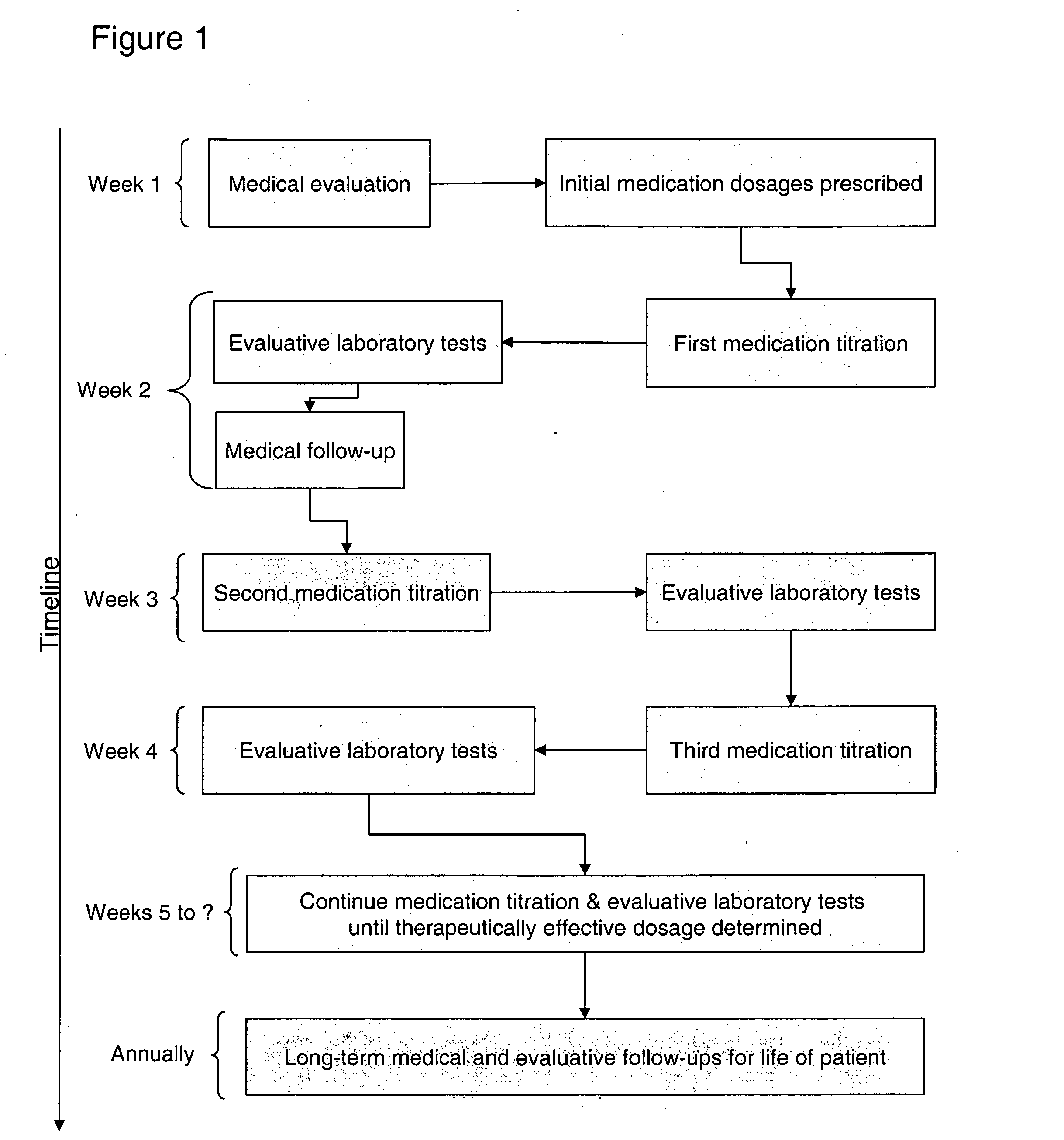
[0025]The following example dosage experiment was conducted on a 57 year old male PD patient weighing 210 lbs and with a body mass index (b.m.i.) of 0.20. Initial tests were run for kidney function and liver function. The kidney function tests showed a creatinine level of 1.0, and a liver function test (LFT). both of which were within normal limits. The patient was administered with a combination of Cialis and Luvox. Table 1, below provides a summary of the titration regime used to determine the therapeutically effective amount of each drug for this patient. As discussed previously, therapeutically effective amounts are defined as the level of medication required to observe maximum improvement in PD symptoms.
TABLE 1Exemplary Dosage RegimeWeekCialis (mg / frequency)Luvox (mg / frequency)15mg / morning12.5mg / twice daily15mg / morning25mg / twice daily25mg / morning50mg / twice daily25mg / morning75mg / twice daily35mg / morning100mg / twice daily35mg / morning150mg / twice d...
PUM
| Property | Measurement | Unit |
|---|---|---|
| body mass index | aaaaa | aaaaa |
| physical state | aaaaa | aaaaa |
| rigidity | aaaaa | aaaaa |
Abstract
Description
Claims
Application Information
 Login to View More