
Coagulant-enhanced pre-filtration system
a pre-filtration system and coagulant technology, applied in the field of coagulant-enhanced pre-filtration system, can solve the problems of high cost, high cost, and high cost of ceramic filters, such as those used by backpackers or emergency response kits, and achieve the effect of improving the quality of water treatment, reducing the cost of coagulant treatment, and increasing the cost of treatmen
- Summary
- Abstract
- Description
- Claims
- Application Information
AI Technical Summary
Problems solved by technology
Method used
Image

Examples
Embodiment Construction
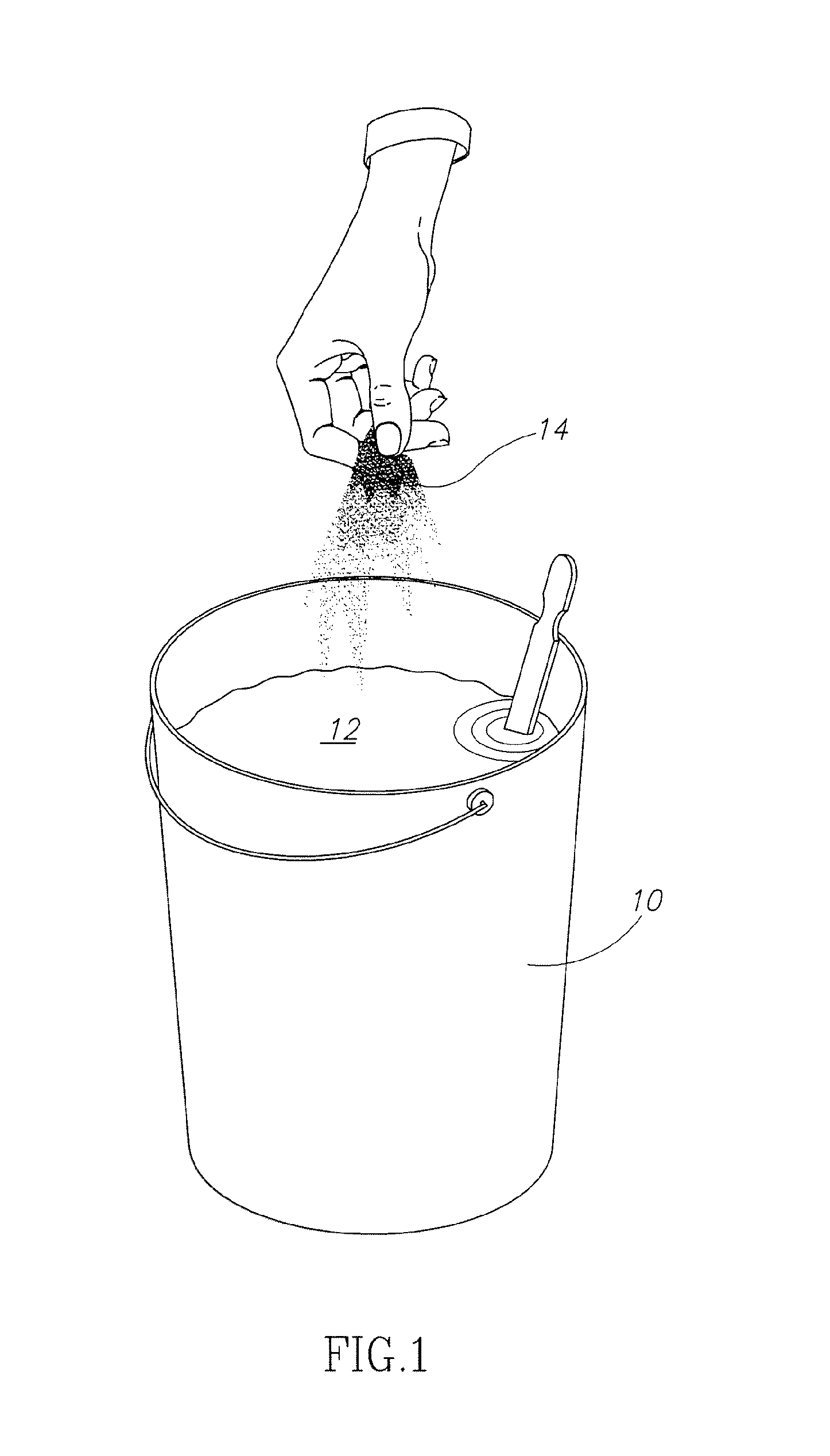
[0011]Referring to FIG. 1, in one embodiment of the invention a reservoir 10 is filled with turbid water 12, such as water from a stream, canal, puddle, or the like. The present system will remove contaminants from virtually all turbid water, although in some cases further processing is required before the water is safe to drink. For example, sewage water, industrial wastewater, seawater, and other highly industrially-contaminated water may not be suitable for drinking water under any circumstances.
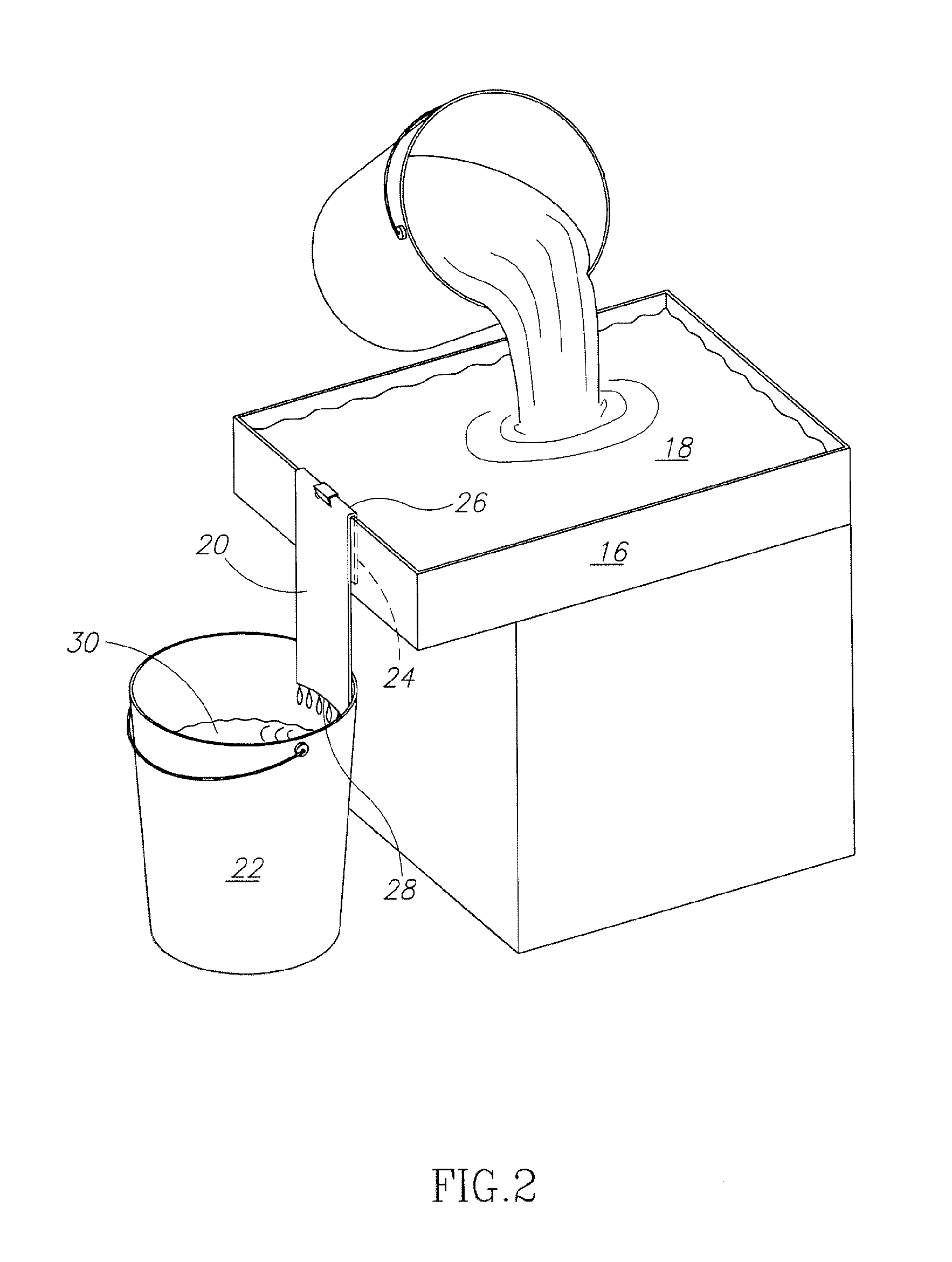
[0012]The turbid water 12 typically has large amounts of particulates that would tend to quickly clog a filter suitable for filtering out sediment, microbes and parasites. A small amount of a coagulant 14 is added to the turbid water 12 and mixed into the water 12, such as by stirring. The amount of stirring required depends on the turbidity of the water, with dirtier water requiring more stirring. The amount of coagulant 14 depends on the amount of water and the degree of turbidity. In s...
PUM
| Property | Measurement | Unit |
|---|---|---|
| height | aaaaa | aaaaa |
| flexible | aaaaa | aaaaa |
| volume | aaaaa | aaaaa |
Abstract
Description
Claims
Application Information
 Login to View More