
Digital archery sight
- Summary
- Abstract
- Description
- Claims
- Application Information
AI Technical Summary
Benefits of technology
Problems solved by technology
Method used
Image

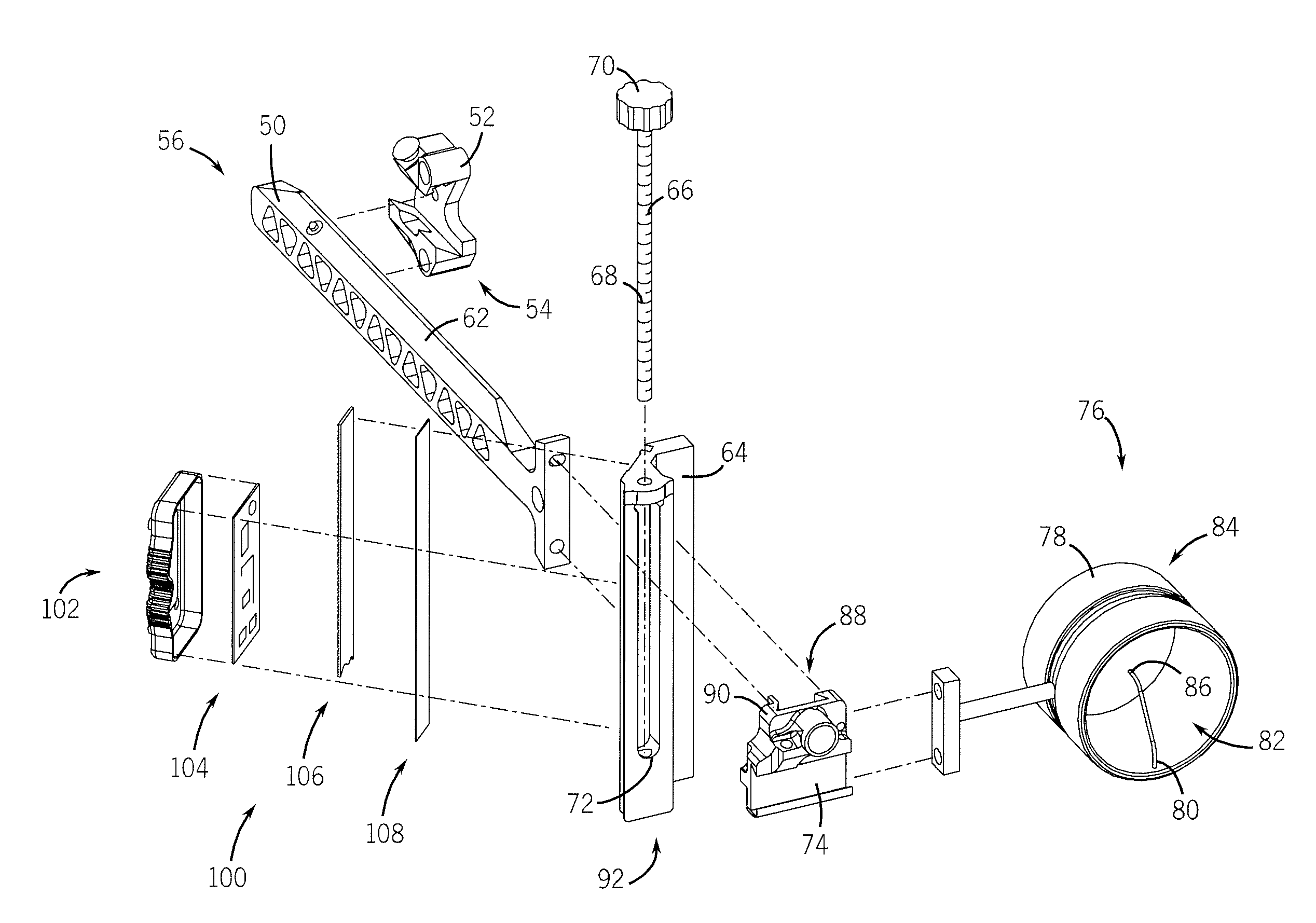
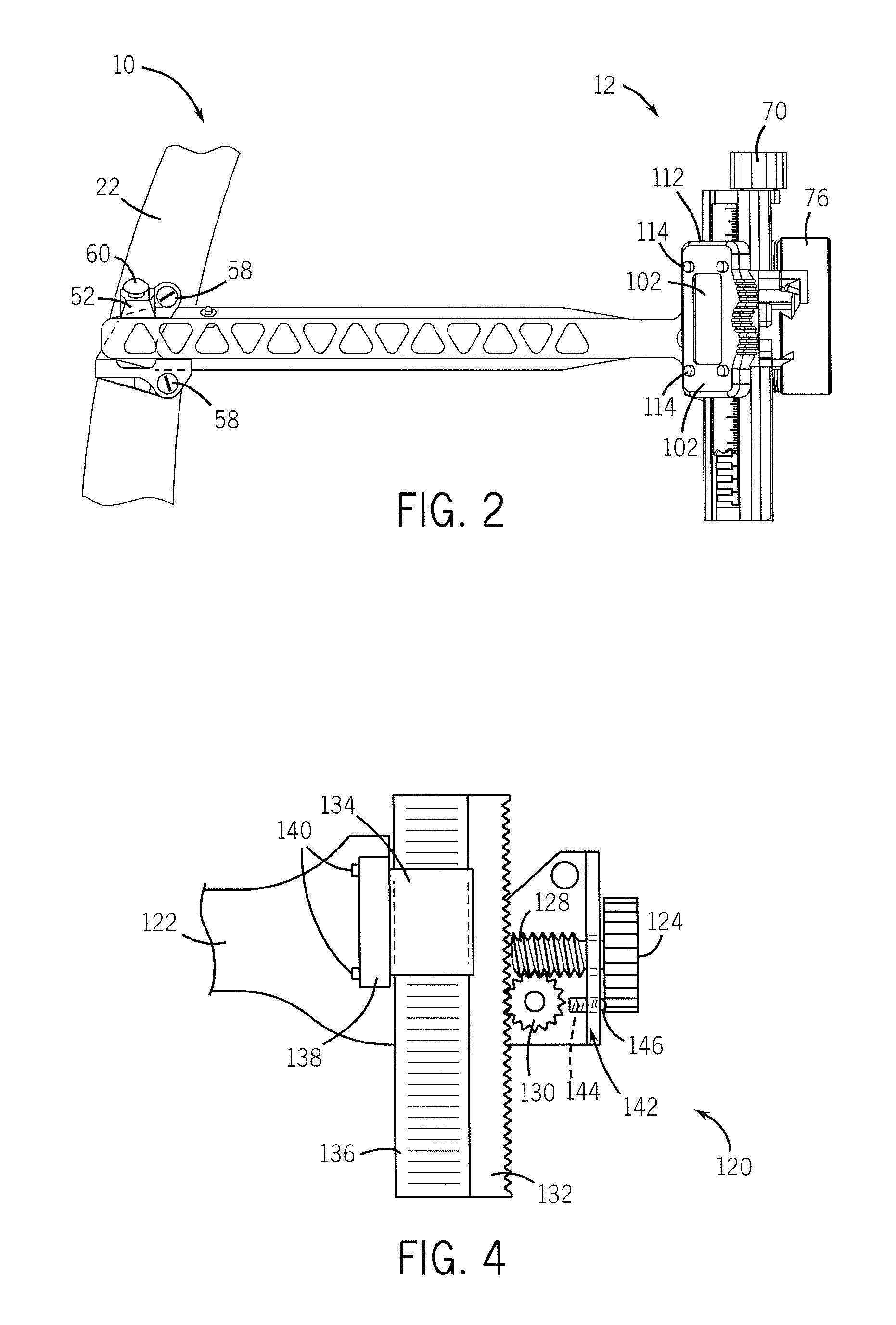
Examples
Embodiment Construction
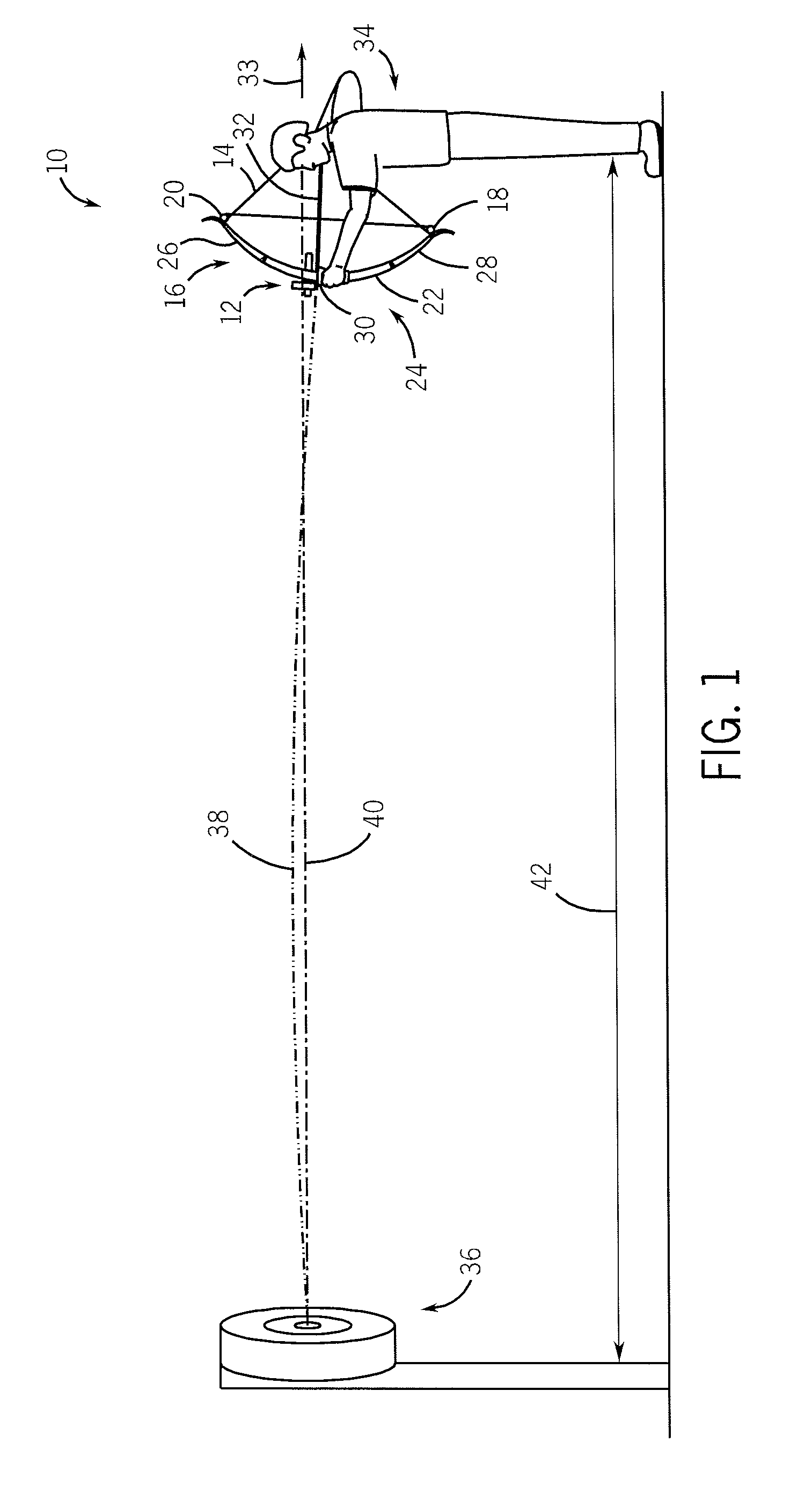
[0020]FIG. 1 shows a bow 10 equipped with a sight 12 according to the present invention. Bow 10 includes a drawstring 14 attached to a frame assembly 16 by a number of pulleys or cams 18, 20. Frame assembly 16 includes a riser 22 having a grip portion 24 and an upper limb 26 and a lower limb 28 attached thereto. As commonly understood such a construction forms an exemplary compound bow although the present invention is applicable with a number of the bow constructions such as recurve or longbows. A rest 30 is attached to riser 22 and is constructed to support an arrow 32 thereon. As an archer 34 pulls drawstring 14, arrow 32 translates rearward, indicated by arrow 33, relative to riser 22. Nocking a butt of arrow 32 in drawstring 14 ensures that arrow 32 is propelled, fired, or shot toward a target 36 when archer 34 releases a drawstring 14. Arrow 32 follows a projectile trajectory path 38 whereas the aim of archer 34 follows a substantially more linear path or a sight path 40. Sigh...
PUM
 Login to View More
 Abstract
Description
Claims
Application Information
 Login to View More