
Use of Pyrimidinedione Derivative for Preventing or Treating Hepatitis C
- Summary
- Abstract
- Description
- Claims
- Application Information
AI Technical Summary
Benefits of technology
Problems solved by technology
Method used
Image

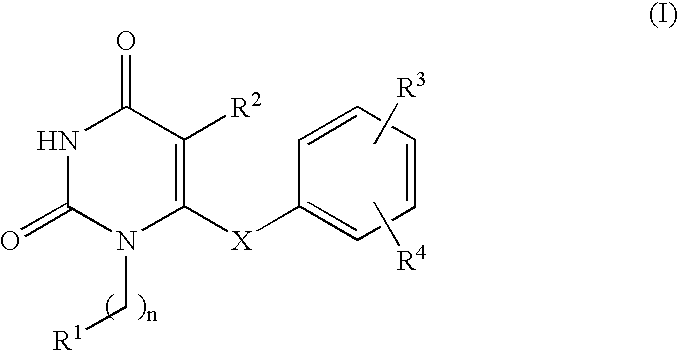
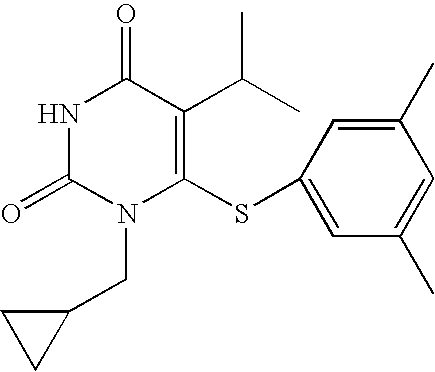
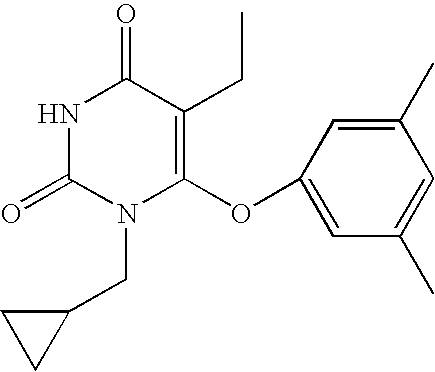
Examples
example 1
[0025]To assess the effectiveness of the pyrimidinedione derivative used in the present invention as a drug for preventing or treating hepatitis C, an anti-BVDV drug screening assay was conducted with bovine viral diarrhea virus (BVDV). BVDV, a virus having a genome, reproduction cycle and infection type similar to hepatitis C virus, was employed because hepatitis C virus can not be subjected to in vivo cultivation.
[0026](Step 1) Preparation of Cells and Virus
[0027]One day before the screening, MDBK cell line (Mardin-Darby bovine kidney, ATTC CCL22) which had been subcultured previously was trypsinized and spread on a plate, followed by counting the cell colonies formed. Then, equal amount of DMEM (Dulbecco's Modified Eagle's Medium) and Ham's F-12 were mixed, and 10% fetal bovine serum was added to the resulting mixture to prepare a tissue culture medium. The MDBK cells were inoculated to the medium at a concentration of 6×10⁴ cells / ml, and then the resulting cell solution was adde...
PUM
| Property | Measurement | Unit |
|---|---|---|
| Molar density | aaaaa | aaaaa |
| Molar density | aaaaa | aaaaa |
| Molar density | aaaaa | aaaaa |
Abstract
Description
Claims
Application Information
 Login to View More