
Composite ceramic electrode, ignition device therewith and methods of construction thereof
a ceramic electrode and composite technology, applied in the field of electrodes therefor, can solve the problems of affecting limiting the material capability of spark plugs, and reducing the useful life of spark plugs
- Summary
- Abstract
- Description
- Claims
- Application Information
AI Technical Summary
Problems solved by technology
Method used
Image

Examples
Embodiment Construction
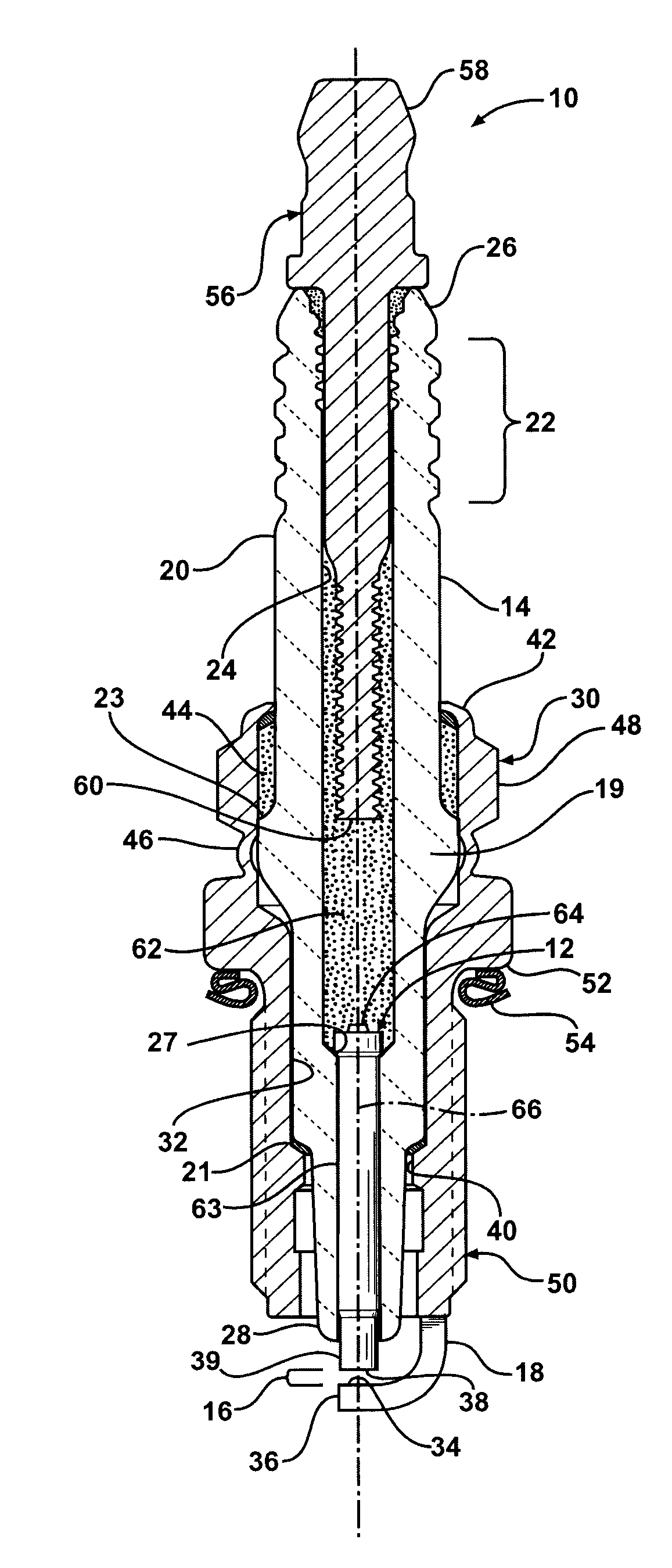
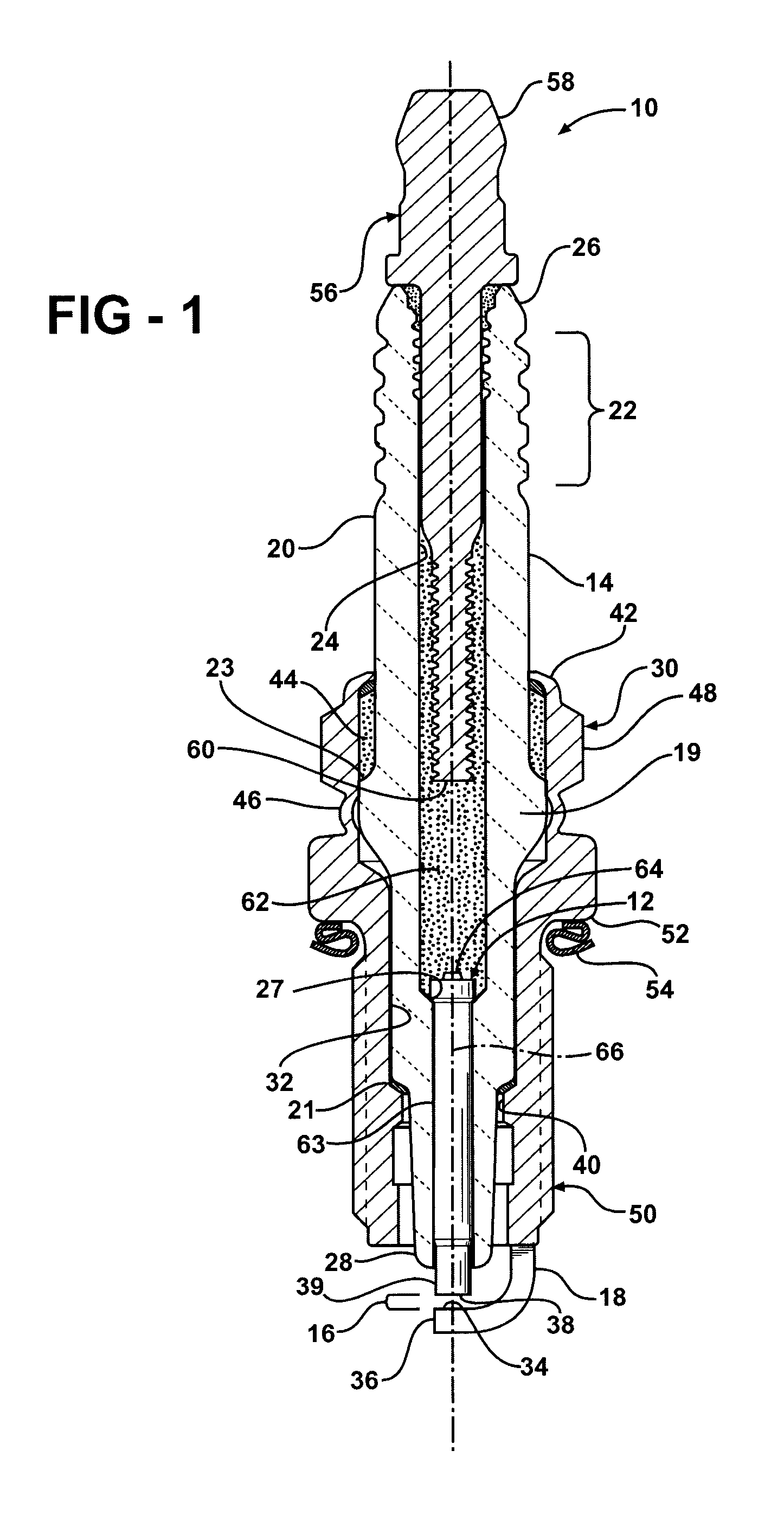
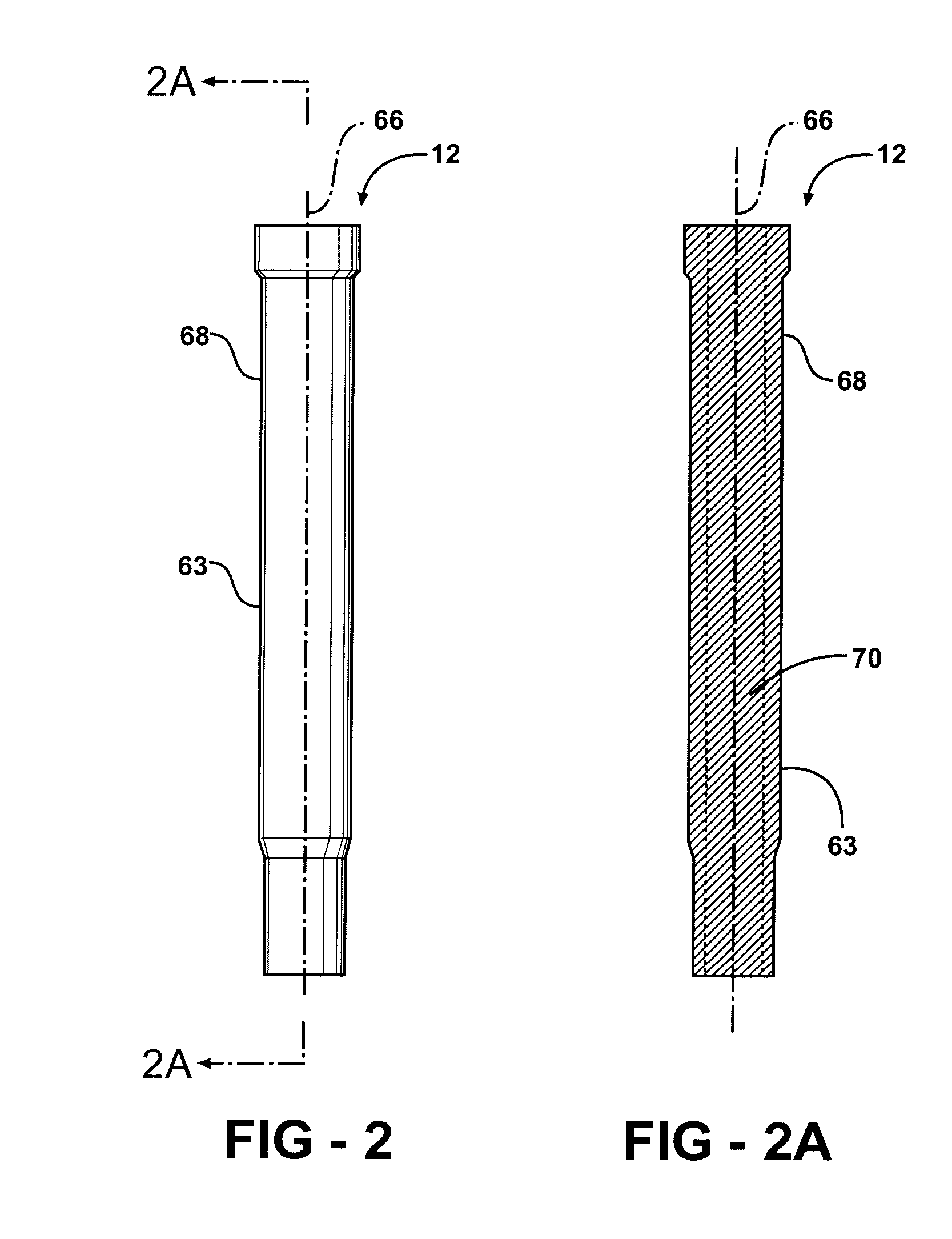
[0020]Referring in more detail to the drawings, FIG. 1 illustrates a spark ignition device, referred to hereafter as spark plug, generally at 10 used for igniting a fuel / air mixture within an internal combustion engine (not shown). The spark plug 10 has a center electrode 12 constructed of a composite ceramic / ceramic material or a composite ceramic / metal material in accordance with the invention. The materials used for the center electrode 12 are capable of withstanding the most extreme temperature, pressure, chemical corrosion and physical erosion conditions experienced by the spark plug 10. These conditions include exposure to numerous high temperature chemical reactant species associated with the combustion process which commonly promote oxidation, sulfidation and other high temperature corrosion processes, such as those attributed to calcium and phosphorus in the combustion products, as well as reaction of the plasma associated with the spark kernel and flame front which promote...
PUM
| Property | Measurement | Unit |
|---|---|---|
| width | aaaaa | aaaaa |
| length | aaaaa | aaaaa |
| concentration | aaaaa | aaaaa |
Abstract
Description
Claims
Application Information
 Login to View More