[0030]Although the present invention also relates to a
time division multiplexing technique, the mainly purpose is not on the multi-path digital communication, but to improve the spectral efficiency of the system. For the conventional multiplexing technologies such as Time Division
Multiplexing TDM,
Frequency Division Multiplexing FDM and
Orthogonal Frequency Division Multiplexing OFDM, the merely multiplexing itself cannot improve the spectral efficiency of the system. But in the present invention, multiplexing scheme is used to greatly improve spectral efficiency of the system. In the present invention, there is no need to isolate the symbols each other. Furthermore, there is strong overlapping between them, and so it is called Overlapped Time Division
Multiplexing (OvDM). The overlapping of the symbols in the present invention isn't taken as interference but used actively as a new coding
constraint relation. The more the overlapping is, the longer the length of the encoding constraint is, the higher the
coding gain is and the spectral efficiency is. When in same threshold
signal interference ratio, it can provide much higher spectral efficiency than the existing high-dimension modulation techniques. On the other hand, for the same spectrum efficiency, the required threshold
signal interference ratio is much lower than the high-dimension modulation techniques, especially in the random time-varying channel. This is because in the present invention the
signal symbols of each slot can be
broadband signals, allowing selective
fading with strong ability of anti-
fading itself. No one has ever pointed out to utilize the coding constraint relation caused by the interference between the symbols to improve the spectral efficiency of the system.
[0031]One objective of the present invention is to provide a
time division multiplexing method to improve the spectral efficiency of the system by multiplexing. The number of the required system levels will not increase with the improvement of spectral efficiency exponentially but only algebraically, thereby the
linearity requirement of the system is greatly reduced. In the overlapping time division multiplexing, there is no special requirements for
transmission function of the system. Thus it can avoid the use of the complex techniques such as adaptive channel
equalization in the system. Compared with other techniques, for the same spectral efficiency, the threshold
signal interference ratio of the Overlapped Time Division Multiplexing is much lower in the same working condition, so as to save transmission power and increase the
service coverage particularly when operating in the random time-varying channel. In this way, the wider spectrum of the signal multiplexed can be used (including the increase of the bit
transmission rate), and the random variation of the channel will automatically generate implicit
diversity effect and improve transmission reliability of the system. The wider the spectrum of the multiplexed signal is, the higher the
diversity gain and the transmission reliability are.
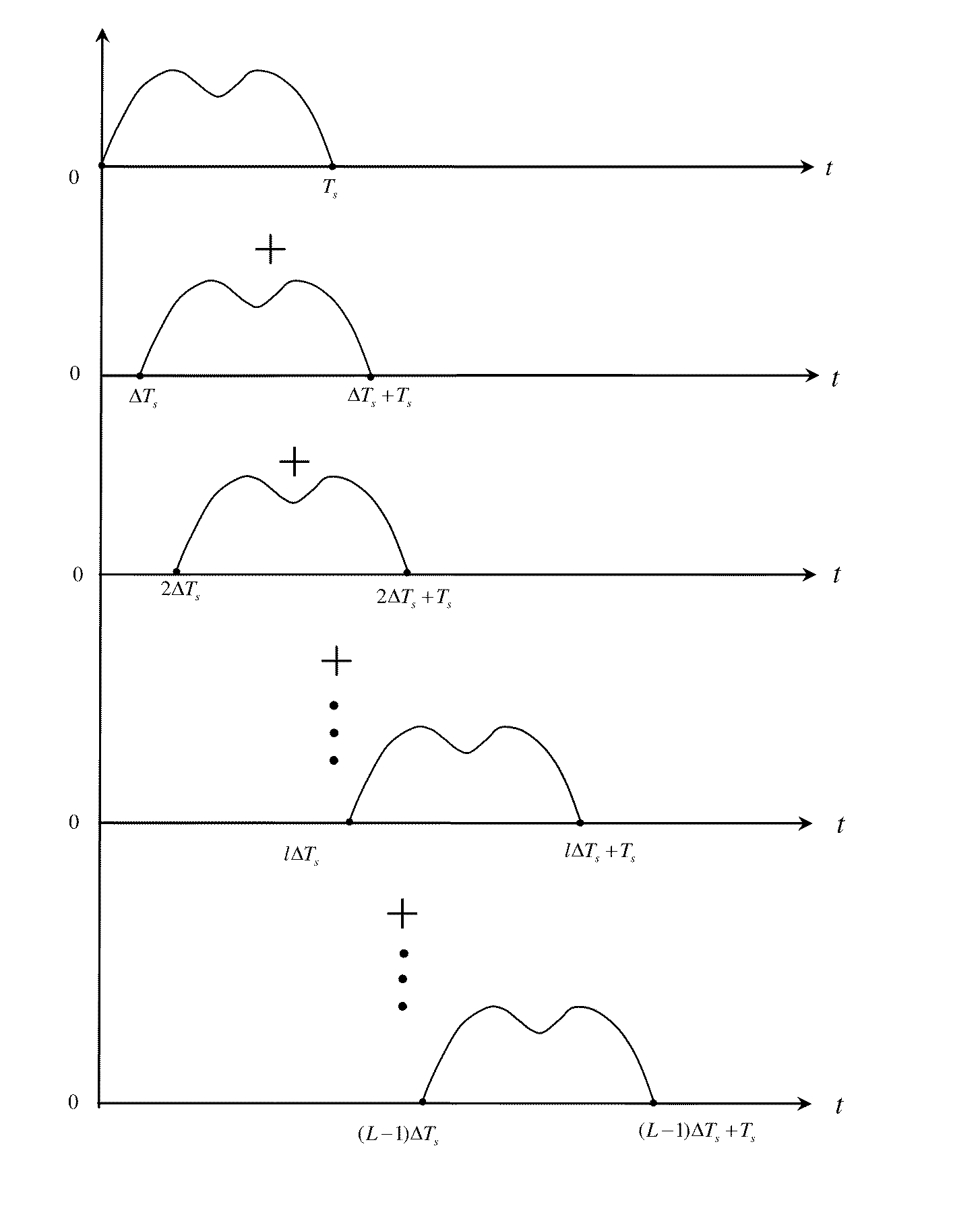
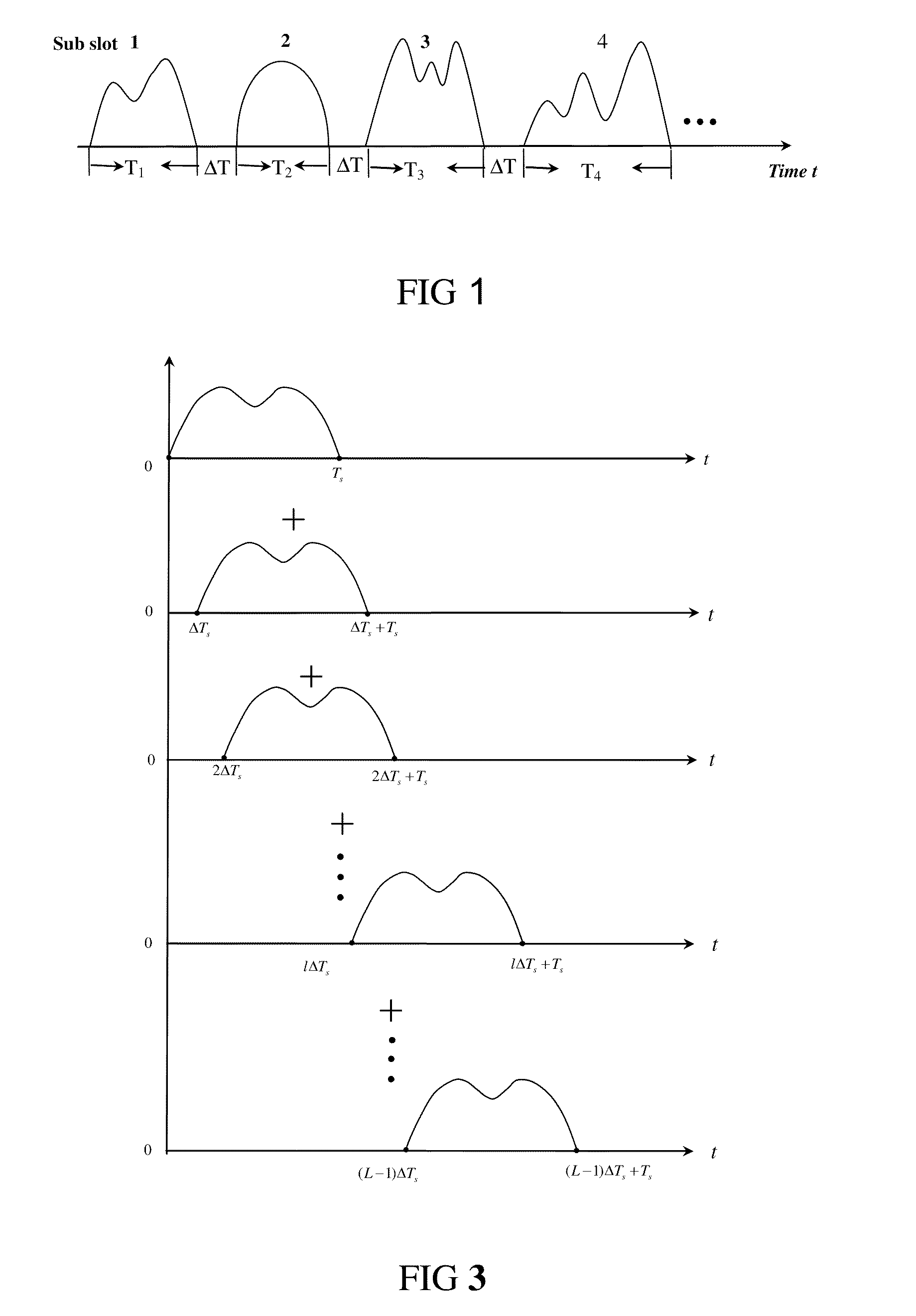
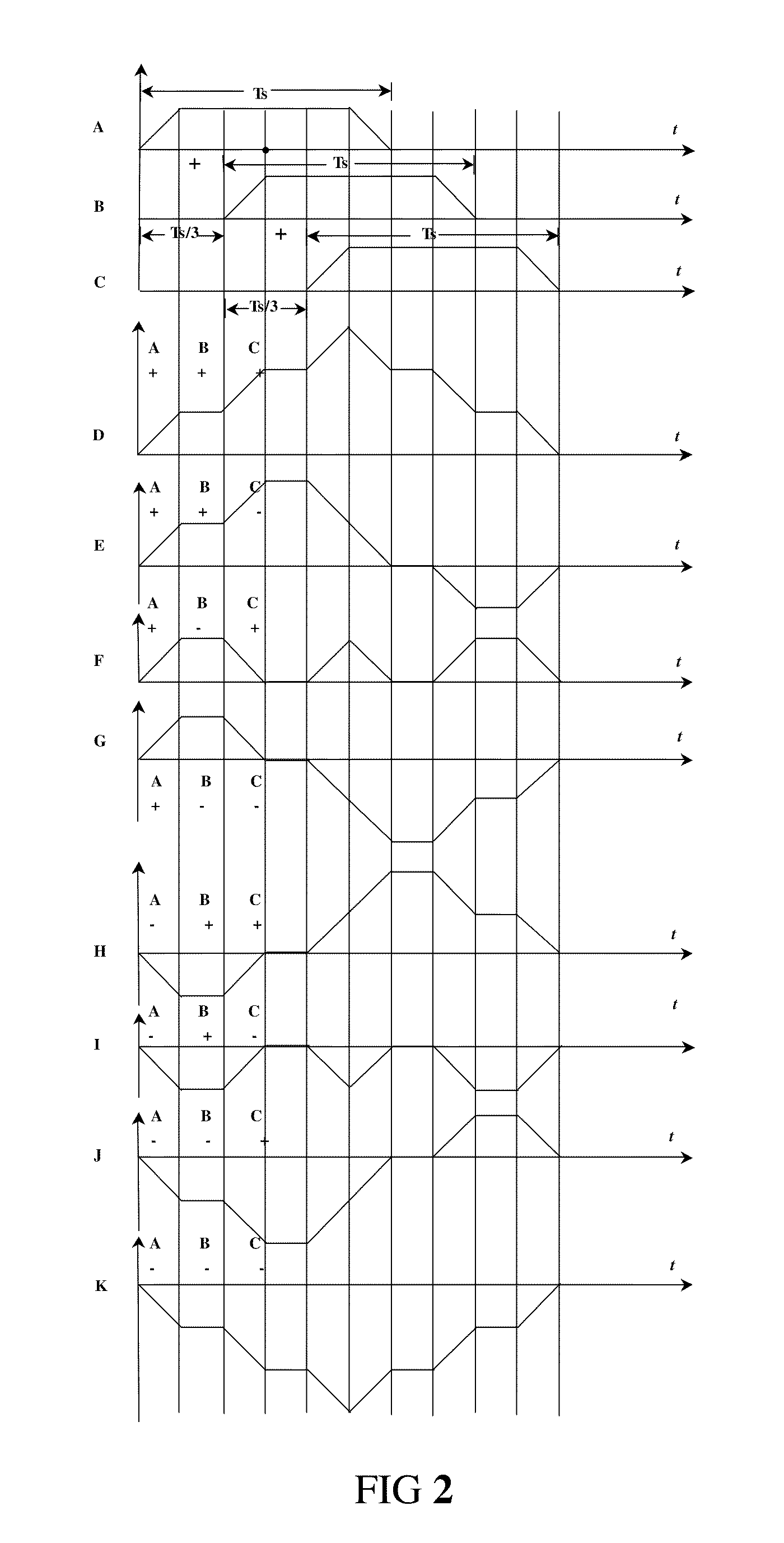
[0042]Increase the multiplicity of the symbol overlapping K by reducing the interval of the symbol ΔTs.
[0045]The order of the implicit frequency diversity can be increased by improving the bandwidth of the system B, or by
interleaving and coding, or improving the bit
transmission rate of the system or expanding the spectrum of the signal.
[0065]The
transmitter can also include the
interleaving unit and encoding unit, if necessary, used to increase the order of implicit frequency or
time diversity of the system, if necessary, to improve transmission reliability of the system.
[0073]The most benefits of the present invention is to provide a new type of theoretical concepts and related techniques which greatly improves the spectral efficiency of the system by using time division multiplexing. It does not need to do any pre-
processing to the
transmission function of the channel, and the capacity of the channel will not be reduced. On the contrary, the actual capacity of the system will be closer to the theoretical
channel capacity. In short, the present invention provides a time division multiplexing technique which is effective, reliable, practical and it greatly improves the spectral efficiency of communication systems.


 Login to View More
  Login to View More