
Methods and compositions for treating brain diseases
- Summary
- Abstract
- Description
- Claims
- Application Information
AI Technical Summary
Benefits of technology
Problems solved by technology
Method used
Image

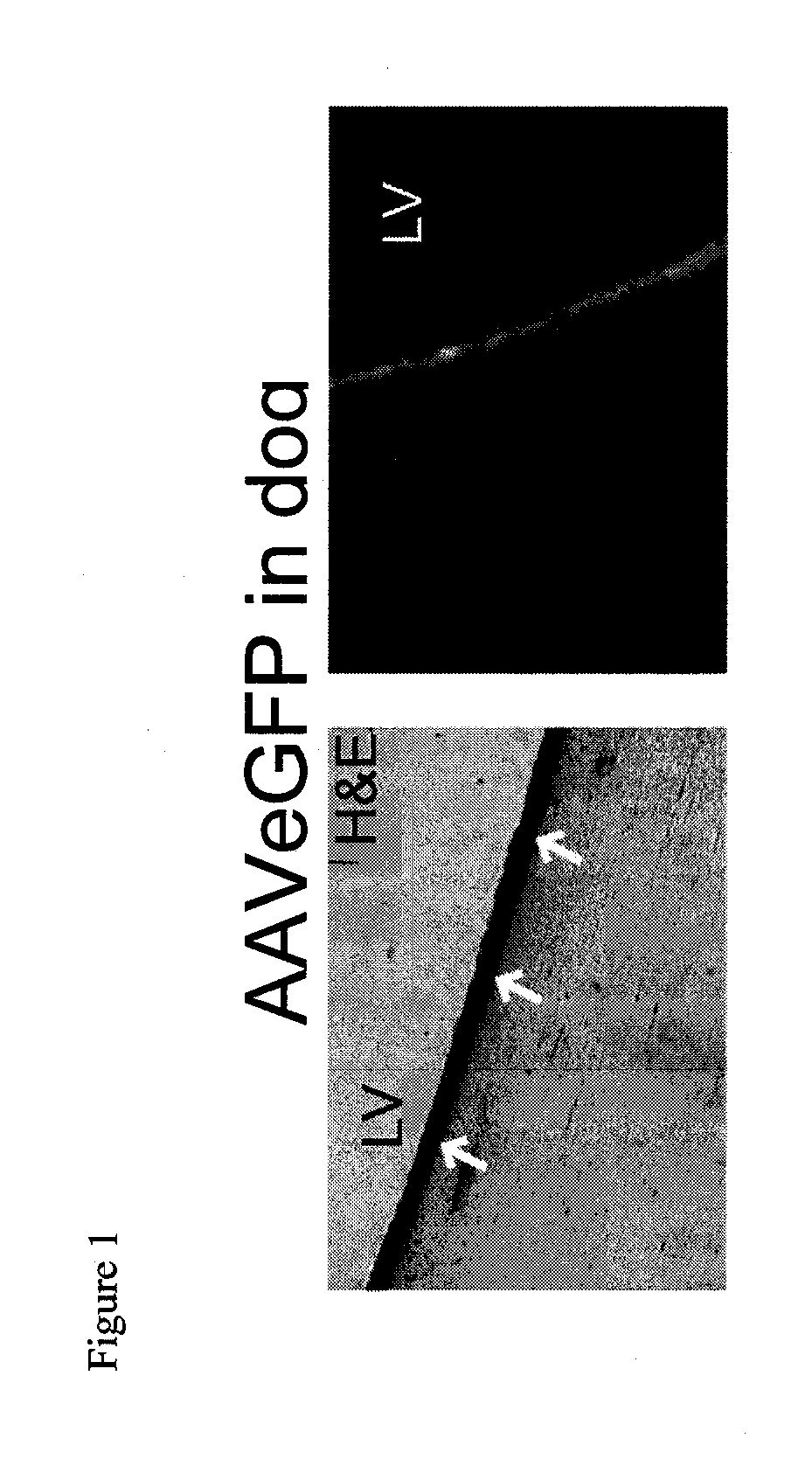
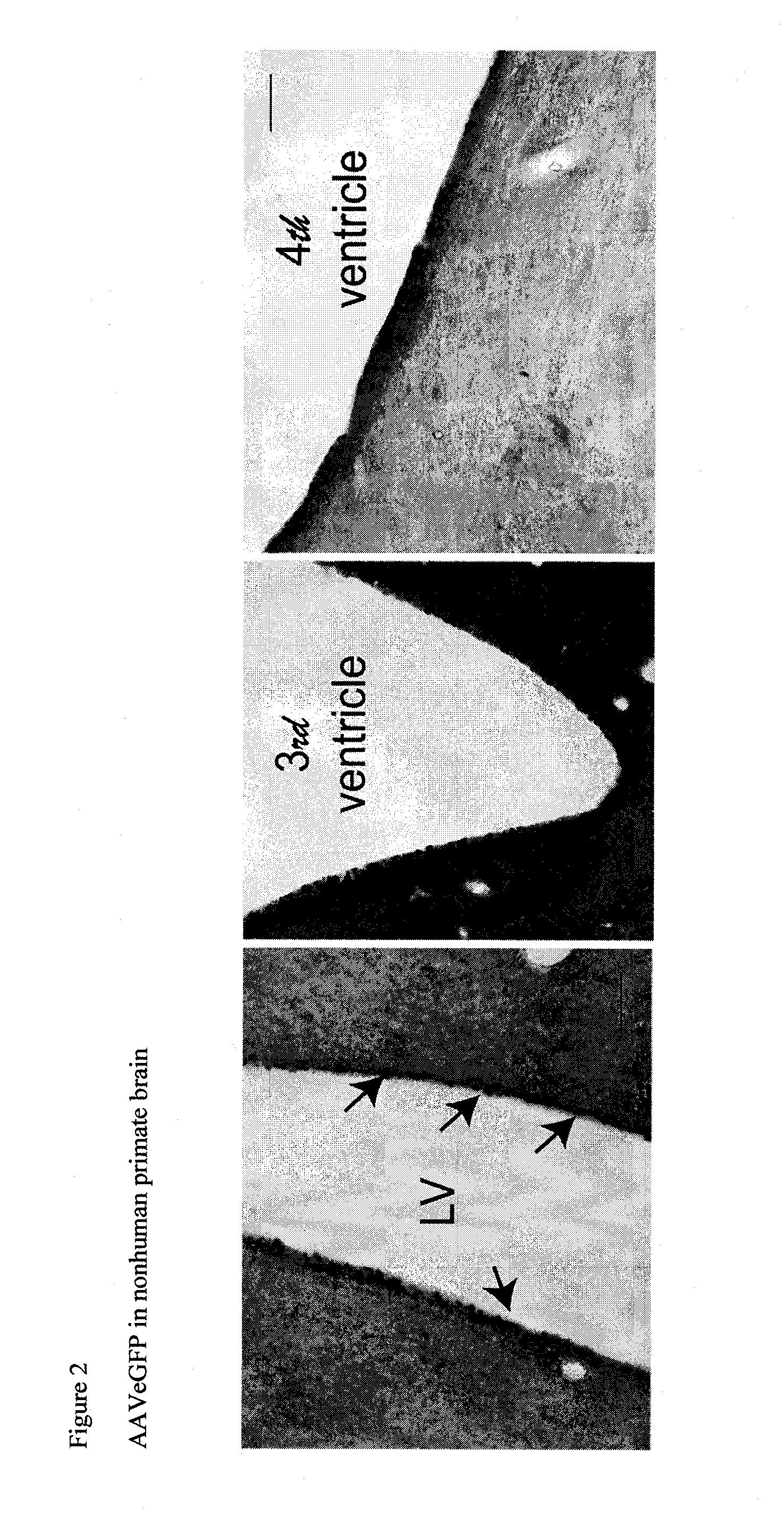
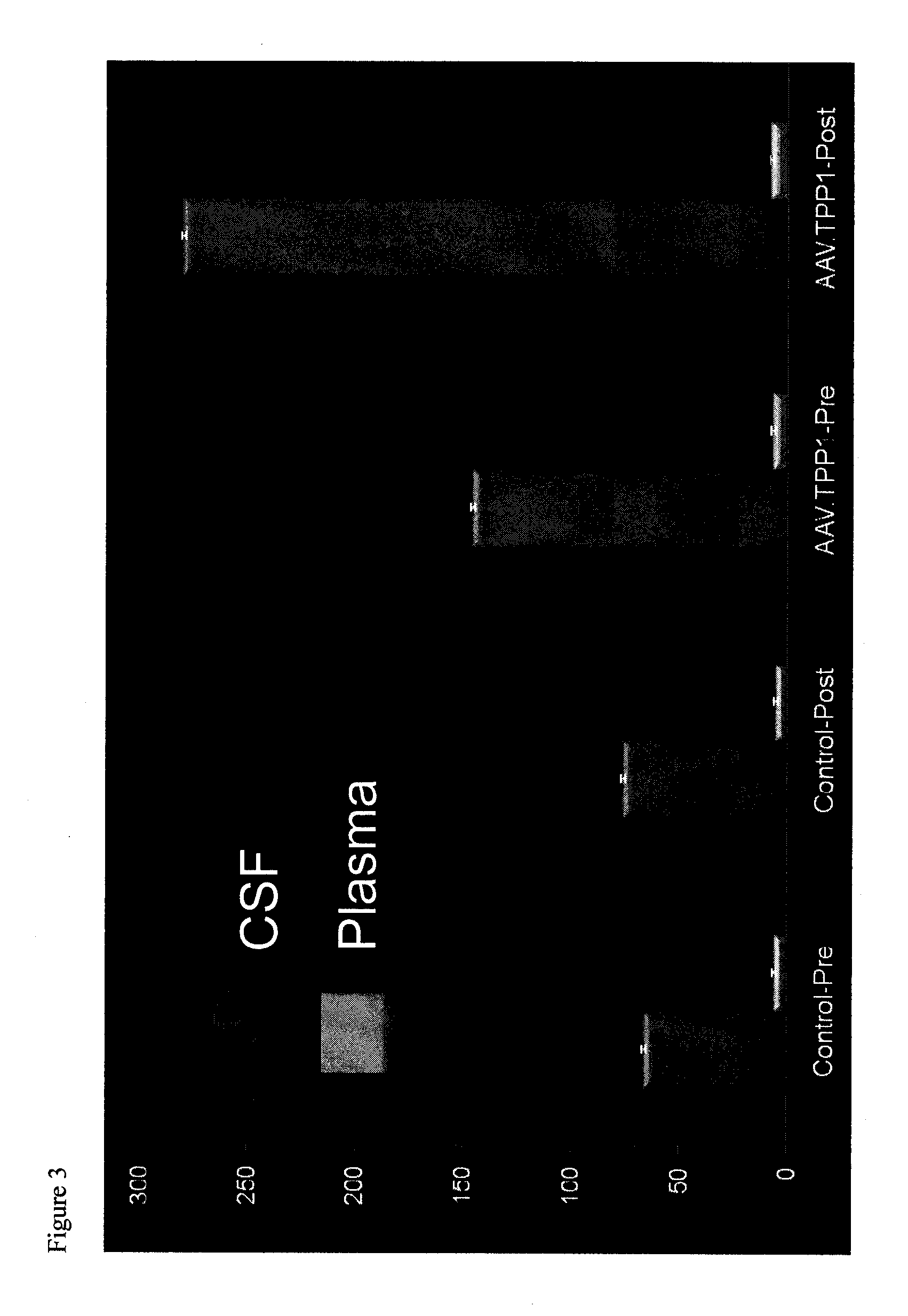
Examples
example 1
Treating Central Nervous System Disorders Via Cerebral Spinal Fluid (CSF) in Large Mammals
[0118]Lysosomal storage disorders (LSDs) constitute a large class of inherited metabolic disorders. Most LSDs are caused by lysosomal enzyme deficiencies which lead to organ damage and often central nervous system (CNS) degeneration. Late infantile neuronal ceroid lipofuscinosis (LINCL) is an autosomal recessive neurodegenerative disease caused by mutations in CLN2, which encodes the lysosomal protease tripeptidyl peptidase 1 (TPP1). LINCL is characterized clinically by progressive motor and cognitive decline, and premature death. Enzyme-replacement therapy (ERT) is currently available for lysosomal storage diseases affecting peripheral tissues, but has not been used in patients with central nervous system (CNS) involvement. A recent study investigated whether enzyme delivery through the cerebrospinal fluid was a potential alternative route to the CNS for LINCL (Chang et al., Molecular Therapy ...
PUM
| Property | Measurement | Unit |
|---|---|---|
| Therapeutic | aaaaa | aaaaa |
Abstract
Description
Claims
Application Information
 Login to View More